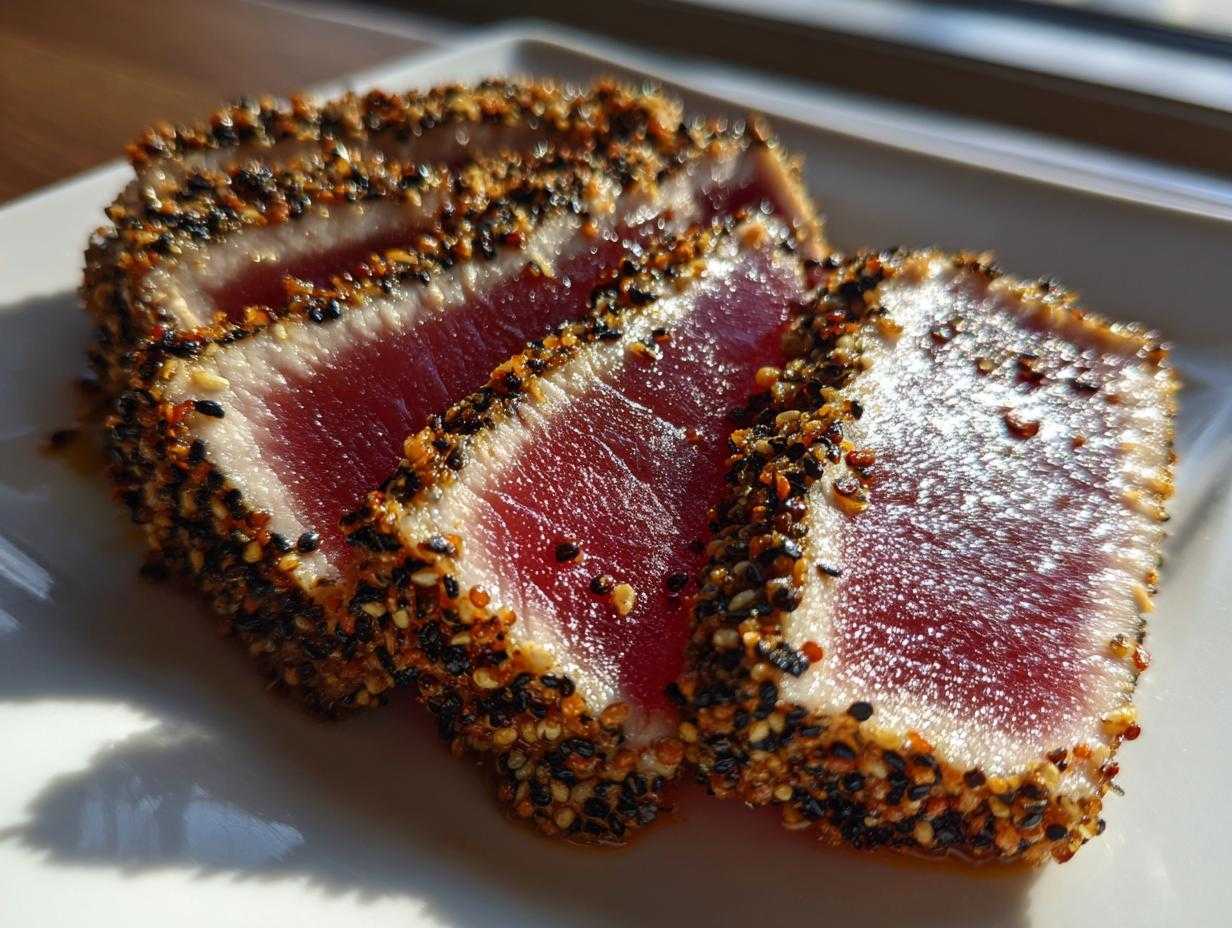
Oh my gosh, do I have a showstopper for you today! When I need something incredibly elegant but only have about fifteen minutes, I skip right over the complicated stuff and make this tuna tataki. Honestly, few things pack as much flavor and wow factor into such a short cooking time. It’s that perfect dance between the hot, nutty crunch of the sesame crust and the cool, soft, ruby-red interior that just screams gourmet.
Getting that sear right was a journey, I’ll admit. My first few attempts resulted in sad, grey tuna pucks! But once I figured out the secret to truly screaming hot oil, this quick seared tuna became my absolute go-to for impromptu gatherings. Trust me when I say, this seared tuna tataki recipe is the real deal, especially paired with my bright homemade ponzu.
Why This Sesame Crusted Tuna Tataki Recipe Works
This isn’t some fussy recipe that takes all afternoon; that’s the first win! It’s perfect because you get maximum impact for minimum effort. Seriously, we are talking under 20 minutes total.
- It delivers that incredible texture contrast, giving you a satisfyingly crisp exterior with a cool, rare center—that’s the definition of spectacular tuna tataki.
- The flavor hits all the right notes: nutty sesame crust meets the zingy, bright citrus punch of the ponzu sauce.
- It’s an amazing starter or centerpiece that fits seamlessly into a low carb dinner plan, too!
Essential Ingredients for Perfect Tuna Tataki
Okay, listen up, because with a recipe this simple, the ingredients have to be top-notch. If you cheat here, you’re going to miss out on the great experience this tuna tataki promises. The star, of course, is the fish. You absolutely must grab about a pound of high-quality sashimi grade tuna loin. No exceptions! We need that clean, firm block that promises safety when we’re only searing the outside.
For the crust, grab a half cup total of white and black sesame seeds—mixing them gives you that beautiful, speckled look! The oil needs to be something high-heat, like vegetable oil, because we are running that pan HOT, hot, hot!
Then we make the bright dressing. You’ll need a quarter cup of soy sauce, about three tablespoons of fresh lemon juice, a splash of rice vinegar, a teaspoon of grated fresh ginger (use the real stuff, please!), and just a tiny bit of sugar to balance the acidity. If you want more ideas on jazzing up soy-based sauces, check out this recipe for a great soy ginger marinade while you gather your supplies!
Sourcing Sashimi Grade Tuna Tataki
This is where we talk about safety, and believe me, it’s important. When we talk about sashimi grade tuna, we aren’t just throwing fancy words around. It means the fish was handled from the moment it was caught specifically to be safe for raw eating. You simply cannot use that regular tuna steak you grab from the supermarket meat tray for tuna tataki—it’s just not the same standard.
My biggest tip? Find a reputable fishmonger you trust, or go to a specialty Asian market that moves a lot of fresh product. Ask them directly: “Is this tuna safe to eat raw?” They should know instantly! Keep that beauty cold right up until the moment you start cooking. I usually keep mine packed in ice in the car on the way home. If you want a fantastic recipe for preparing a slightly different cut, check out this guide on seared ahi tuna.
Step-by-Step Guide to Quick Seared Tuna Tataki
This is the part where you feel like a real chef, I promise! Remember, speed is your friend here, which is why this makes such a brilliant sesame crusted tuna recipe. We are going for barely cooked on the outside, ice-cold rare on the inside—that perfect texture of a quick seared tuna.
Preparing the Sesame Crust for Tuna Tataki
First things first, grab your white and black sesame seeds and spread them out evenly on a wide plate. Take that beautiful, cold tuna loin and just press it firmly into the seeds. I mean really press! You want every single surface completely coated. Don’t be shy; you want a gorgeous, thick, nutty blanket on that fish before it ever sees the heat.
Achieving the Perfect Quick Sear
Now for the heat! Get your heaviest skillet—cast iron is my secret weapon here—on the highest setting possible until that oil you added is almost shimmering and smoking slightly. You need that pan smoking hot! Place the crusted tuna in and set your timer for just 30 to 45 seconds per side. Seriously, that’s it! Use tongs to gently turn it so you get that perfect brown color all around. Immediately pull it out and onto a cutting board to rest for about five minutes. That short rest lets the exterior firm up before we slice it.
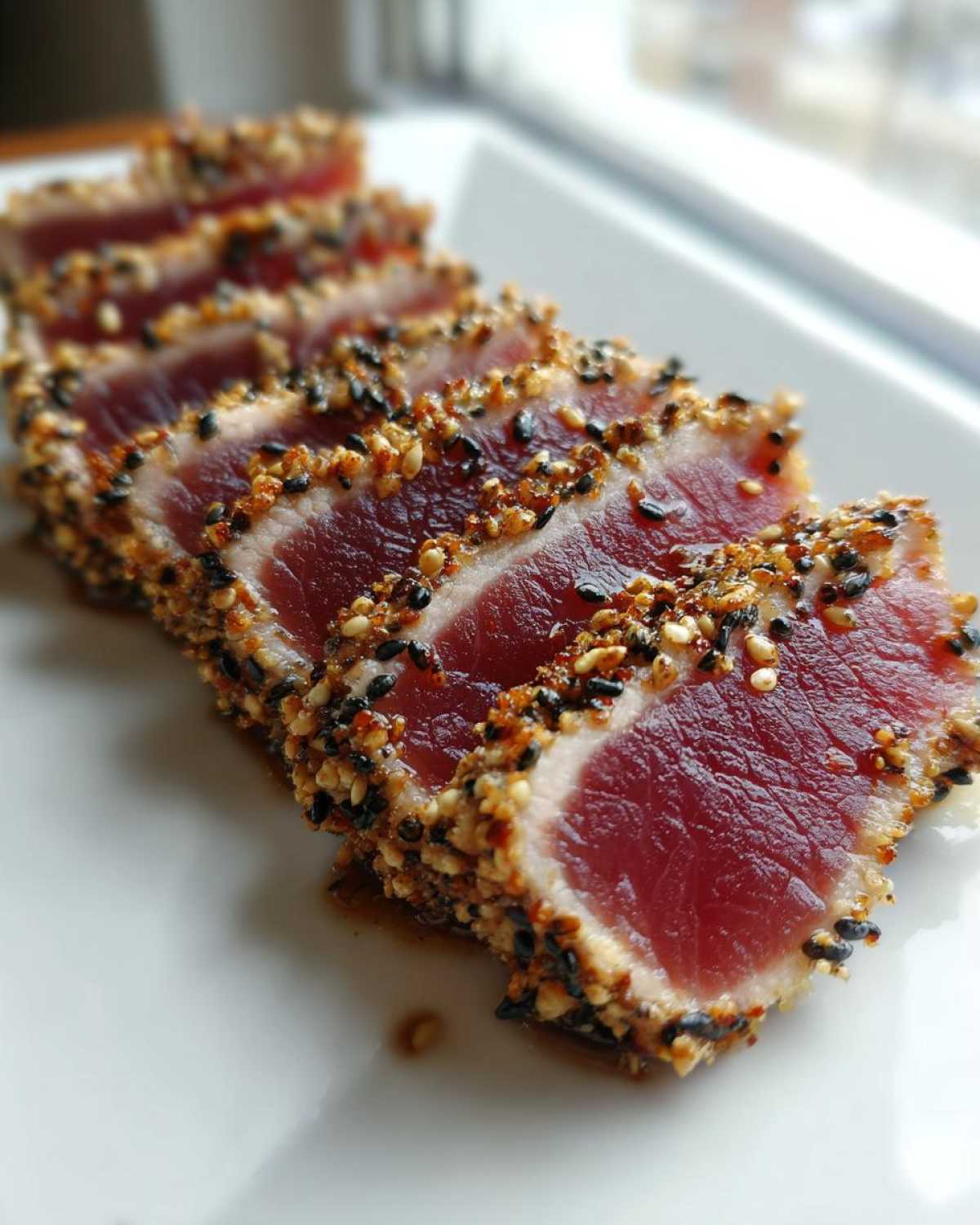
After resting, use your sharpest knife to slice it thinly—aim for about a quarter inch thick—always cutting against the grain. This prevents those beautiful slices from tearing apart on the plate!
Making the Bright Ponzu Tuna Sauce
While that glorious sesame-crusted tuna loin is resting for its five minutes—don’t skip the rest, it’s crucial—we whip up the sauce. This is where the ponzu tuna flavor really sings! It’s so incredibly easy, you just need a small bowl and a whisk.
Combine your quarter cup of soy sauce, the three tablespoons of fresh lemon juice, and that splash of rice vinegar. Then, toss in your teaspoon of grated fresh ginger—you need that spicy kick! Finally, whisk in that tiny pinch of sugar and salt until everything is smooth and slightly bubbly. Taste it! It should be bright, tangy, and deeply savory. Drizzle this liquid sunshine right over the waiting slices when you’re ready to serve!
Expert Tips for Slicing and Plating Your Tuna Tataki
You’ve done the hard part—the blazing hot sear! Now we move into the presentation phase, because let’s be honest, this seared tuna tataki deserves to look as good as it tastes. This is what elevates it from just good fish to an incredible Japanese appetizer!
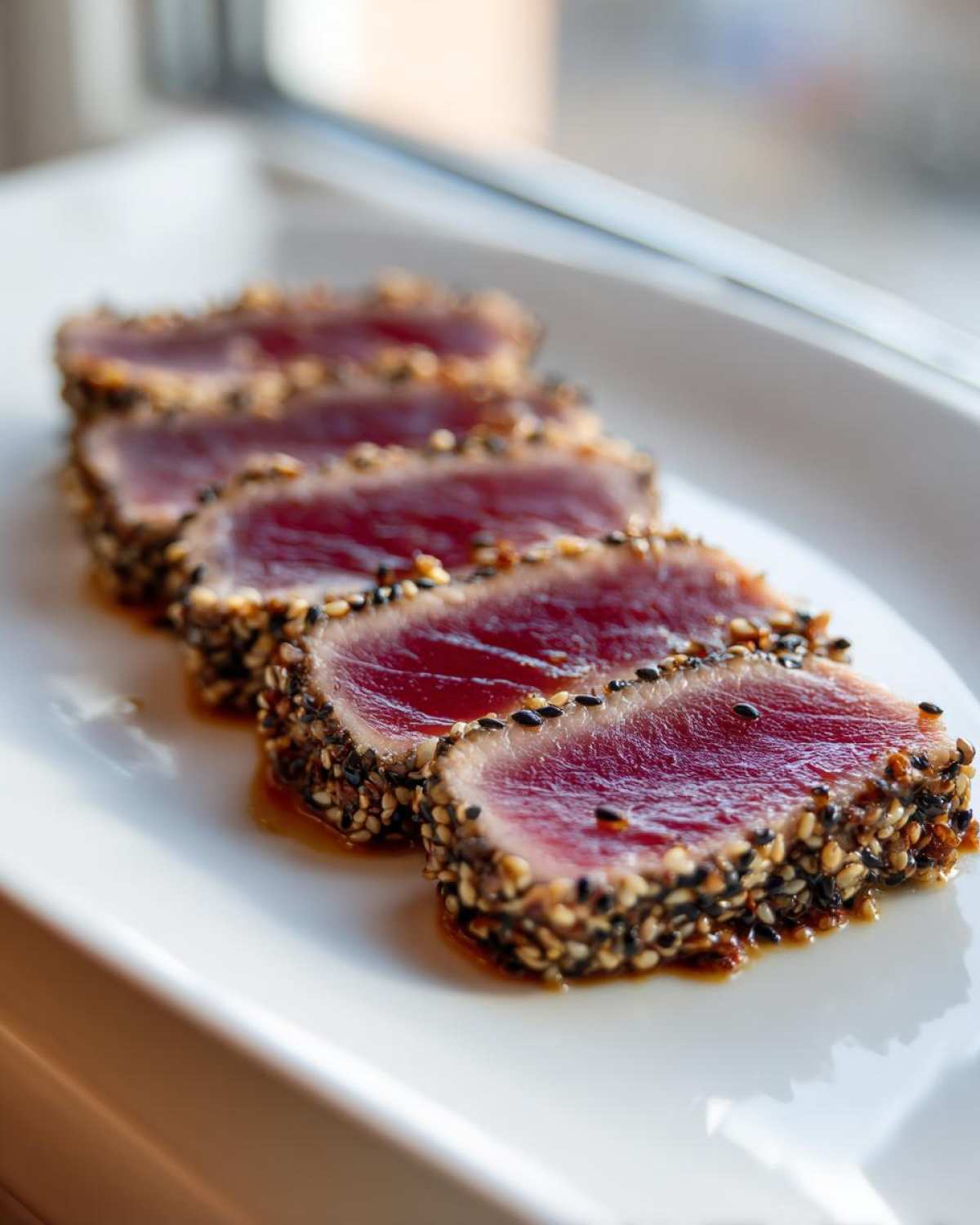
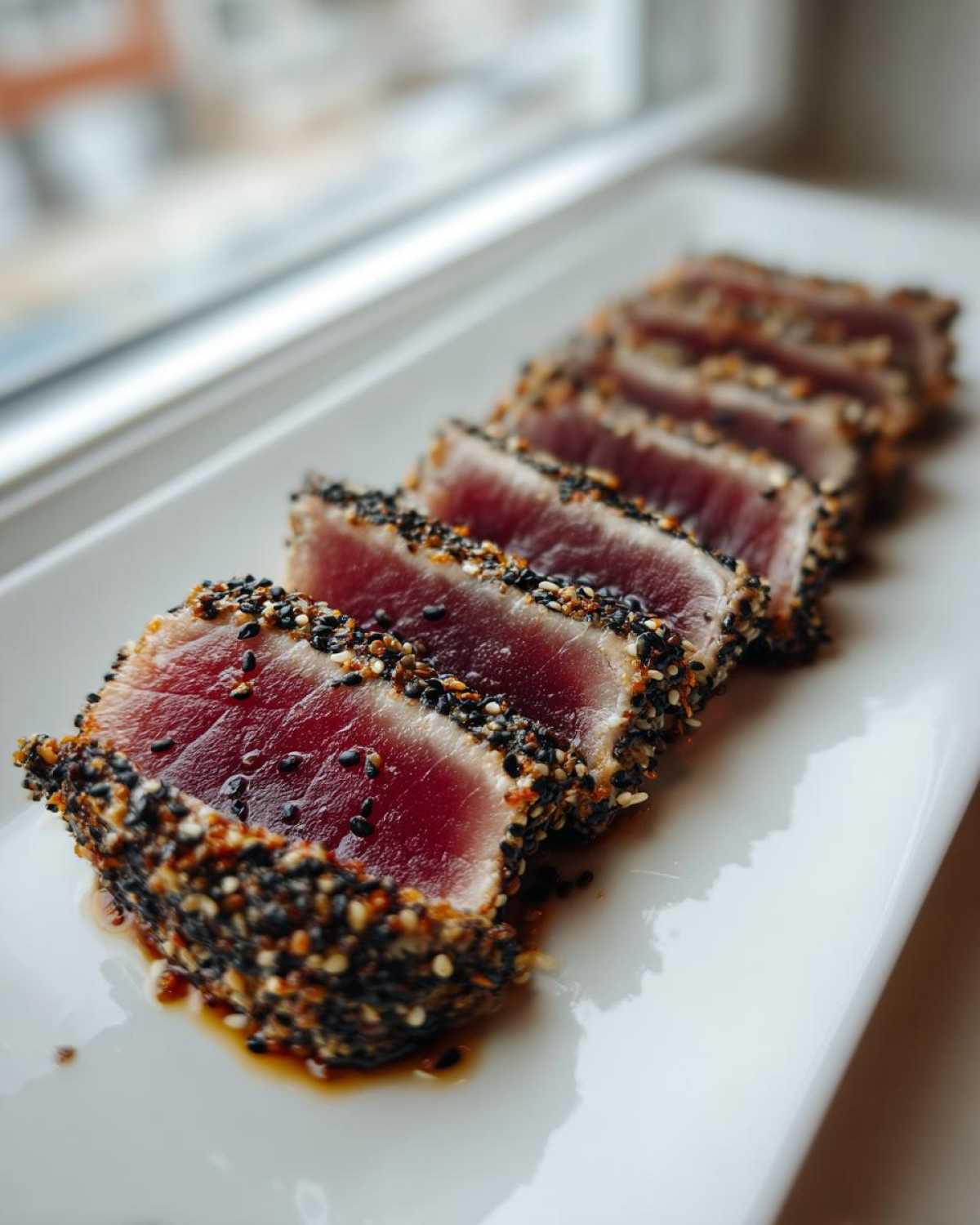
The most important tool here is your knife. It has to be razor sharp. A dull knife will absolutely squash those delicate sesame seeds and tear the rare center we worked so hard to preserve. You need to slice the rested tuna like butter, aiming for a uniform thickness of about 1/4 inch. Always cut against the grain, which feels counterintuitive, but it keeps the texture tender in your mouth!
Pro presentation tip? Stick your serving plates in the freezer for about ten minutes before you plate. That little bit of chill keeps the tuna cool a bit longer while you drizzle on that bright ponzu. Arrange the slices slightly overlapping in a lovely fan pattern, and then let that sauce drizzle over the top. It looks stunning!
Serving Suggestions for Sesame Crusted Tuna Tataki
Since this stunning tuna tataki is light by nature, we want sides that keep that fresh feeling going! This is the perfect high-protein, low carb dinner component, so let’s not weigh it down with anything heavy.
For garnish, I always go for finely sliced green onions sprinkled over the top. They give just the right little oniony bite that works wonderfully with the ponzu. Seriously, a few microgreens look fancy, too!
If you want a side dish, I highly recommend a simple, crisp cucumber salad made with rice vinegar—nothing creamy here! Or, if you’re looking for something slightly more substantial but still light, you should really check out some of these great refreshing summer salads that pair perfectly with seafood.
Storage and Reheating Instructions for Seared Tuna Tataki
Listen, I’m going to be brutally honest: you made this amazing because it was served seconds after slicing! For the absolute best experience of your seared tuna tataki, you really need to eat it right away. That contrast between hot sesame crust and cool center fades fast.
Do you have leftovers? Pop them in an airtight container and get them in the coldest part of your fridge for no more than 24 hours. But be warned: that gorgeous crust will soften, and the interior won’t have that lovely cool texture. I wouldn’t even bother trying to reheat any part of it—just eat it cold straight from the fridge the next day!
Frequently Asked Questions About Tuna Tataki
I always get a ton of questions once people try making my tuna tataki because there are just a few critical steps that make or break it. Here are the main things people ask me most often!
Can I use regular tuna steak instead of sashimi grade tuna?
Oh, that’s a big ‘no’ from me, sweetie. If you are preparing tuna tataki, you have to treat the fish as if you are eating it completely raw since the center stays raw! You must use fish specifically labeled ‘sashimi grade’ or ‘sushi grade.’ That designation guarantees it’s been handled and frozen in a way that makes it safe for raw consumption. Regular store-bought tuna steaks usually aren’t safe for that rare center we love.
How do I know when my quick seared tuna is perfectly done?
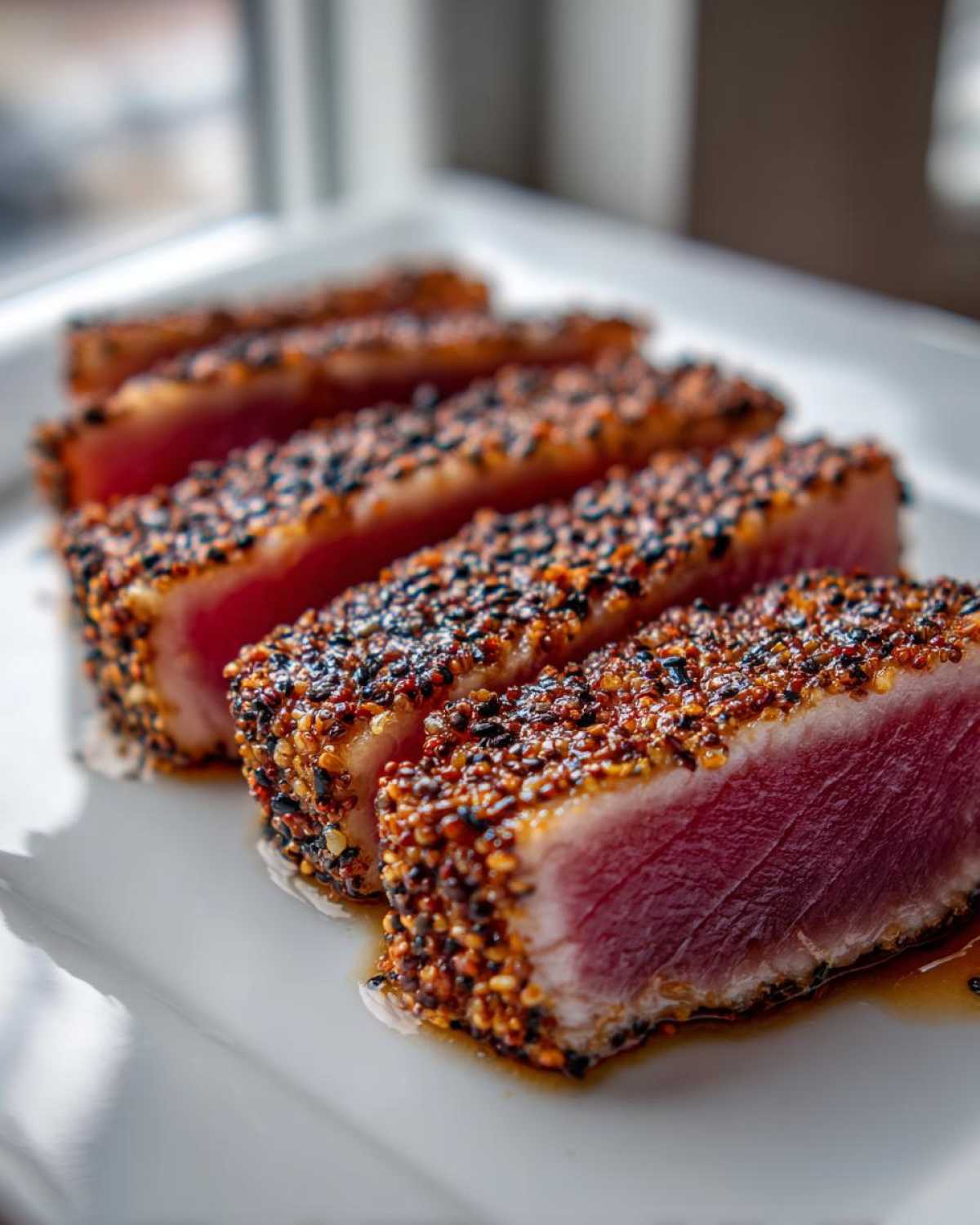
This is the trickiest part! You are aiming for speed and high heat. The goal is a thin, browned crust—remember the recipe calls for just 30 to 45 seconds per side. If you cook it longer, you’ll ruin that beautiful texture! You’ll know it’s right when the crust is deeply browned and crisp from the sesame seeds, but when you slice it open later, the middle should still be cool and deep red, almost the color of a ruby. Don’t press it while searing; let the heat do the work!
What if I don’t have rice vinegar for the ponzu sauce?
If you’re out of rice vinegar, don’t panic! While rice vinegar offers a perfectly mild, slightly sweet acidity for this ponzu tuna sauce, you can swap it for a different light acid. Try using the same amount of fresh lime juice instead—it will be slightly tangier, but still delicious and bright. Just maybe add a tiny extra pinch of sugar to balance that extra tartness! If you need a crisp side dish to go along with this, this crunchy cabbage salad is also fantastic and low carb!
Can this be made ahead of time?
For the best results, no! The magic of this sesame crusted tuna is the immediate temperature contrast. If you try to slice it ahead of time, the residual heat from the sear will continue cooking the center, and the gorgeous crust gets soggy sitting in the ponzu. I always recommend searing, resting, and slicing right before your guests arrive. Trust me, the two minutes on the heat is worth the fresh result!
Print
Sesame Crusted Tuna Tataki with Ponzu Sauce
- Total Time: 17 min
- Yield: 4 servings
- Diet: Low Fat
Description
Prepare quick-seared tuna tataki with a sesame crust and serve with a simple ponzu dressing. This recipe focuses on proper searing for a rare center.
Ingredients
- 1 pound sashimi grade tuna loin
- 1/4 cup white sesame seeds
- 1/4 cup black sesame seeds
- 1 tablespoon vegetable oil
- 1/4 cup soy sauce
- 3 tablespoons fresh lemon juice
- 1 tablespoon rice vinegar
- 1 teaspoon grated fresh ginger
- 1 teaspoon sugar
- Pinch of salt
Instructions
- Combine white and black sesame seeds on a plate. Press the tuna loin firmly into the seeds on all sides to coat evenly.
- Heat the vegetable oil in a heavy skillet over high heat until it is almost smoking.
- Sear the sesame-crusted tuna for 30 to 45 seconds per side, turning carefully with tongs, until the outside is browned and crusty but the inside remains raw.
- Immediately remove the tuna from the pan and place it on a cutting board. Let it rest for 5 minutes.
- While the tuna rests, whisk together the soy sauce, lemon juice, rice vinegar, grated ginger, sugar, and salt in a small bowl to make the ponzu sauce.
- Using a very sharp knife, slice the tuna thinly against the grain, about 1/4 inch thick.
- Arrange the slices on a serving platter. Drizzle the ponzu sauce over the tuna before serving.
Notes
- Use only tuna labeled ‘sashimi grade’ or ‘sushi grade’ for safe consumption when raw.
- Do not overcook the tuna; the goal is a very thin cooked layer on the outside and a cool, rare center.
- Chill your serving plates slightly before plating for a better presentation.
- Prep Time: 10 min
- Cook Time: 2 min
- Category: Appetizer
- Method: Searing
- Cuisine: Japanese
Nutrition
- Serving Size: 1 serving
- Calories: 220
- Sugar: 3
- Sodium: 650
- Fat: 10
- Saturated Fat: 2
- Unsaturated Fat: 8
- Trans Fat: 0
- Carbohydrates: 5
- Fiber: 1
- Protein: 30
- Cholesterol: 60