
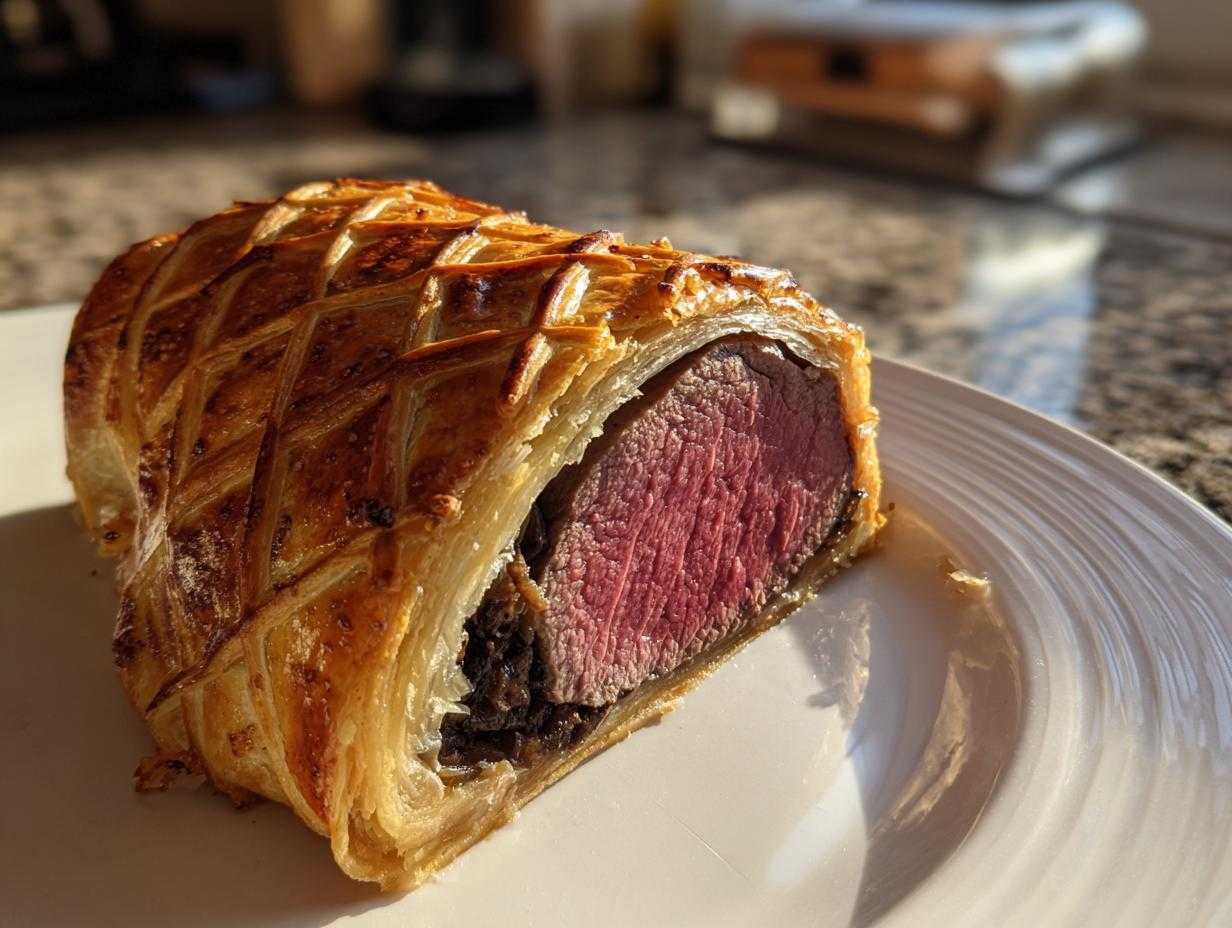
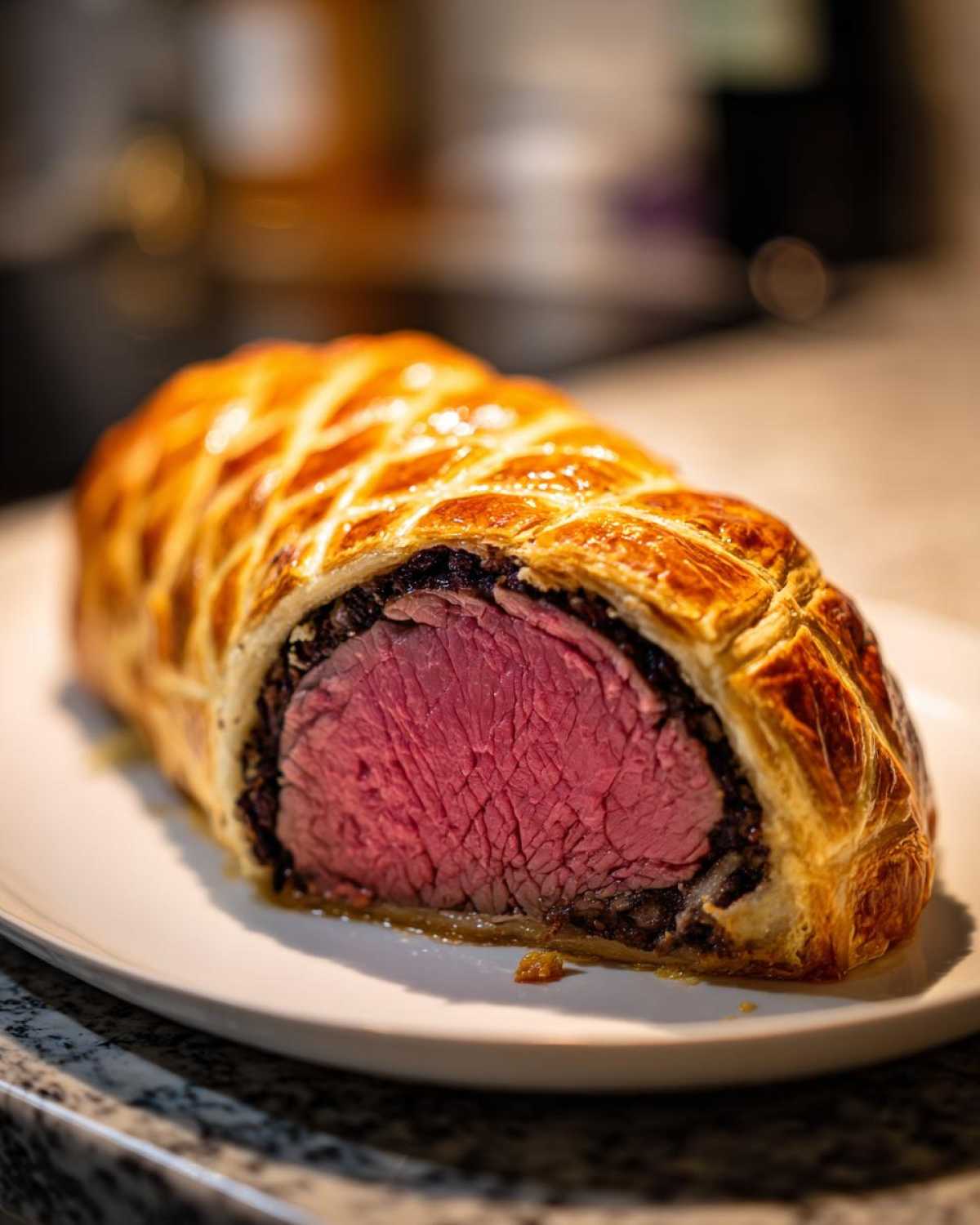
Okay, let’s be honest—this dish has a reputation, right? It seems like something only served in fancy restaurants with ridiculously dim lighting! But trust me, when you nail that perfect crust and see that deep rose-pink layer of beef inside, you feel like a culinary superhero.
I spent years trying to get the wrapping right so the pastry would actually puff up instead of turning into a sad, damp blanket around the filet. This isn’t some shortcut recipe; this is the real deal. We’re focusing on traditional, meticulous techniques to give you that incredible Authentic Beef Wellington with Puff Pastry result every single time. Once you master the moisture control, everything else falls into place, and you’ll want to serve this elegant main course for every single celebration from now on!
Why This Authentic Beef Wellington with Puff Pastry Recipe Works
Look, the reason this dish intimidates people is usually down to one thing: moisture! If you skip the proper prep, you end up with soup inside your beautiful pastry. But this Authentic Beef Wellington with Puff Pastry recipe works because we tackle the moisture issue head-on, treating every component like a separate little cooking project before they even meet. Don’t forget, a perfectly seared tenderloin coated in Dijon mustard before wrapping really helps too—check out my thoughts on great beef preparations over at Filet Mignon with Garlic Herb Butter.
I spent years trying to get the wrapping right so the pastry would actually puff up instead of turning into a sad, damp blanket around the filet. We chill everything!
-
Mastering the Duxelles Moisture Control
You absolutely cannot rush the Duxelles! We cook those mushrooms until they stop steaming and actually start smelling slightly toasted. That is your cue. If you leave any residual water in there, I promise you’ll end up with a soggy bottom. Making sure every drop of moisture is gone is the secret to a truly Soggy Bottom Proof Beef Wellington. It needs to be a spreadable paste, not a mushroom sauce!
-
The Importance of Chilling Stages
I chill the beef after searing, chill the Duxelles after cooking, and then I chill the whole thing again after wrapping it in prosciutto and before it even touches the pastry. Why so many steps? Because chilling forces the beef to firm up perfectly, it locks the flavor coating in place, and most importantly, it prevents that pastry from softening or shrinking too aggressively when it hits the hot oven. It’s what earns you that unbelievable flakiness in your final Authentic Beef Wellington with Puff Pastry.
Essential Ingredients for Authentic Beef Wellington with Puff Pastry
You need the absolute best ingredients for a truly stunning Beef Wellington. Don’t skimp here; this recipe relies on quality to shine. We’re using a 2.5 lb Center Cut Beef Tenderloin, often called Chateaubriand, which is trimmed nice and neat before we start searing. You’ll also need some Dijon mustard for that layer of sharpness, those intensely flavored cremini mushrooms and shallots for the Duxelles, a splash of Madeira for depth, and of course, 12 slices of prosciutto to act as that crucial moisture barrier. Getting these items right is step one toward the Authentic Beef Wellington with Puff Pastry success we are aiming for.
Even though my grandmother never made Beef Wellington, she always said, “If the base ingredient isn’t top-notch, don’t bother cooking it!” You can read more about treating good cuts of meat right over here at Filet Mignon with Garlic Herb Butter.
-
Beef Tenderloin Preparation Notes
We are focusing only on the center-cut tenderloin—it cooks the most evenly. Make absolutely sure your butcher trims off all the silver skin. That stuff is tough and won’t soften during the short bake time. Using high-quality beef here is what earns you the title of having the Best Beef Wellington Recipe Ever. Just trust me on this one!
-
Puff Pastry Considerations
I know some recipes call for rough puff you can whip up fast, but for something this special, you want the real deal. Always aim for all-butter puff pastry. It yields the best flavor and that beautiful, shattering crispness we want. Even if you buy it pre-made, checking that ingredient list for real butter is essential for achieving that flaky result, mimicking what you’d get from making your own Homemade Puff Pastry Beef Wellington.
Step-by-Step Instructions for How to Make Perfect Beef Wellington
Alright, this is where the magic—and the technique—really comes together! Follow these steps exactly, and you’ll wonder why you ever thought this was too complicated. Remember, we are building layers of flavor and texture here. If you feel you need a refresher on how to treat fantastic beef cuts, check out my notes on Filet Mignon with Garlic Herb Butter.
We’re moving fast in some stages, but slow and patient in others. That balance is the key to a stunning Authentic Beef Wellington with Puff Pastry.
-
Searing and Initial Coating
Get that heavy skillet screaming hot with the olive oil! We need a deep, dark brown crust on all sides of that seasoned tenderloin—don’t be shy, this takes maybe two minutes per side max. We sear for color and flavor, not for cooking the inside. As soon as it comes out, let it cool just enough so you can handle it, and then brush every single surface with that sharp Dijon mustard. That mustard stops any moisture from the beef migrating directly into the pastry later! Wrap it tight in plastic wrap and pop it into the fridge to firm up—at least 30 minutes. Seriously, don’t skip the chill!
-
The Traditional Duxelles Recipe for Wellington
This is where we fight sogginess! Your skillet needs to be hot, and you cook those finely chopped mushrooms, shallots, and thyme until they stop weeping. I mean it! Keep stirring until the mixture is dry and smells deeply savory, not wet. Once they’re dry, add your Madeira or sherry to deglaze and cook off every last drop of liquid. Spread this paste out on a clean plate immediately so it cools down fast. If you’re after seriously rich mushroom flavor, this is your secret weapon for the Duxelles Recipe for Wellington.
-
Beef Wellington Pastry Wrapping Tutorial
Now we assemble the beef blanket. Lay out plastic wrap and overlap your prosciutto slices to make a sheet big enough for the whole log. Spread that completely cool Duxelles over the prosciutto. Place the mustard-coated beef at the edge and start rolling, using the plastic wrap to help you pull it incredibly tight. Twist the ends like a giant sausage casing and chill it again. This tight wrapping is vital for the Beef Wellington Pastry Wrapping Tutorial—it ensures the beef takes a beautiful, compact shape.
-
Baking and Achieving Medium Rare Beef Wellington Internal Temperature
Once your pastry has been rolled out (about 1/8 inch thick!), use the egg wash to seal everything up tight, trimming excess pastry—thick overlaps steam! Give the whole thing one final chill. Preheat your oven to 400°F (200°C). Brush the pastry generously with egg wash and score a simple crisscross pattern on top, careful not to cut through the base layer. Then, you use that meat thermometer! Slide it in gently through the pastry to the center. Bake until you hit 125°F to 130°F for that perfect pink center—that’s your goal for Medium Rare Beef Wellington Internal Temperature. It usually takes about 40 minutes, but the thermometer never lies!
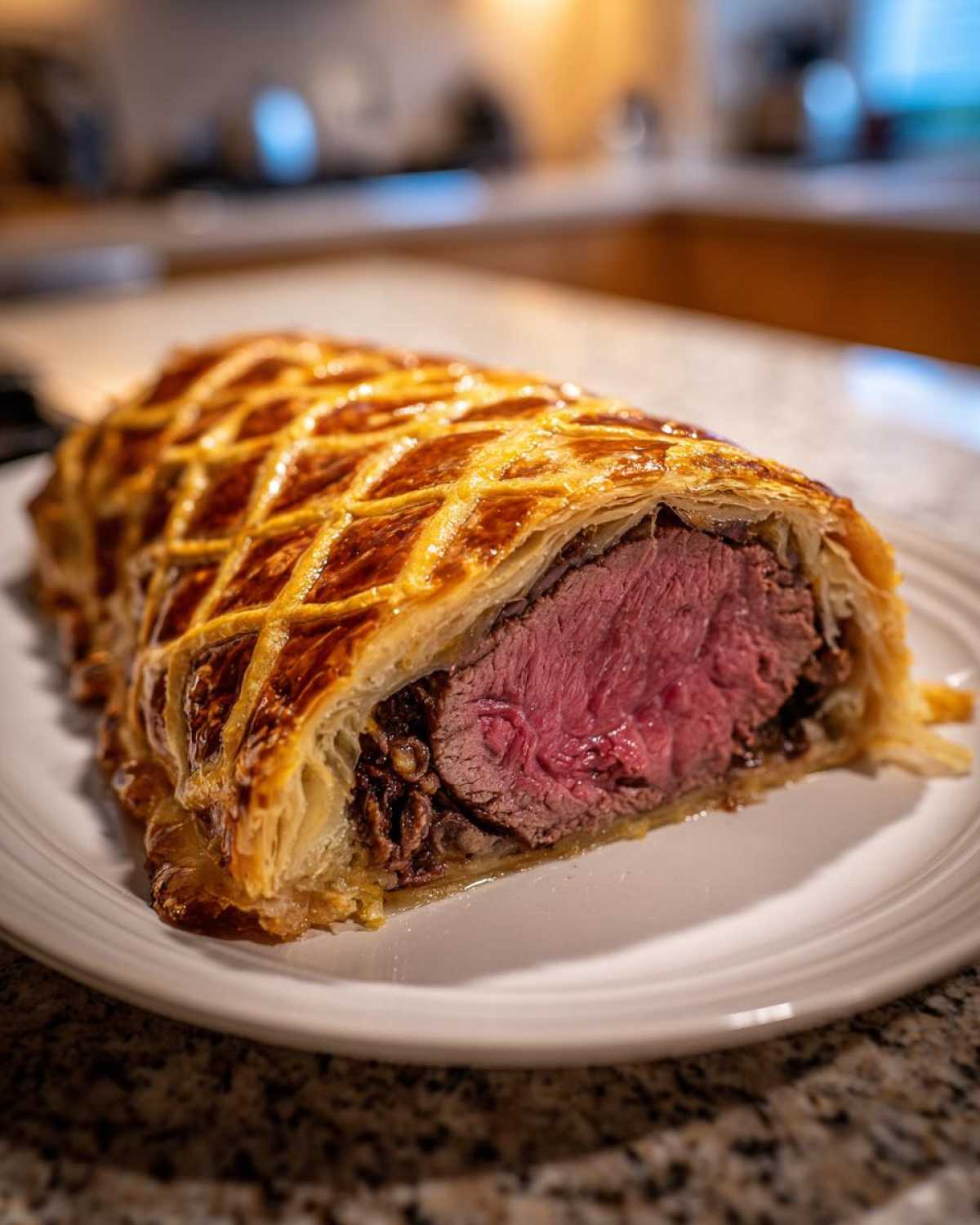
Tips for Success: Foolproof Beef Wellington Guide
I know it feels like a lot of steps, but trust me, these little expert nudges are what elevate this from a good Wellington to the masterpiece you’re aiming for. We’re going for true culinary triumph here, and that requires listening to a few hard-earned lessons. Every time I make this Authentic Beef Wellington with Puff Pastry, I double-check these details.
If you want to see how I treat other cuts of meat with intense flavor, you should take a look at my Filet Mignon with Garlic Herb Butter recipe—the precision is similar!
-
Preventing a Soggy Bottom Proof Beef Wellington
We already dried out the Duxelles within an inch of its life, but we can add one more safety net! Before you wrap the beef log in the pastry, sprinkle the prosciutto/Duxelles layer with a super fine dusting of flour or even some finely ground breadcrumbs. That thin, dry layer catches any last bit of moisture trying to seep out of the mushroom mix. Also, when it goes into the oven, skip the solid baking sheet! Put the Wellington directly onto a wire rack placed over a baking sheet. That lets air circulate underneath, ensuring you get that perfect, crisp base we call a Soggy Bottom Proof Beef Wellington.
-
Resting the Authentic Beef Wellington with Puff Pastry
The second it comes out of the oven, you might be tempted to hack into it immediately to admire your perfect crust and rosy interior. Don’t you dare! You must let the Wellington rest for a minimum of 10 to 15 minutes outside the oven. The internal temperature will creep up a few degrees—that’s called carry-over cooking—and, way more importantly, this resting time allows all those gorgeous beef juices to redistribute throughout the filet. If you cut it too soon, all that moisture floods the plate, and your pastry gets sad fast. Patience earns you a juicy center!
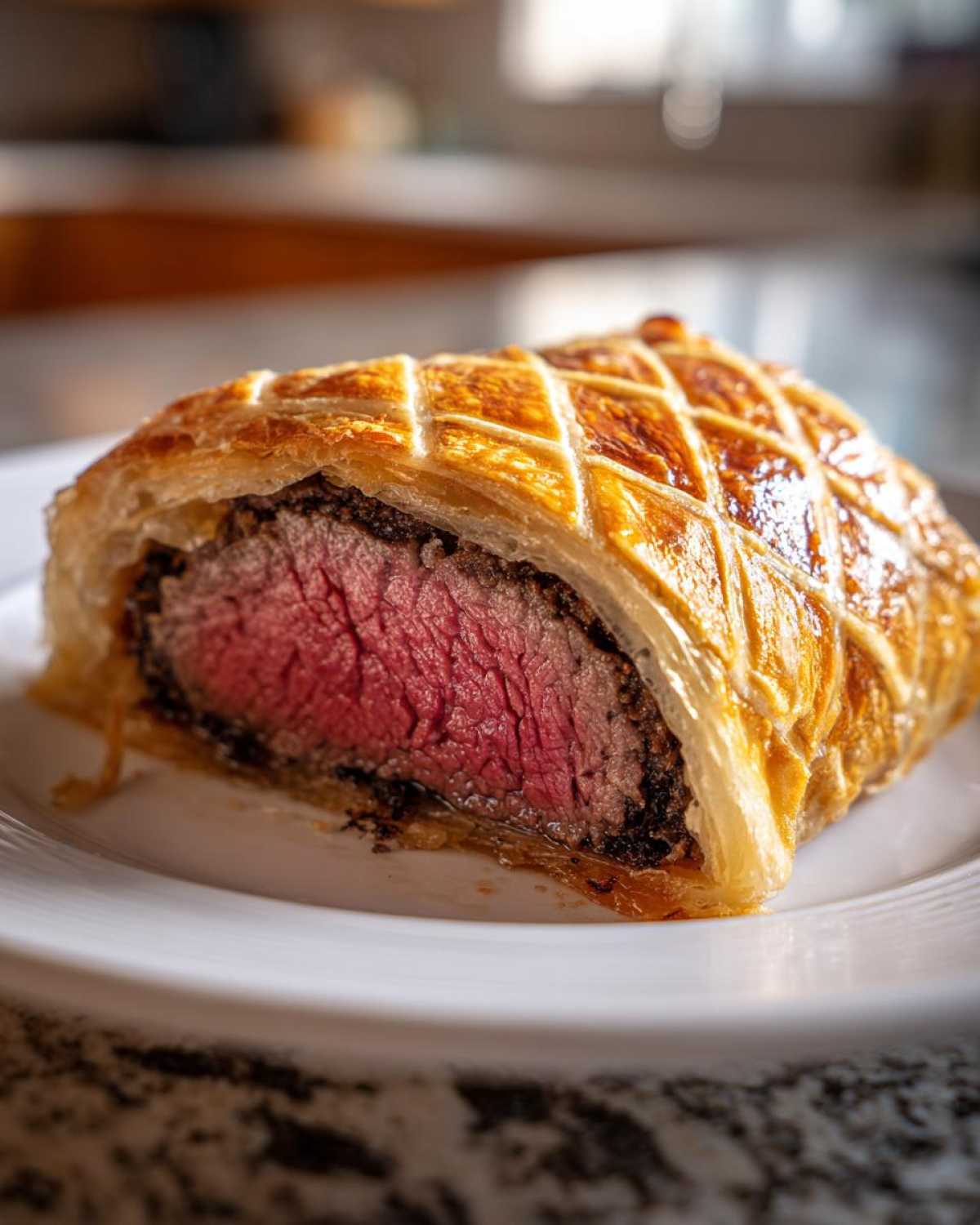
Serving Suggestions for Your Gourmet Beef Wellington Dinner Idea
Okay, once you’ve wrestled this masterpiece into perfection, what are you going to serve it with? You don’t want heavy sides distracting from that incredible beef and pastry!
I always go for something green and vibrant. Roasted asparagus bathed in lemon zest is just lovely. Or, if you want something a bit more classic and velvety, a simple but elegant potato purée works wonders—just make sure the seasoning is spot on. For another vibrant green addition, try my Garlic Parmesan Roasted Green Beans; the saltiness from the parmesan really complements the richness of the beef. A simple red wine reduction sauce is the only liquid you need on the plate!
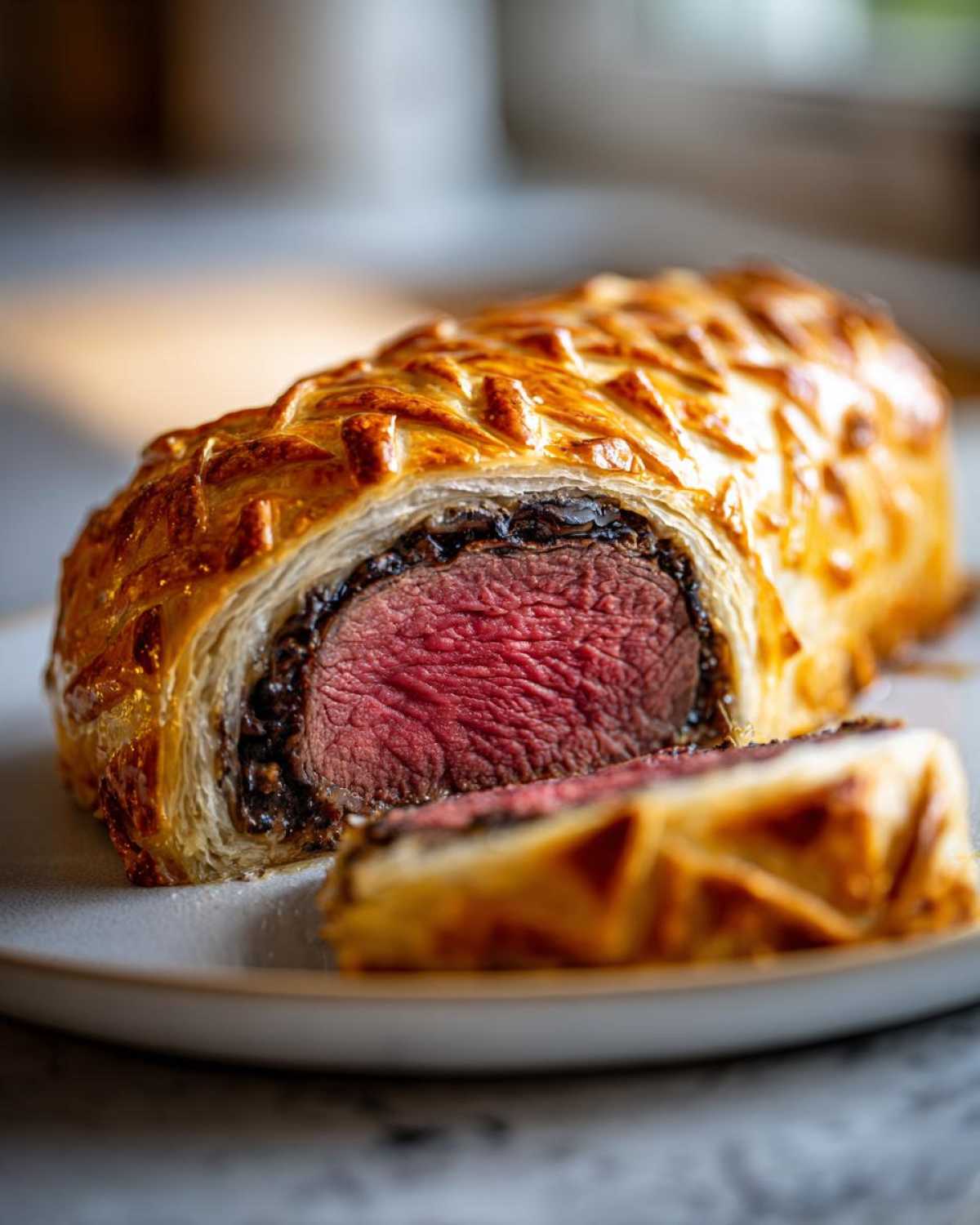
Storage and Reheating Instructions for Leftover Beef Wellington
If you somehow manage to have leftovers—which I have totally done, just fork the edges during the night, don’t tell anyone—don’t just throw it in the microwave! That dough will turn instantly leathery. The trick is totally revamping the pastry.
Wrap any slices tightly in plastic wrap and store them in the fridge for up to two days. When you want to eat them, the only way to go is the oven. Lay the slices on a wire rack situated over a small baking sheet. Heat them gently at about 325°F (160°C) until the beef is warmed through. This low, slow method helps the pastry crisp back up without scorching the outside.
Frequently Asked Questions About Traditional Beef Wellington with Puff Pastry
When you tackle a showstopper like this, questions are totally normal! I still have concerns sometimes, even after making it a dozen times. Here are a few things folks often ask me about getting this Authentic Beef Wellington with Puff Pastry just right for that elegant main course feel.
-
Can I substitute the beef tenderloin in this Classic Beef Wellington Recipe?
Technically, you *can*, but should you? Not really! The uniform shape and tenderness of the center-cut filet are what allow for that perfect, edge-to-edge medium-rare finish. If you must switch, pork tenderloin can work, but it cooks much faster and you’ll have to adjust your temperature goals completely. For a true Classic Beef Wellington Recipe experience, stick to the filet. If you’re curious about other beef preparations, check out my Filet Mignon with Garlic Herb Butter recipe!
-
How far ahead can I assemble the Beef Wellington before baking?
This is a great make-ahead option for holiday dinners! You can fully assemble the entire Wellington—meat wrapped in Duxelles, wrapped in prosciutto, and finally encased in the raw pastry—and chill it. I wouldn’t push past 24 hours, though. Aim for wrapping it the morning of your dinner or the night before. That final long chill is crucial for the pastry to stay firm for the bake, which is central to getting that lovely Traditional Beef Wellington with Puff Pastry texture.
Estimated Nutritional Data for Authentic Beef Wellington with Puff Pastry
Cooking something this elegant always makes me wonder about the bigger picture, right? So, for those keeping track, here is the estimated nutritional breakdown for one slice of our glorious Authentic Beef Wellington with Puff Pastry. Remember that these numbers are just ballpark figures! They change depending on the exact brand of puff pastry you use and how much of that incredible sauce ends up on your plate.
- Serving Size: 1 slice
- Calories: 650
- Fat: 40g
- Saturated Fat: 20g
- Carbohydrates: 25g
- Protein: 45g
I always advise taking these figures with a grain of salt—pun intended! They rely heavily on the specific cut of tenderloin and the richness of your pastry. It’s a decadent meal, that’s for sure!
Share Your Perfect Beef Wellington Experience
Now that you’re armed with all the secrets—the dry Duxelles, the chilling marathon, the perfect searing—it’s time for you to shine! I absolutely love seeing your results. Did the pastry puff up like a dream? Did you manage to get that perfect medium-rare center?
Please drop a comment below and tell me how it went! Honestly, seeing your success keeps my passion going. If you tried this recipe for Christmas or a big anniversary, share a photo if you can. And if you’re looking for another impressive showstopper, you have to check out my recipe for the Best Soft Chewy Chocolate Chip Cookies—a completely different kind of triumph!
Print
Authentic Beef Wellington with Puff Pastry
- Total Time: 2 hours 15 min
- Yield: 6 servings
- Diet: Low Lactose
Description
Follow these detailed steps to prepare a classic Beef Wellington using traditional techniques for a perfectly cooked tenderloin encased in crisp puff pastry.
Ingredients
- 2.5 lb center-cut beef tenderloin (Chateaubriand), trimmed
- 2 tablespoons olive oil
- 2 tablespoons Dijon mustard
- 1 pound cremini mushrooms, finely chopped
- 4 shallots, finely chopped
- 2 sprigs fresh thyme, leaves only
- 1/2 cup dry Madeira or sherry
- Salt and freshly ground black pepper
- 12 thin slices prosciutto or Parma ham
- 1 tablespoon English mustard (or hot English mustard powder mixed with a little water)
- 1 cup all-purpose flour (for dusting)
- 1.5 pounds all-butter puff pastry, chilled
- 2 large egg yolks, beaten with 1 teaspoon water (egg wash)
Instructions
- Season the beef tenderloin generously with salt and pepper. Sear the beef in hot olive oil in a heavy skillet on all sides until deeply browned, about 1-2 minutes per side. Remove the beef and let it cool slightly. Brush the entire surface of the warm beef with Dijon mustard. Wrap the beef tightly in plastic wrap and chill in the refrigerator for at least 30 minutes to firm up.
- Prepare the Duxelles: Place the chopped mushrooms, shallots, and thyme leaves in a dry, hot skillet. Cook over medium heat, stirring frequently, until all the moisture has evaporated. This step is crucial for preventing a soggy bottom. Add the Madeira or sherry and cook until the liquid has completely reduced. Season with salt and pepper. Spread the mixture on a plate and chill completely.
- Assemble the Casing: Lay out a large sheet of plastic wrap on your work surface. Arrange the prosciutto slices on the plastic wrap, overlapping them slightly to form a rectangle large enough to wrap the entire tenderloin. Spread the chilled Duxelles evenly over the prosciutto layer.
- Wrap the Beef: Place the chilled, mustard-coated tenderloin at one end of the prosciutto/Duxelles layer. Using the plastic wrap to assist, tightly roll the prosciutto and Duxelles around the beef. Twist the ends of the plastic wrap tightly to create a firm, compact cylinder. Chill for another 30 minutes.
- Prepare the Pastry: On a lightly floured surface, roll out the chilled puff pastry into a large rectangle, about 1/8 inch thick, large enough to completely encase the beef log. Brush the edges of the pastry lightly with the egg wash.
- Wrap the Wellington: Unwrap the chilled beef log and place it near one edge of the pastry. Brush the exposed pastry edges with egg wash. Roll the pastry around the beef, trimming any excess pastry to avoid thick overlaps. Seal the seam tightly, tucking the ends neatly underneath the log. Ensure the seal is firm.
- Chill Again: Wrap the entire Wellington loosely in plastic wrap and chill for at least 30 minutes, or up to 24 hours. This prevents the pastry from shrinking excessively during baking.
- Bake: Preheat your oven to 400°F (200°C). Brush the entire surface of the chilled Wellington with the egg wash. Score the top lightly with the back of a knife in a decorative pattern, being careful not to cut all the way through the pastry. Sprinkle lightly with coarse salt.
- Bake for 35 to 45 minutes for medium-rare (internal temperature of 125°F to 130°F). Use a meat thermometer inserted through the pastry into the center of the beef.
- Rest: Let the Beef Wellington rest on a cutting board for 10 to 15 minutes before slicing thickly.
Notes
- For a truly crisp bottom, place a thin layer of flour or finely ground breadcrumbs between the Duxelles and the pastry before wrapping.
- If your pastry browns too quickly, loosely tent the Wellington with aluminum foil for the last 10 minutes of baking.
- Use all-butter puff pastry for the best flavor and flakiness.
- Prep Time: 1 hour 30 min (includes chilling)
- Cook Time: 45 min
- Category: Main Course
- Method: Baking
- Cuisine: British/French
Nutrition
- Serving Size: 1 slice
- Calories: 650
- Sugar: 2
- Sodium: 550
- Fat: 40
- Saturated Fat: 20
- Unsaturated Fat: 15
- Trans Fat: 0.5
- Carbohydrates: 25
- Fiber: 2
- Protein: 45
- Cholesterol: 180

