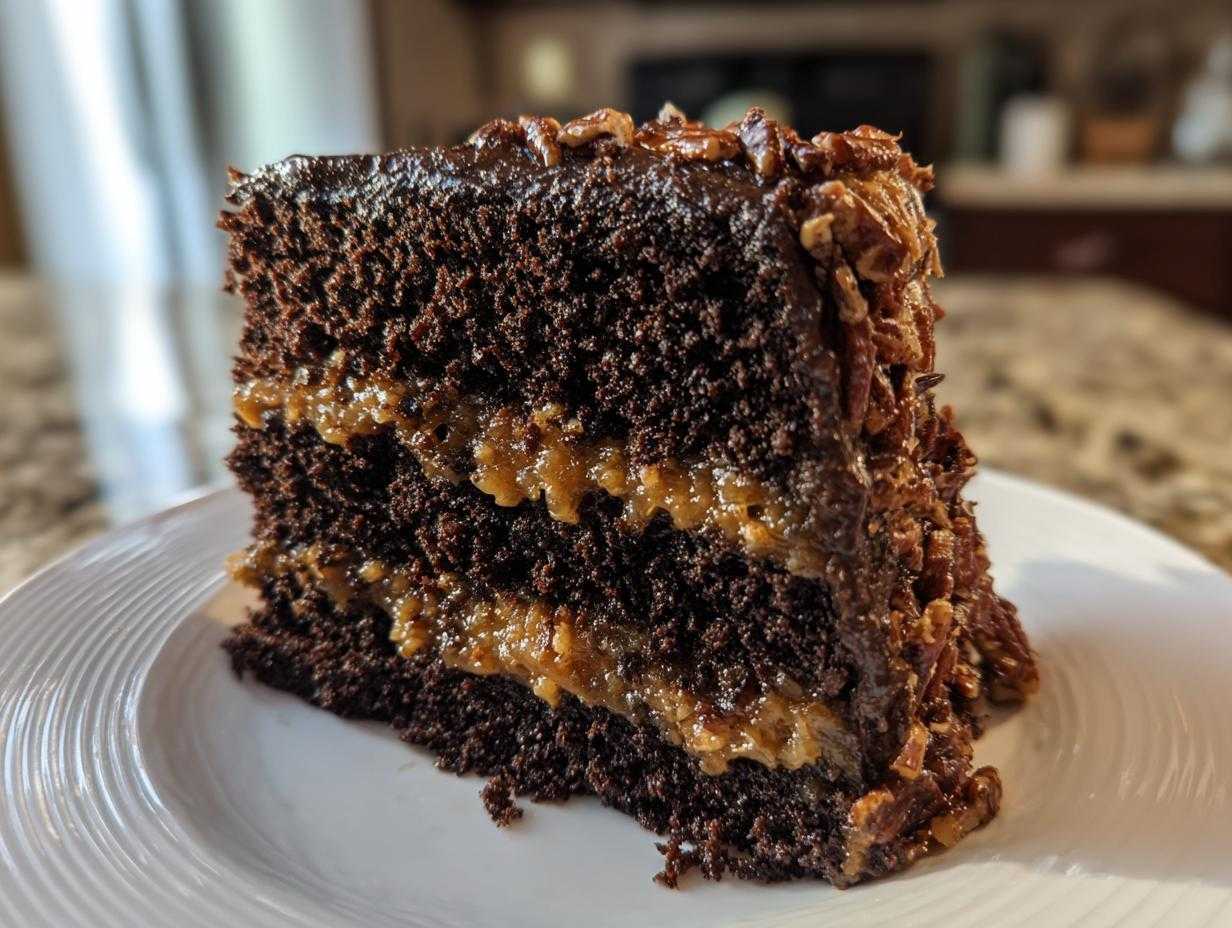
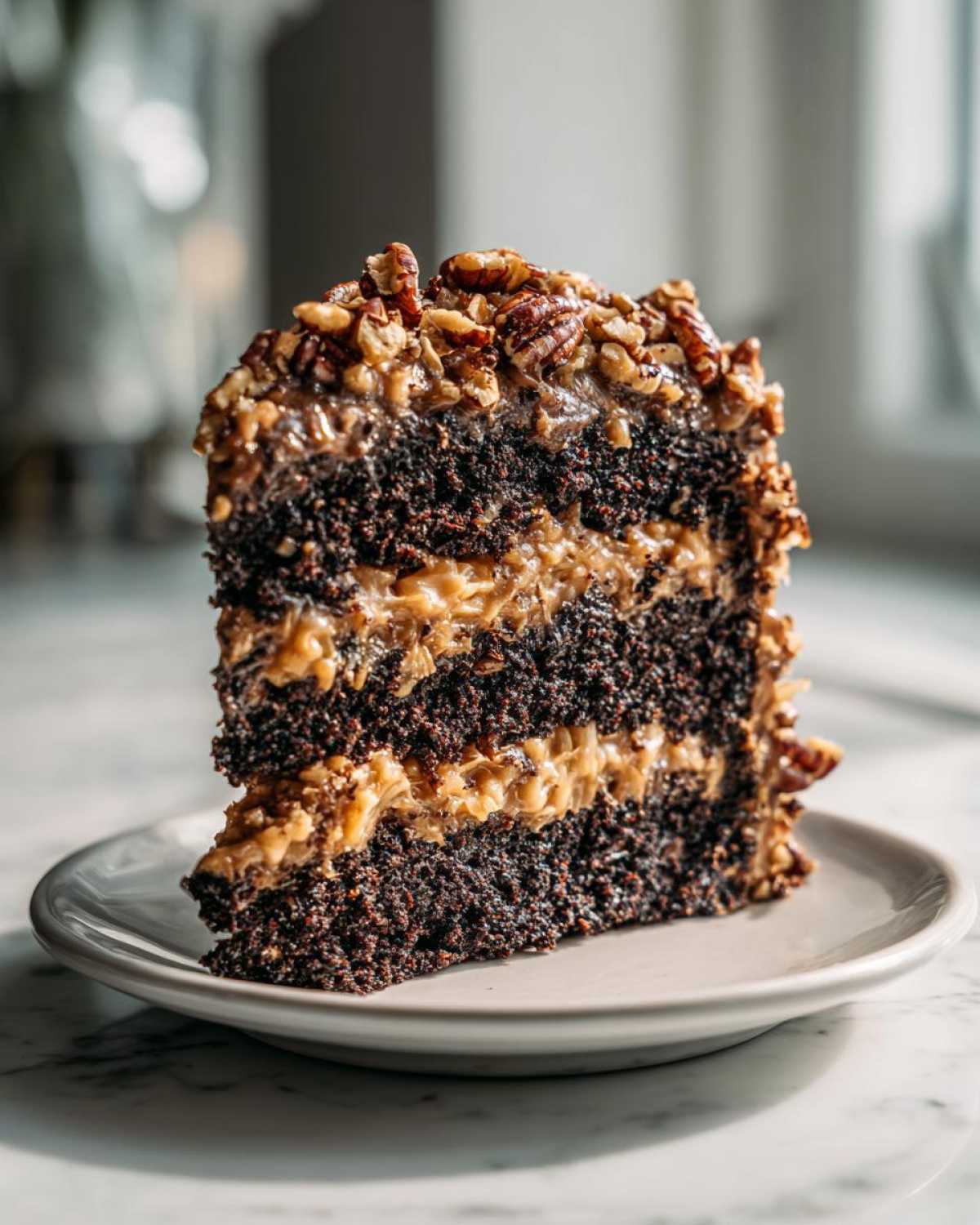
Oh, you know those desserts that just scream ‘celebration’? Forget your fancy French pastries for a minute—when it comes to true, over-the-top American indulgence, nothing beats a properly made German Chocolate Cake. I’ve tried every shortcut, every boxed mix, and honestly? They fall flat. This isn’t just some chocolate cake; it’s an architectural masterpiece of moist crumb and sticky, buttery, crunchy frosting.
I spent years trying to nail the texture of those old-school Southern bakeries. The cake layers have to be dark, tender, and hold up to that incredible caramel-sweet coconut topping without getting soggy—that’s the trick! My version finally works flawlessly every single time, and trust me, it’s all about balancing the melted chocolate in the batter with folding in those glorious, stiff egg whites at the end. If you’re looking for the definitive, reliable recipe that yields that perfect moist texture and signature frosting, you’ve found it.
The History Behind the Classic German Chocolate Cake
Okay, before we get elbow-deep in buttermilk and pecans, let’s clear up the history because people always ask me this! Nope, this amazing cake didn’t come from Germany. I know, totally misleading, right?
It’s actually named after an American baker, Samuel German. He worked for the Baker’s Chocolate Company back in 1852 and developed a specific sweet baking chocolate bar. Fast forward to the 1950s, and a Texas home cook found his recipe on the back of the chocolate bar wrapper. She tweaked it slightly, added the famous coconut-pecan topping, and voilà—she made history!
So when you’re baking this, remember you’re honoring a true American culinary moment. It’s tradition, not geography!
Essential Ingredients for German Chocolate Cake
Gathering your supplies is half the battle, especially with a vintage recipe like this. Don’t try to substitute ingredients here, especially in that frosting—it’s what makes this dessert iconic! Seriously, make sure you have everything measured out before you start whipping things up. Having everything ready makes the process smooth, especially when you need to move fast between mixing bowls. I included a link for making great vanilla cupcakes if you ever want a detour, but stick to the list below for the real deal!
For the Moist Chocolate Cake Layers
We’re using melted unsweetened chocolate here, not cocoa powder alone, which is the secret to that deep, almost fudgy richness. Also, notice the separated eggs! Those whites get whipped to fluffy clouds, giving the cake body without making it tough.
- 1 cup unsalted butter, softened—and I mean softened, not melted!
- 2 cups granulated sugar
- 4 large eggs, separated (we use the yolks for flavor/moisture and the whites for lift)
- 1 teaspoon vanilla extract
- 1 1/2 cups all-purpose flour
- 1 teaspoon baking soda
- 1/2 teaspoon salt
- 1 cup buttermilk (don’t skip this, it reacts perfectly with the baking soda!)
- 4 ounces unsweetened chocolate, melted and cooled (let it cool so it doesn’t scramble your butter/sugar mix!)
For the Signature Coconut Pecan Frosting
This is the star of the show, the part that makes everyone ask for the recipe. You absolutely need flaked coconut—get the sweetened kind for the best texture—and some nice chopped pecans. Cook this slowly; rushing it guarantees a runny mess, and nobody wants that!
- 1 cup granulated sugar (for the topping itself)
- 1/2 cup evaporated milk (this is key for the caramelizing texture)
- 1 cup chopped pecans
- 1 1/2 cups flaked coconut
- 4 large egg yolks (for thickening the custard base)
- 1/2 cup unsalted butter (for the topping)
- 1 teaspoon vanilla extract (for the topping)
Step-by-Step Instructions for the Best Homemade Chocolate Layer Cake
Alright, deep breaths! This is where the magic happens, and I promise you, having all your ingredients ready makes this process flow like butter. We’re not just mixing things; we’re building structure for a seriously moist cake. If you follow these steps for assembly, you’ll have a showstopper. If you like learning about other perfect layers, check out my notes on making fluffy vanilla layers too; the creaming technique is similar!
Baking the Chocolate Cake Layers
First things first: get that oven preheated to 350°F (175°C). Don’t put your pans in yet! Grease and flour those two 9-inch rounds so nothing sticks later—I always use parchment paper circles on the bottom just in case the cake tries to rebel.
- In your biggest bowl, cream together that softened butter and the first two cups of sugar. You want this light and fluffy—like pale yellow beach sand. Beat those four egg yolks in one at a time, mixing well after each one goes in, then swirl in the vanilla.
- Now for the dry stuff. In a separate bowl, whisk your flour, baking soda, and salt together until they look totally uniform.
- In a small bowl, combine your buttermilk and that melted chocolate (make sure it’s cooled down a bit!).
- Time for the alternating dance: Add about a third of your dry ingredients to the butter mixture and mix until just combined. Then pour in half of your chocolate milk mixture and mix gently. Keep alternating—dry, wet, dry—always starting and ending with the dry ingredients. Stop as soon as you don’t see flour streaks anymore.
- Now, beat those four reserved egg whites in a clean, dry bowl until they form stiff, glossy peaks. When you lift the whisk, they should stand straight up! Gently, and I mean *gently*, fold those whites into the cake batter. This is what gives you that lift and tenderness, so don’t deflate them!
- Divide the glorious batter into your prepared pans. Pop them into the oven for 30 to 35 minutes. You’ll know they are done when a wooden pick comes out clean from the center. Let them sit in the pans for exactly 10 minutes before turning them out onto a cooling rack to cool completely. Don’t rush this cooling part!
Making the Coconut Pecan Filling Recipe Not Runny
Listen up because this is the most important part of your entire baking adventure! If you rush this filling, it ends up weeping all over your counter, and nobody wants that sticky, sad mess. We are making a custard base here, so patience is required.
- Grab a medium saucepan. Combine the 1/2 cup butter, the 1 cup of sugar (for the topping), the evaporated milk, and the four egg yolks. Whisk it all together constantly while it heats over medium heat.
- Keep stirring! You are looking for the mixture to visibly thicken to the point where it coats the back of a spoon. You should be able to draw a clean line across the spoon with your finger. This should take about 8 to 10 minutes.
- Warning! Do not let it boil! If it boils, the eggs will curdle, and you’ll end up with sweet scrambled pecans. As soon as it coats the spoon, yank it off the heat immediately!
- Once it’s off the burner, quickly stir in your chopped pecans, flaked coconut, and vanilla extract. Let this amazing mixture cool down just a bit until it feels spreadable, almost like a thick jam. Resist the urge to use it hot!
Assembling Your German Chocolate Cake
The layers are cool? The frosting has set just enough? Perfect! Now we put the puzzle together.
Put one cooled cake layer right on your serving stand or cake plate. Use exactly half of that coconut-pecan frosting and spread it evenly over the top—don’t press too hard; you don’t want to tear the delicate layers!
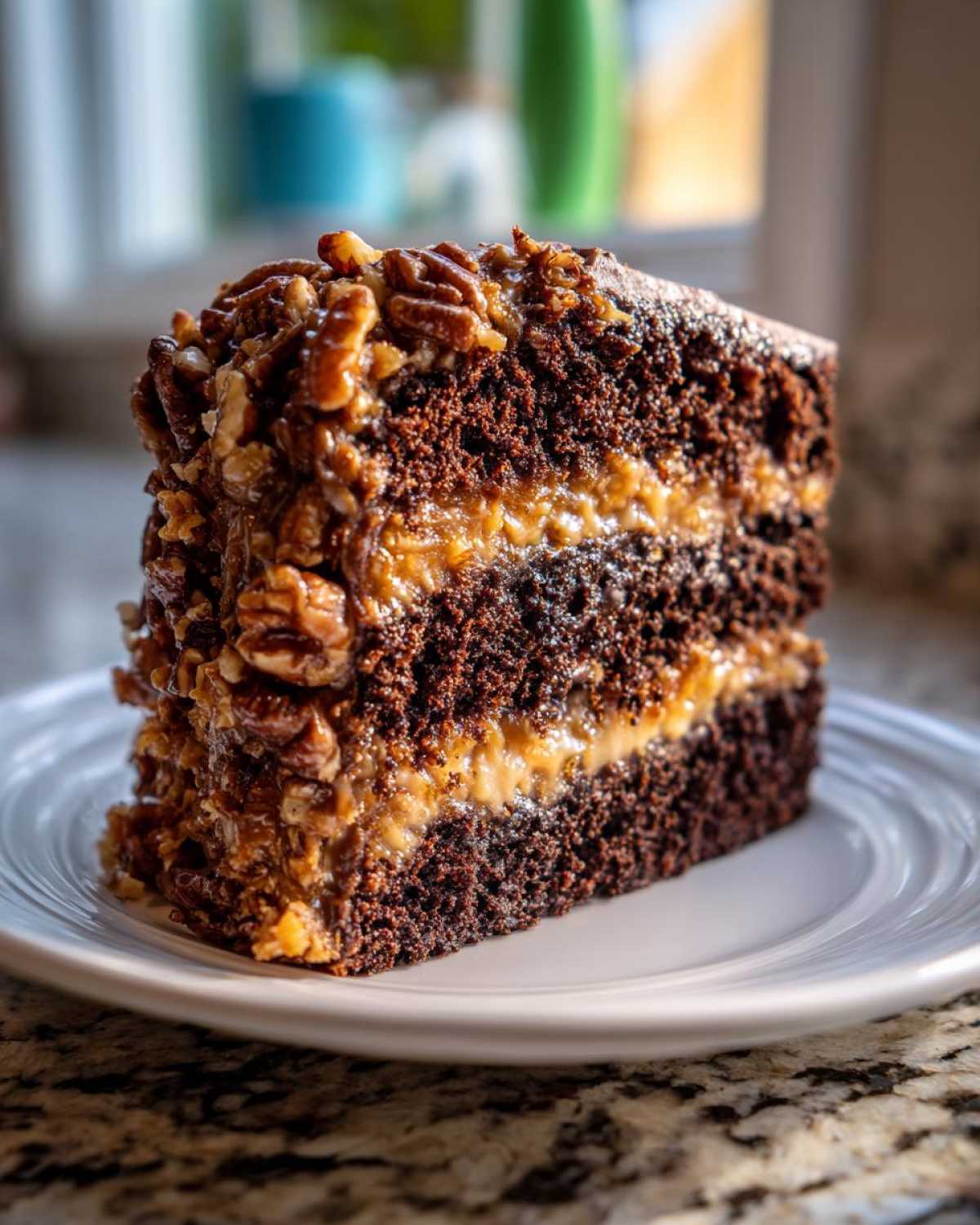
Carefully place the second cake layer on top. Use all the remaining frosting to cover the top and smooth the sides. If you want an extra fancy look, you can reserve a few perfect pecan halves for the very top center. That’s it—you’re done! Step back and admire your edible monument.
Tips for Success with German Chocolate Cake
Even the simplest steps can trip you up when you’re making a classic like this, so I wanted to pull together the three biggest lessons I learned after ruining my first few batches. Follow these, and you’ll avoid the most common pitfalls, especially concerning that temperamental coconut topping!
First, remember those room temperature ingredients I mentioned earlier? They are a non-negotiable for the cake batter! If your butter is too cold, or your eggs are straight from the fridge, they won’t emulsify with the sugar properly. You need that perfect creamy base so the batter can hold those air bubbles from the egg whites. If you forget, run your eggs under some warm water for about 60 seconds before cracking them! It helps immensely.
My second biggest tip is about the melted chocolate. You absolutely *must* let your four ounces of unsweetened chocolate cool down until it’s just warm to the touch before you add it to the creamed butter and sugar, or later when mixing with the buttermilk. If it’s hot, it will melt your butter and deflate the whole mixture immediately. We want rich chocolate flavor, not a puddle!
Finally, let’s talk about the frosting again because it’s made or broken right there on the stovetop. I mentioned not boiling it, but the other huge mistake people make is taking it off the heat too soon. If it doesn’t coat the back of a spoon—if it just runs right off—it will soak into your cake layers like syrup instead of sitting beautifully on top. You need that slow cook time to develop that thick, caramel-y texture. If you want more detailed advice on general chocolate cake baking, I wrote a whole piece on tips for baking perfect chocolate cake that you definitely should peek at!
Ingredient Notes and Substitutions for German Chocolate Cake
I know sometimes you open the pantry and you’re missing one key item, and you think, “Can I cheat?” With this cake, especially, I urge you to try and stick to the list! These vintage recipes were designed around very specific ingredients that interact chemically, like tiny baking wizards.
Let’s talk about the buttermilk in the cake layers first. If you don’t have buttermilk, don’t panic, but please don’t use plain milk! That slight acidity in the buttermilk is crucial; it tenderizes the flour structure beautifully and reacts with the baking soda to give the cake its lift, preventing it from turning into a dense brick. If you’re truly stuck, you can whip up a quick substitute: take one cup of whole milk and stir in one tablespoon of white vinegar or lemon juice. Let that sit on the counter for about five minutes until it curdles slightly. That’s your emergency buttermilk!
Now, the frosting—this is where we cannot stray too much! The evaporated milk is specifically different from regular milk or heavy cream. Evaporated milk is concentrated—the water content is reduced—which means when you cook it down with the egg yolks and butter, it creates that beautiful, thick, caramel-like custard base for the coconut and pecans. If you try to use regular milk, you’ll end up cooking forever and still have a runny, weak topping that slides right off the cake.
And finally, the chocolate. We call for four ounces of unsweetened chocolate. This is vital for the flavor profile because it provides bitterness to balance the heavy sugar in both the cake and that super-sweet frosting. If you only have sweetened baking chocolate on hand, you’ll need to reduce the amount of granulated sugar in the cake batter by at least half a cup, or it will be sickeningly sweet. Trust me, the unsweetened bar is worth tracking down for that classic, sophisticated chocolate flavor!
Variations on the Traditional German Chocolate Cake Recipe
While this classic combination of dark chocolate and sticky pecan topping is pure perfection, sometimes you just need a little shake-up, right? I love knowing I can slightly pivot the recipe without losing that essential German Chocolate Cake DNA. You don’t have to just stick to the towering layer cake! These tweaks are easy and keep the spirit of a great, decadent chocolate dessert alive.
My favorite easy approach when I’m short on time—or just feeling lazy—is skipping the full frosting job and going for a simple, shiny glaze. If you’re okay with losing that crunchy texture, this is so fast. You just melt about 4 ounces of semi-sweet chocolate with a couple of tablespoons of good butter and maybe a tiny splash of corn syrup (just enough to keep it glossy and prevent seizing).
Seriously, melt it gently—I do this in a double boiler or microwave in 20-second bursts. Once it’s smooth and shiny, drizzle it right over the cooled cake layers. It sets up beautifully firm and gives you that gorgeous, rich chocolate shell. It’s not the traditional look, but it tastes amazing, especially if you dust the top with a few extra toasted pecans before it sets.
Another idea is thinking about the format. Those 9-inch layers can be a pain to frost perfectly, so what if you change the vessel? This batter works surprisingly well when baked in a standard bundt pan. You’ll need to increase the baking time because the center is much thicker, so start checking around the 50-minute mark. When you pull that bundt out, you have two choices: skip the coconut pecan filling entirely and just dust it heavily with powdered sugar, or, if you want that gooey filling, cook the frosting until it’s slightly *thicker* than normal, and spoon it into the crevices of the bundt pan *after* the cake is cooled but before you invert it. That way, it sinks in nicely!
Finally, if you love the flavor profile but need something completely different, consider using the cake batter as a base for something like a layered trifle—just crumble up the baked layers, mix them with a little coffee or chocolate syrup for moisture, and layer them in a big glass bowl with alternating layers of stabilized whipped cream. It’s not quite the same as my recipe for chocolate overnight oats, but it’s just as comforting and much quicker to assemble when company is coming!
Storage and Reheating Instructions for German Chocolate Cake
This is where we get down to the reality of hosting—sometimes you just can’t eat a whole cake in one afternoon! That glorious coconut pecan frosting we worked so hard on is basically a cooked custard made with egg yolks and evaporated milk. Because of that, you absolutely cannot leave this cake sitting on the counter for hours. We need to refrigerate it to keep things safe and stable.
Once your beautiful cake is fully assembled, cover it loosely with plastic wrap or put it under a cake dome, and pop it into the fridge. It usually lasts really well for about three to four days. If you notice the edges of the frosting starting to get a little firm or dry after day three, that’s normal; the butter is just getting very cold!
Now, here’s the crucial serving instruction: Never, ever serve this cake straight out of the refrigerator! When it’s ice cold, the frosting turns hard like peanut brittle, and the chocolate cake layers seize up and taste dense. You need to let it sit out on the counter for at least an hour, maybe 90 minutes if your kitchen is chilly, before you slice into it.
That little resting period warms the butter back up in the frosting, making it soft, gooey, and perfectly spreadable again. This allows you to really appreciate how moist that bottom layer is supposed to be! Trust me, pulling it out early is the difference between a good slice and an absolutely *perfect* slice.
Serving Suggestions for This Decadent Chocolate Dessert
Honestly, once this German Chocolate Cake is assembled, it really doesn’t need much else! It’s already rich, sweet, and loaded with texture between the cake, the pecans, and the coconut. It really stands on its own as the ultimate decadent chocolate dessert.
However, if you’re serving this after a big meal, I always suggest having something truly simple and slightly tart on the side to cut through all that sweetness. A small dollop of freshly whipped heavy cream—and I mean just cream, maybe sweetened with a tiny sprinkle of powdered sugar, but no vanilla—is fantastic. That lightness balances the heavy, buttery caramel structure of the topping perfectly.
And, of course, you need the perfect beverage! A strong cup of black coffee is my go-to pairing. The bitterness of the coffee really enhances the deep, dark chocolate notes in the cake layers. If you’re looking for other rich, comforting things to serve afterward, I have a collection of decadent chocolate dessert recipes you might enjoy looking through!
Presentation-wise, I always serve slices on plain white plates. The colors—that deep chocolate brown, the golden caramel nuts, and the white coconut flakes—are vibrant enough on their own. A single slice, maybe with that side of whipped cream, is all the fanfare you need to make a spectacular presentation.
Frequently Asked Questions About German Chocolate Cake
Since this recipe involves a bit of technique—especially with that incredible topping—I figured I’d round up the most common worries folks have when making this famous cake. Don’t sweat it if you’re new to baking; this cake is much easier than it looks, especially if you follow my step-by-step guide for the German Chocolate Cake for Beginners!
Can I make the layers of the German Chocolate Cake a day ahead?
Absolutely, you can! In fact, I sometimes prefer it that way because it breaks up the work. The key is making sure those chocolate layers are completely, 100% cool before you do anything else. Once they are room temperature, I wrap each layer tightly in plastic wrap, and then wrap them again in a layer of foil. This locks in all that moisture you worked so hard to achieve.
Store the wrapped layers on the counter if you plan to frost them the next morning, or pop them in the fridge if you’re waiting longer than 24 hours. When you are ready to frost, just unwrap them and let them sit on the counter for about 30 minutes to take the chill off before you start layering. They should look just as moist as when they came out of the pan!
What is the secret to a Coconut Pecan Filling Recipe Not Runny?
This is the question I get asked the most about this cake! The secret, truly, is patience and watching the temperature, because we are essentially making a soft-set custard for that filling. You have to cook the mixture of butter, egg yolks, evaporated milk, and sugar over medium heat, and you must stir constantly! If you stop stirring for even a minute, the bottom scorches, or the eggs clump up.
The visual test is everything: You need that mixture to get thick enough to thickly coat the back of a spoon. Don’t worry about using a candy thermometer; just dip a spoon in, pull it out, and run your finger across the back of the spoon. If the line stays separated and clean, it’s ready. If it oozes back together, keep cooking for another minute or two. As soon as it hits that point, take it OFF the heat immediately because it will keep thickening as it cools down.
How do I store leftovers of this rich fudge cake with caramel topping?
Because of that wonderfully gooey, custard-based topping, you need to treat this leftover cake like a dairy item. Once you’ve finished assembling your rich fudge cake with caramel topping, cover it loosely with plastic wrap—make sure the wrap isn’t touching the frosting directly unless you put a toothpick or two in the top to support it—and store it in the refrigerator.
It holds up wonderfully in the fridge for about 3 to 4 days. Just like I mentioned before, the biggest mistake is eating it cold! Take your slice out of the fridge about an hour before you plan on eating it. That slight warming allows the butter in the topping to soften back up, making it deliciously gooey again, and it lets the chocolate cake layers regain their perfect, tender crumb.
Share Your Perfect German Chocolate Cake
Now that you have successfully navigated the mysterious waters of the coconut-pecan topping and baked up those deeply flavored chocolate layers, I truly want to hear about it! Baking is meant to be shared, and seeing your gorgeous creations always makes my day.
If you followed along and ended up with a show-stopping, moist, and perfectly frosted cake, please do me a huge favor and give this Classic German Chocolate Cake Recipe a rating right here on the site! Five stars is always lovely, but I really want to know what made it special for you.
Did you serve it for a birthday? Did the frosting stay perfectly thick the first time? Did you end up adding any secret little twists of your own? Drop all those wonderful details, tips, and photos in the comments below!
Seriously, don’t be shy! We home cooks have to stick together, and your success story might be the exact encouragement someone else needs to tackle this legendary dessert next week. Happy baking, and thank you for bringing this piece of American dessert history into your kitchen!
Print
Classic German Chocolate Cake Recipe
- Total Time: 65 min
- Yield: 12 servings
- Diet: Vegetarian
Description
A detailed recipe for a moist chocolate layer cake topped with the traditional coconut-pecan frosting.
Ingredients
- 1 cup unsalted butter, softened
- 2 cups granulated sugar
- 4 large eggs, separated
- 1 teaspoon vanilla extract
- 1 1/2 cups all-purpose flour
- 1 teaspoon baking soda
- 1/2 teaspoon salt
- 1 cup buttermilk
- 4 ounces unsweetened chocolate, melted and cooled
- 1 cup granulated sugar (for frosting)
- 1/2 cup evaporated milk
- 1 cup chopped pecans
- 1 1/2 cups flaked coconut
- 4 large egg yolks (for frosting)
- 1/2 cup unsalted butter (for frosting)
- 1 teaspoon vanilla extract (for frosting)
Instructions
- Preheat your oven to 350 degrees F (175 degrees C). Grease and flour two 9-inch round cake pans.
- In a large bowl, cream together 1 cup butter and 2 cups sugar until light and fluffy. Beat in the 4 egg yolks one at a time, mixing well after each addition. Stir in 1 teaspoon vanilla extract.
- In a separate bowl, whisk together the flour, baking soda, and salt.
- In a small bowl, combine the buttermilk and melted chocolate. Add alternately with the dry ingredients to the butter mixture, beginning and ending with the dry ingredients. Mix until just combined.
- In a clean bowl, beat the 4 egg whites until stiff peaks form. Gently fold the egg whites into the cake batter.
- Divide the batter evenly between the prepared pans. Bake for 30 to 35 minutes, or until a wooden pick inserted into the center comes out clean. Let the cakes cool in the pans for 10 minutes before inverting them onto a wire rack to cool completely.
- Prepare the frosting: In a medium saucepan, combine 1/2 cup butter, 1 cup sugar, evaporated milk, and 4 egg yolks. Cook over medium heat, stirring constantly, until the mixture thickens enough to coat the back of a spoon (about 8 to 10 minutes). Do not boil.
- Remove the frosting from the heat. Stir in the pecans, coconut, and 1 teaspoon vanilla extract. Let the frosting cool slightly until it is spreadable.
- Assemble the cake by placing one cooled layer on a serving plate, spreading half of the frosting over it. Top with the second cake layer and frost the top and sides with the remaining frosting.
Notes
- For a richer chocolate flavor, use high-quality unsweetened chocolate.
- To prevent the frosting from being runny, cook it slowly and ensure it coats the back of a spoon before removing it from the heat.
- If you prefer a glaze instead of the traditional frosting, melt 4 ounces of semi-sweet chocolate with 2 tablespoons of butter and 1 tablespoon of corn syrup for a simple ganache topping.
- Prep Time: 30 min
- Cook Time: 35 min
- Category: Dessert
- Method: Baking
- Cuisine: American
Nutrition
- Serving Size: 1 slice
- Calories: 450
- Sugar: 45g
- Sodium: 250mg
- Fat: 28g
- Saturated Fat: 14g
- Unsaturated Fat: 14g
- Trans Fat: 0.5g
- Carbohydrates: 50g
- Fiber: 2g
- Protein: 6g
- Cholesterol: 120mg