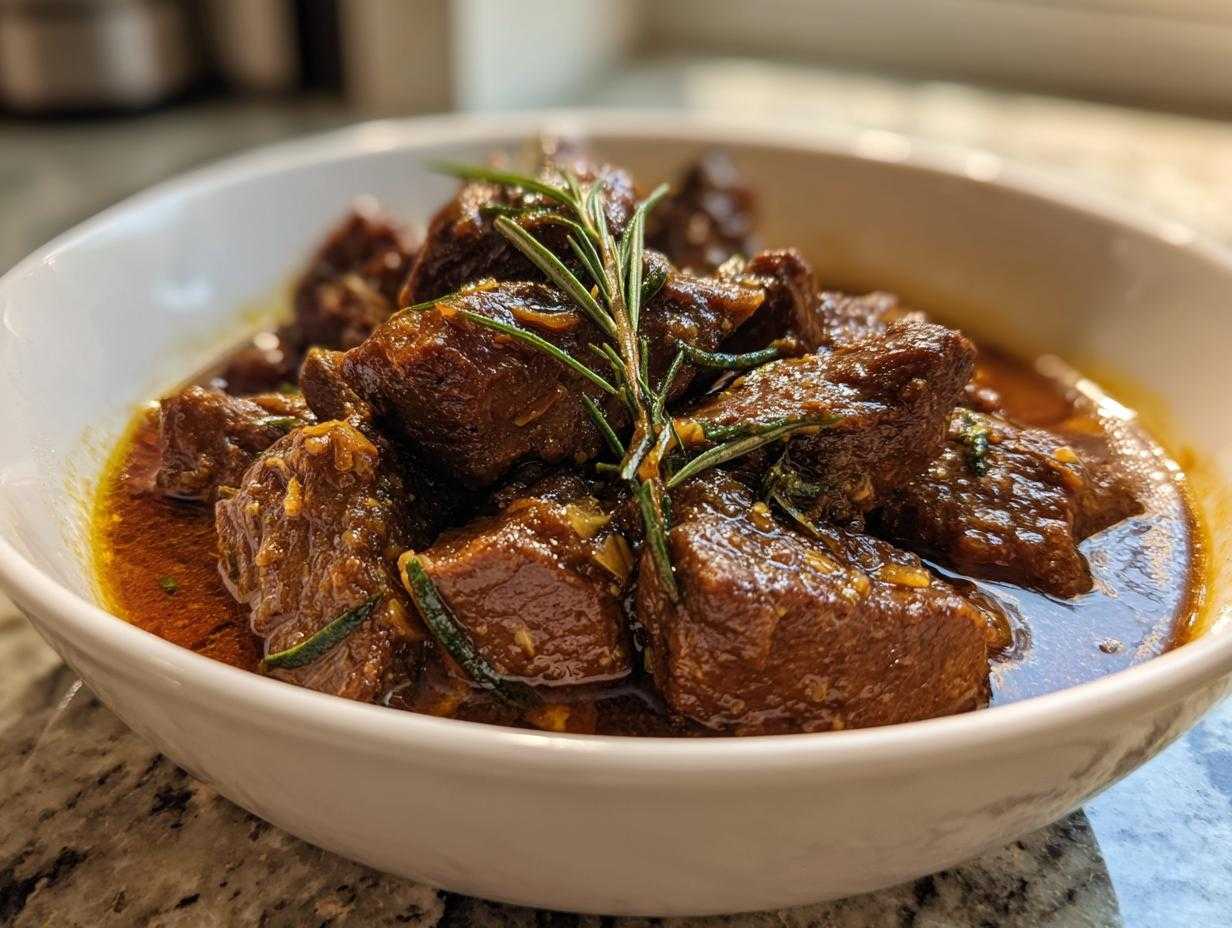
When you think of Rome, sure, pasta comes to mind, but let me tell you, the true heart of that city’s winter cooking beats in a pot simmering low on the stovetop. Forget those rushed weeknight dinners; we’re talking about history you can taste! I’m obsessed with recreating those deep, rustic flavors from the Italian countryside right here in my own kitchen. And friends, there is nothing quite like mastering the Roman Lamb Stew (Abbacchio). This isn’t just pot roast; it’s tender, wine-braised lamb scented with pure mountain herbs. I promise you, once you nail the gentle simmer on this authentic recipe, you’ll feel like you’ve snagged a secret handed down through generations of Roman chefs.
Why This Roman Lamb Stew (Abbacchio) Recipe Works So Well
Honestly, people rush lamb too much, and that’s a tragedy! This traditional approach to Roman Lamb Stew (Abbacchio) is all about patience, and that’s what separates a chewy meal from something divine. It’s rooted in true Italian technique, making every single step count. When you follow this braising method, you are guaranteed incredible results.
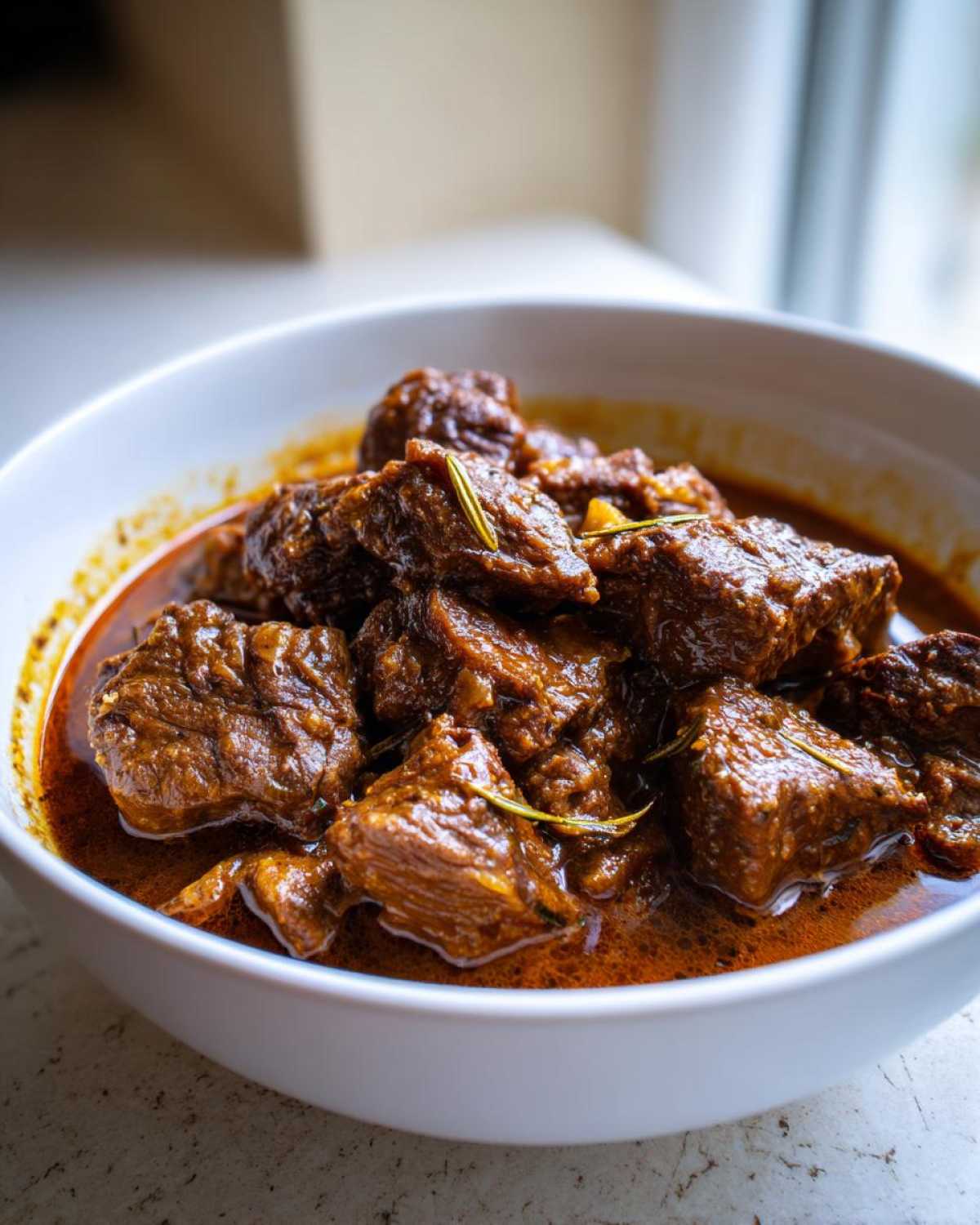
- It delivers truly fork-tender meat; that connective tissue just melts away!
- The use of dry white wine creates a bright, complex base that screams authenticity.
- We stick only to the core Roman herbs—rosemary and garlic—for that signature taste.
Achieving Tender, Fall-Off-The-Bone Lamb
The secret weapon here is the low-and-slow cooking method we use in the Dutch oven. We aren’t boiling the lamb; we’re coaxing it. The low, steady heat over two or more hours allows the tough collagen in cuts like the shoulder or neck to convert into gelatin. That gelatin is what gives you that luxurious, mouth-coating texture. This specific braising ensures your Roman Lamb Stew (Abbacchio) is tender without falling apart into mush—it holds its shape beautifully!
The Authentic Flavor Profile of Roman Lamb Stew (Abbacchio)
What makes this dish uniquely Roman? It’s the simplicity and quality of the aromatics. Forget heavy tomato bases or fussy spices. Real Roman cooking relies on the power of a few perfect ingredients working together. We use fresh rosemary—not dried, please—smashed garlic cloves, and a sharp, dry white wine. That wine reduction right before you add the broth is crucial for building the classic, slightly tangy depth that you expect from an Authentic Abbacchio Stew.
Essential Ingredients for Authentic Abbacchio Stew
Okay, let’s talk shopping! To make this dish really sing, we have to respect the ingredients. This isn’t the time to use whatever lamb shank is lurking in the back of the freezer. Authenticity starts at the butcher counter. Keep your list tight, because Roman cooking shines when the ingredients are right, not when there are twenty things swimming in the pot. We are making Roman Lamb Stew (Abbacchio) here, so quality counts!
Here is what you absolutely need for a truly magnificent batch:
- Two pounds of lamb shoulder or neck, cut into nice, generous 1.5-inch pieces.
- A good glug of quality olive oil—don’t skimp here!
- Two cloves of fresh garlic, and I mean *smashed* so they release all their flavor.
- One large, beautiful sprig of fresh rosemary. This is non-negotiable!
- Half a cup of dry white wine—something you’d actually drink!
- One cup of lamb or chicken broth—I prefer lamb broth if I can find it, but chicken works in a pinch.
- About a quarter cup of all-purpose flour for dredging (this helps thicken our sauce later).
- Salt and pepper, seasoned exactly to your taste.
Ingredient Notes and Substitutions for Roman Lamb Stew (Abbacchio)
We need to get specific about these items, especially if you are swapping things out. For the meat, I always tell people that the Best Lamb Cuts for Italian Stew are the ones with a little fat and bone, like the shoulder or neck. These areas have the necessary connective tissue that melts into the sauce, giving you that unbelievably rich texture. Don’t go straight for the expensive loin, trust me!
When it comes to the wine, use a very dry white—think Pinot Grigio or a crisp unoaked Chardonnay. Nothing sweet! The acidity cuts through the richness of the lamb beautifully. And please, please use a whole sprig of fresh rosemary. It infuses the oil and the broth perfectly. If you try to substitute with dried rosemary, you’ll end up with a pot that tastes dusty, not bright like a true Roman Lamb Stew (Abbacchio) should.
If you happen to have some caramelized onions on hand from another project, feel free to toss those into the pot along with the garlic for an extra layer of sweetness! You can grab my recipe for perfect onion topping here: caramelized onions ultimate guide sweet topping. It adds a little something extra without losing that traditional Roman foundation.
How to Prepare Roman Lamb Stew (Abbacchio) Step-by-Step
This is where the magic happens, but you have to be mindful! You can’t rush heritage cooking. We take our time to build layers of flavor before we even think about simmering this Roman Lamb Stew (Abbacchio). Follow these steps closely, and you’ll see why the Romans have been doing it this way forever. Timing is everything, so gather your mise en place before you even turn the stove on!
Preparing and Browning the Lamb
First things first, you need to dry those lamb pieces really well—gently pat them with paper towels. Excess moisture stops them from getting that deep, gorgeous brown crust we need. Once they are dry, give them a light sprinkle of salt and pepper, and then dust them *very* lightly in that flour. Shake off any extra; we just want a whisper of flour clinging on. Heat up your olive oil in that heavy Dutch oven over medium-high heat. You want the oil shimmering but not smoking. Now, and this is important: brown the lamb in batches! If you crowd the pot, the temperature drops, and you end up steaming the meat instead of searing it. Brown them really well on all sides—maybe 3 or 4 minutes per batch—then pull them out and set them aside.
Building the Braising Liquid for Classic Italian Lamb Stew
Once all the lamb is safely resting, drop the heat to medium. Toss in your smashed garlic cloves and that whole sprig of rosemary. Let them sizzle for maybe just a minute until you can really smell that garlic perfume. Don’t let it burn, or the whole stew tastes bitter! Next, you pour in that half-cup of dry white wine. This is the best part of the whole process for developing a Deep Flavor Lamb Stew. Let it bubble furiously and use a wooden spoon to scrape up all those tasty brown bits stuck to the bottom of the pan—that’s called deglazing, and those bits are pure gold. Cook that wine down until it’s reduced by half, maybe 3 or 4 minutes. After that, add your broth, enough so the meat is mostly submerged. This foundation results in a marvelous Classic Italian Lamb Stew.
The Slow Cooking Process for Authentic Abbacchio Stew
Okay, time to tuck it in! Put all that beautifully browned lamb back into the pot with the wine and broth mixture. Bring everything up to a gentle simmer—not a rolling boil, just slow, lazy bubbles on the surface. Once it’s simmering, put the lid on tight, slide the heat down as low as your stove will allow, and let it be. Seriously, don’t peek too much. You are looking at 2 to 2.5 hours. This long, patient cooking makes this Authentic Abbacchio Stew unforgettable. When that time is up, the lamb should be so tender that if you poke it with a fork, it just sighs apart. If you’re dabbling in slow cooker methods, you can adapt this for a slow cooker pulled pork style by cooking on low for 6-8 hours, but I still prefer the stovetop!
Tips for Success with Your Roman Lamb Stew (Abbacchio)
Even with a solid recipe, sometimes a stew needs that little extra nudge to go from great to ‘Ma, this tastes exactly like Nonna’s!’ I’ve made this Roman Lamb Stew (Abbacchio) countless times, and I’ve learned a few tricks to head off potential problems before they start.
The biggest area where people mess up is the sauce consistency. Remember that light dusting of flour we used on the lamb at the beginning? Sometimes, especially if your pot isn’t perfectly sealed or your heat fluctuates, you might need a little insurance. If your sauce looks too thin after the two-hour mark, don’t panic! Mix one tablespoon of flour with two tablespoons of cold water until it’s a smooth paste—we call that a slurry. Whisk that in during the last 15 minutes of simmering time. It thickens up beautifully without leaving lumps, which is much better than trying to fix it at the end.
Another thing I always watch for is scorching. Since this Abbacchio simmers so low for so long, it’s easy for the liquid to reduce too much, causing the bottom layer to stick and burn, especially right where the garlic was cooked initially. Do yourself a favor and check the bottom of your pot every 45 minutes or so. Just gently stir the bottom layer—don’t agitate the whole stew too much! If the liquid looks dangerously low, just add half a cup more of warm broth to keep things swimming happily.
Finally, while you are letting this simmer away, don’t forget what you NEED to serve it with. This sauce is meant to soak up every last drop! I highly recommend having some crusty homemade Italian bread ready to go. It’s perfect for mopping up that flavorful sauce left in your bowl afterward. You can find my favorite easy Italian bread recipe if you need a reliable partner for your stew.
Serving Suggestions for Roman Lamb Stew (Abbacchio)
Now that you have this absolutely gorgeous, fall-apart tender Roman Lamb Stew (Abbacchio) simmering away, we need to talk about what gets served alongside it! You can’t just serve this liquid gold on its own; you need something sturdy enough to hold up to that rich, herby sauce. Pasta isn’t the usual pairing for Abbacchio when it’s stewed like this; we keep it rustic, focusing on things that soak up flavor!
The absolute classic partner for any good Italian stew is good bread. I mean seriously good bread. You need something crusty on the outside but soft enough in the center to act like a sponge. If you’re feeling ambitious, my easy Italian bread recipe makes the perfect accompaniment for dipping right into that reduced wine sauce. Don’t let a single drop go to waste!
But let’s talk potatoes because they are my personal weakness when paired with this dish. Boiled potatoes tossed simply in salt and maybe a little parsley are traditional because they are light enough not to compete with the lamb, but oh my goodness, if you want to treat yourself, make some creamy potatoes!
I know, I know, twice-baked potatoes usually feel too fancy for a humble stew, but trust me here. The creamy, cheesy interior of a perfectly prepared twice-baked potato tucked next to a piece of that deeply flavorful lamb? It’s heaven. Check out my recipe for best twice-baked potatoes; they add the richness you want without being heavy.
Keep it simple: use crusty bread to mop up the juices, or serve the Abbacchio Stew right over a bed of polenta if you want something creamier and heartier, though boiled new potatoes are my go-to year-round pairing for this traditional Roman dish.
Storage and Reheating Your Roman Lamb Stew (Abbacchio)
Here’s the best part about making a huge pot of Roman Lamb Stew (Abbacchio): it generally tastes even better the next day! Seriously, the flavors have time to hang out overnight, marry each other, and become deeper and more complex. It’s like the stew is aging perfectly in your fridge. You absolutely should plan on having leftovers because this is a fantastic grab-and-go lunch later in the week.
When you’re ready to store it, make sure the stew has cooled down a bit—don’t put a piping hot pot right into the fridge, that’s not safe! Transfer the stew to an airtight container. I prefer glass containers because they don’t hold onto smells, but any sturdy container works fine. You can keep your Abbacchio Stew safely in the refrigerator for up to four days. If you need to keep it longer, it freezes like a dream! Wrap the containers well or use freezer-safe bags, pressing out as much air as possible before tucking it into the freezer for up to three months.
Reheating is where you have to be gentle, just like when you cooked it! You want to bring that incredible tenderness back without drying out those lovely chunks of lamb. The best way, hands down, is on the stovetop. Transfer the stew to a saucepan over medium-low heat. Cover it, and let it warm up slowly. If you bring it to a boil, you risk tightening the meat back up, and we don’t want that!
If you’re reheating from frozen, make sure you thaw it completely in the fridge overnight first. Then, heat it up slowly on the stovetop. If you’re feeling lazy and use the microwave, use short, 60-second bursts, stirring well in between each burst so the heat distributes evenly. Remember, the goal is gentle warming, not aggressive cooking. Either way, you’re going to end up with perfect, incredibly flavorful Roman Lamb Stew (Abbacchio) again!
Cultural Context: Understanding Abbacchio in Authentic Roman Cuisine Recipes
You know, cooking isn’t just about following steps; it’s about understanding *why* people cooked a certain way centuries ago. When we talk about Abbacchio, we are tapping directly into deep Roman tradition. This isn’t a year-round, everyday type of meal for them; this is a dish wrapped up in celebration and season!
Traditionally, Abbacchio refers specifically to lamb under four months old, which gives the meat a much milder, sweeter flavor than mature mutton. That delicate quality used to be highly sought after, especially leading up to Easter. If you look at Authentic Roman Cuisine Recipes, lamb often plays the lead role during spring festivals. It reflects the agricultural cycle—a celebration of the new life and the best ingredients available at that specific time.
Even though we adapted this version to be a heartier, slower stew—which we often see in the colder winter months when you need that deep comfort food—the heart of the dish remains tied to those prime, young cuts. If you serve this stew in December, you are honoring the Roman tradition of slow-cooked winter meals, but if you serve it in April, you are right there celebrating the traditional Easter lamb feast.
It’s interesting because you might see other Italian stews featuring goat or older lamb, but the term Abbacchio is specific to Rome and its surrounding Lazio region. It carries a weight of regional pride. By using sharp rosemary and clean white wine, we echo that ancient Roman preference for clear, bright flavors over heavy fortification. It’s simple, it’s elegant, and it tells a story of the Roman countryside in every single spoonful of your Roman Lamb Stew (Abbacchio).
Frequently Asked Questions About Roman Lamb Stew (Abbacchio)
I always get so many questions once I share this recipe because people want to make sure they honor this beautiful tradition correctly! Don’t worry if you need to tweak things for your kitchen schedule—we can make this work. Here are some of the things I hear most often about making the perfect Roman Lamb Stew (Abbacchio) at home.
Can I use a Slow Cooker Roman Lamb method?
Oh, absolutely! I totally get it; sometimes you just need to set it and forget it, especially when life gets busy. You can definitely adapt this to create fantastic Abbacchio Recipes Slow Cooked style. The key difference is that the slower heat means you don’t need quite as much liquid right up front, because almost none of it evaporates. Follow your initial browning and deglazing steps, but when you transfer it to the slow cooker, make sure the liquid comes about halfway up the meat, not covering it entirely. Cook on low for 7 to 8 hours, or high for about 4 hours. It comes out equally tender, though I sometimes miss that deep crust you get from the Dutch oven lid!
What is the difference between this and Tuscan Lamb Stew Comparison?
That’s a great question that gets right to the heart of regional Italian cooking! Both are incredible winter dishes, but they are distinct. The Roman version—our Roman Lamb Stew (Abbacchio)—is all about being clean and sharp. We rely heavily on rosemary, garlic, white wine, and sometimes artichokes. Everything is bright! When you look at a Tuscan Lamb Stew Comparison, you often see richer, earthier flavors. Tuscany tends to lean toward red wine instead of white, and they frequently incorporate ingredients like beans (cannellini) or more substantial herbs like sage along with the rosemary. Roman food is about clarity; Tuscan is often about depth through longer cooking with heartier liquids.
Can I use mint in this Roman Lamb Stew (Abbacchio)?
That’s interesting! While this specific Recipe for Abbacchio with Rosemary demands that fragrant herb—rosemary is utterly traditional for savory Roman lamb dishes—mint does pop up in other Italian lamb preparations, especially later in the spring. If you are making this stew in the spring and have fantastic fresh mint, you can certainly swap out half the rosemary for mint, or even just use a tiny pinch of mint toward the end. Just know that you’ll be steering slightly away from the classic Roman profile and closer to something you might find further south or maybe a preparation meant for grilled lamb. For this recipe, stick to the rosemary for that truly authentic flavor!
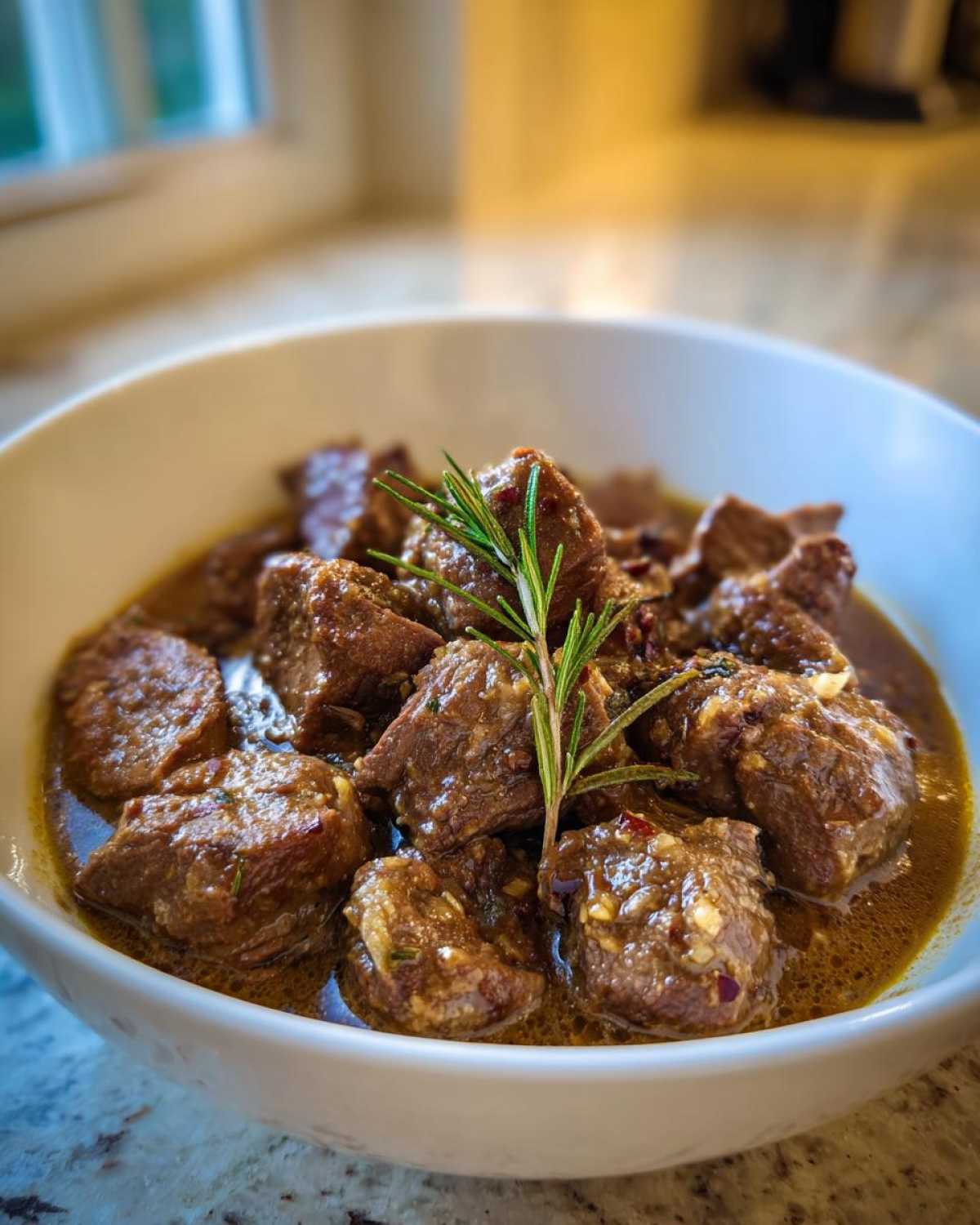
Estimated Nutritional Data for Roman Lamb Stew (Abbacchio)
For those of you tracking macros, or just curious about what goes into this satisfying bowl of Roman Lamb Stew (Abbacchio), here is a general breakdown. Remember, since we are using lamb shoulder which has significant fat content, this is a rich, comforting meal! These numbers are just estimates, of course, based on using the shoulder cut and the broth mentioned in the recipe. If you trim more fat or use a leaner cut, the numbers will shift!
- Serving Size: 1 serving
- Calories: 450
- Protein: 45g
- Fat: 25g
- Carbohydrates: 8g
- Sugar: 3g
You can see the protein content is wonderfully high, which is what you expect from a slow-braised meat dish. Enjoy it with a side of simple greens or crusty bread, and you’ve got a complete, hearty meal!
Estimated Nutritional Data for Roman Lamb Stew (Abbacchio)
For those of you tracking macros, or just curious about what goes into this satisfying bowl of Roman Lamb Stew (Abbacchio), here is a general breakdown. Remember, since we are using lamb shoulder which has significant fat content, this is a rich, comforting meal! These numbers are just estimates, of course, based on using the shoulder cut and the broth mentioned in the recipe. If you trim more fat or use a leaner cut, the numbers will shift!
- Serving Size: 1 serving
- Calories: 450
- Protein: 45g
- Fat: 25g
- Carbohydrates: 8g
- Sugar: 3g
You can see the protein content is wonderfully high, which is what you expect from a slow-braised meat dish. Enjoy it with a side of simple greens or crusty bread, and you’ve got a complete, hearty meal!
Print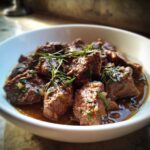
Authentic Roman Lamb Stew (Abbacchio)
- Total Time: 2 hr 50 min
- Yield: 4 servings
- Diet: Low Fat
Description
A traditional recipe for Roman lamb stew, known as Abbacchio, featuring tender lamb braised with white wine, rosemary, and garlic.
Ingredients
- 2 lbs lamb shoulder or neck, cut into 1.5-inch pieces
- 1/4 cup olive oil
- 2 cloves garlic, smashed
- 1 large sprig fresh rosemary
- 1/2 cup dry white wine
- 1 cup lamb or chicken broth
- 1/4 cup all-purpose flour (for dredging)
- Salt to taste
- Black pepper to taste
Instructions
- Pat the lamb pieces dry. Season them lightly with salt and pepper, then lightly dredge them in flour, shaking off excess.
- Heat the olive oil in a heavy-bottomed pot or Dutch oven over medium-high heat.
- Brown the lamb pieces in batches until golden on all sides. Remove the browned lamb and set it aside.
- Reduce the heat to medium. Add the smashed garlic and the rosemary sprig to the pot. Cook for one minute until fragrant, being careful not to burn the garlic.
- Return the lamb to the pot. Pour in the white wine and let it bubble, scraping up any browned bits from the bottom of the pot. Cook until the wine is reduced by half.
- Add the broth. The liquid should mostly cover the meat; add more broth if necessary.
- Bring the liquid to a simmer. Cover the pot tightly, reduce the heat to low, and cook slowly for 2 to 2.5 hours, or until the lamb is very tender and easily pulls apart with a fork.
- Remove the rosemary sprig before serving. Adjust salt and pepper as needed.
Notes
- For the most authentic flavor, use lamb shoulder or neck pieces, as they contain connective tissue that breaks down during slow cooking.
- If you prefer a thicker sauce, mix one tablespoon of flour with two tablespoons of cold water and stir this slurry into the stew during the last 15 minutes of cooking.
- This stew pairs well with crusty bread or simple boiled potatoes.
- Prep Time: 20 min
- Cook Time: 2 hr 30 min
- Category: Dinner
- Method: Braising
- Cuisine: Italian
Nutrition
- Serving Size: 1 serving
- Calories: 450
- Sugar: 3
- Sodium: 350
- Fat: 25
- Saturated Fat: 9
- Unsaturated Fat: 16
- Trans Fat: 0
- Carbohydrates: 8
- Fiber: 1
- Protein: 45
- Cholesterol: 120