
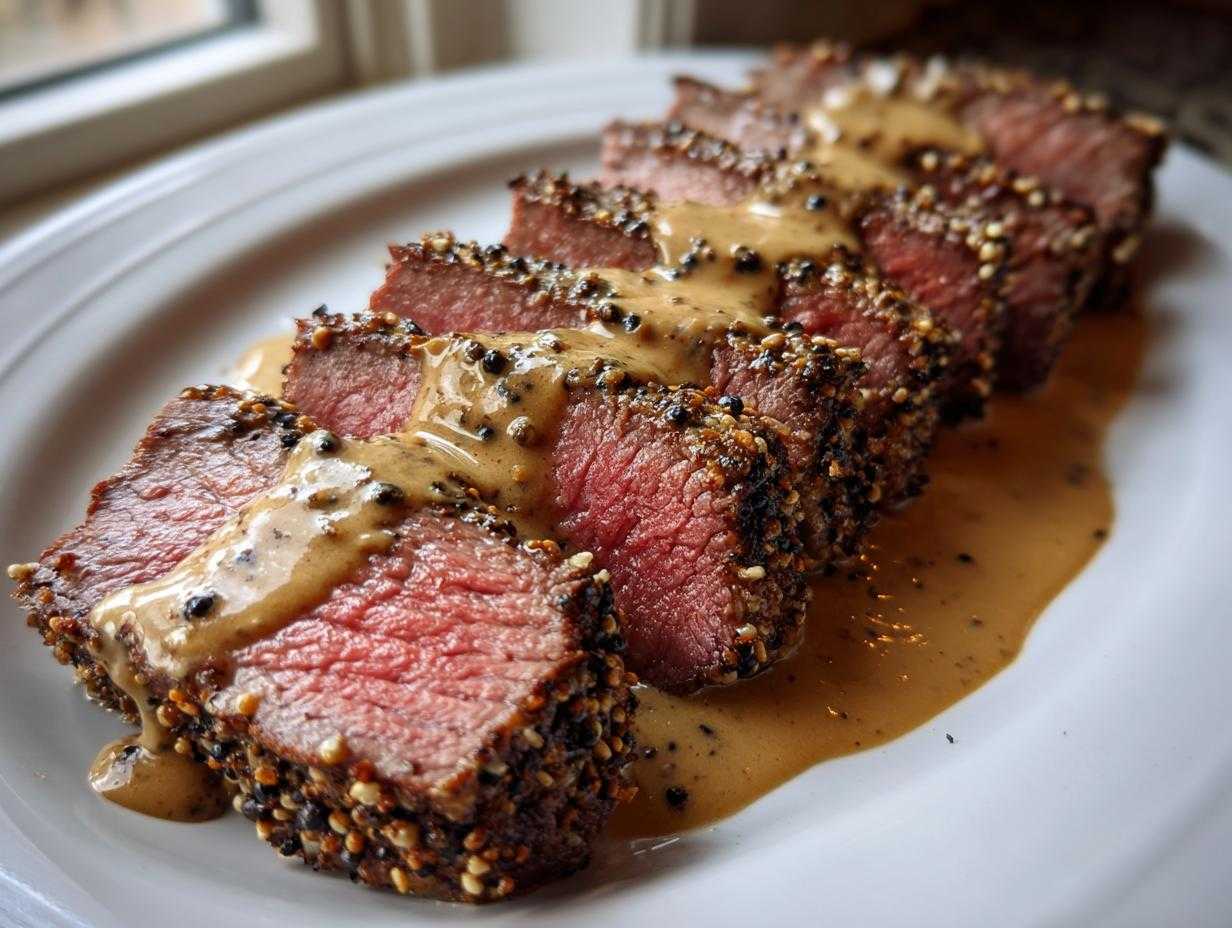
You know those nights when you crave something truly decadent, something that tastes like it cost a fortune at a fancy French bistro, but you want to whip it up right there in your own kitchen? Well, get ready, because tonight’s the night you conquer the classic Steak au Poivre! I promise you, this isn’t some complicated, scary chef thing. After years of tweaking, I’ve boiled down the authentic technique into something so straightforward, you’ll wonder why you ever ordered it out.
This guide is my absolute best, definitive, cannot-fail method for getting that perfectly peppery crust and that unbelievably rich cognac cream sauce clinging perfectly to a beautifully seared cut of beef. Forget dry steaks and thin sauces; we are making restaurant quality right here. Trust me, once you nail this Steak au Poivre, it’s going straight into your rotation for elegant dinner parties or just whenever you need a major weeknight win.
Why You Will Master This Steak au Poivre Recipe
Look, I know French cooking sounds intimidating, but this particular dish is designed for home cooks who want big flavor without the huge time commitment. You totally got this! Once you try this recipe, you’ll see exactly why so many home chefs keep it in their back pockets.
- This recipe delivers an explosion of flavor—that sharp, spicy peppercorn bite followed by the smooth, savory finish of the cream sauce—and it all comes together in under 30 minutes. Amazing!
- We aren’t using any fancy complicated techniques here; it’s just pure skill building for both searing and pan sauce construction.
- It’s incredibly forgiving! Even if your sear is a little uneven, the rich sauce covers up any minor imperfections.
Quick Preparation Time for Steak au Poivre
Seriously, the total time clocking in around 25 minutes means this is the perfect answer for a classy, Quick Weekend Steak Recipe or when you need a gourmet-level, elegant steak on a random Tuesday! Who needs takeout when you can create a world-class meal this fast?
Selecting and Preparing Your Steak au Poivre Cut
Okay, the steak itself is the star, so we can’t skimp here! For true quality, you want something thick—I mean it, aim for about 1 1/2 inches. My absolute favorite cut for this is the beef tenderloin, because honestly, nothing beats that buttery texture. But if you want something with a little more beefy chew, a good quality sirloin works beautifully too. Remember, thinner steaks cook too fast, and you won’t get that lovely pepper crust before the inside turns gray!
Before you do anything else, take them out of the fridge about 30 minutes before cooking. Letting them warm up just a bit helps them sear evenly. Also, pat them super dry with paper towels—moisture is the enemy of a good crust! If you want the inside temperature guide gospel, check out my notes on when to pull your steak off the heat.
Achieving the Perfect Peppercorn Crust for Steak au Poivre
Now for the namesake! You must use whole black peppercorns here. Do not, I repeat, DO NOT use pre-ground pepper. The coarse grind is what gives you that lovely texture and aromatic bite in this Classic French Steak Recipe. I just slip the peppercorns into a plastic bag and use the bottom of my heaviest skillet to give them a few good thwacks. You want pieces—some big, some small—but definitely not dust!
Once they are crushed, take that salt and pepper and just press it *hard* into both sides of the steak. Don’t sprinkle; you want a genuine coating, almost like a little spiced armor. This crust is what gives the final sear its character and flavor!
Ingredients for Authentic Steak au Poivre
Alright, listen up, because having the exact right stuff makes all the difference in nailing that signature flavor. You don’t need a massive shopping list for this, which is part of why I love making Steak au Poivre at home. It’s all about quality over quantity, my friend!
Here is what you need to gather up before you even think about turning on the stove. Make sure everything is measured out and ready to go—we move fast once that pan gets hot!
- Two gorgeous beef tenderloin or sirloin steaks, cut about 1 1/2 inches thick. Thicker is better, remember?
- One tablespoon of coarse salt. Yes, coarse! We want flavor, not just salinity.
- A quarter cup of whole black peppercorns. This is non-negotiable for that epic crust.
- Two tablespoons of unsalted butter, and you’ll need to divide this for searing and sauce making.
- One tablespoon of simple olive oil—just whatever good quality you have on hand.
- A quarter cup of cognac or brandy. This adds that essential warmth and depth to the sauce.
- Half a cup of rich beef stock. A good low-sodium one works great if you’re worried about saltiness later.
- And finally, a quarter cup of heavy cream to tie the whole beautiful sauce together.
If you’re missing the cognac, don’t sweat it too much, but know that it changes the flavor profile slightly. We’ll talk about substitutes later, but for the truly Authentic Steak Au Poivre Technique, the brandy is key!
Step-by-Step Instructions for Steak au Poivre
This is where the magic happens, and honestly, the whole cooking process takes less time than deciding what to wear! The key here is setup—make sure your crushed pepper is on the steak, your salt is ready, and your pan is waiting for you beside the stove. We need high heat for a fantastic crust, so be ready to move quickly. Remember to set those steaks aside to rest after searing; I know it’s hard to wait, but rushing that rest will ruin all your hard work!
Don’t forget to check out my guide on the best pan sauce recipes for steak if you want to level up this skill for other dishes too!
Searing the Peppercorn Crusted Steak
Put your heaviest skillet—cast iron is the absolute best friend here—over medium-high heat. That tablespoon of butter and the oil need to go in first. Wait until that fat is shimmering beautifully; you want it hot enough to sizzle immediately when the steak hits it. Carefully lay those peppery beauties down. Sear them hard for about 3 to 4 minutes on each side. If you’re aiming for that perfect medium-rare, you’re looking for that internal temp around 130°F to 135°F. Once they look gorgeous and crusty, pull them out right away and tent them loosely with foil while they rest. Don’t skip the rest!
Making the Easy Steak Au Poivre Sauce
Now, quick change of pace! Keep the heat on medium. Toss that final tablespoon of butter into the hot pan. Take an old wooden spoon and scrape up all those deep, dark, delicious browned bits stuck to the bottom—that’s pure flavor gold! It’s time for the exciting part: pour in the cognac or brandy. Let it bubble for just 30 seconds, scraping the bottom again. If you’re feeling brave (and have gas), you can tilt the pan to flame it up, but if you’re nervous, just let it cook down for a minute until most of the alcohol cooks off.
Next, pour in the beef stock and let it reduce until the liquid is halved in volume. This concentrates the flavor immensely. Finally, stir in that heavy cream. Let the mixture cook gently until it thickens enough to coat the back of your spoon—it shouldn’t be a rapid boil, just a gentle thickening. That’s your luscious Cognac Cream Sauce for Steak ready to go!

Tips for Restaurant Style Steak Dinner Success with Steak au Poivre
Okay, we’ve seared the pepper crust and built that heavenly sauce, but I want to give you a few little pro secrets. These aren’t just suggestions; they are the things that separate a good home steak from a fantastic one. Achieving that Restaurant Style Steak Dinner feel is all in the details!
My biggest tip, and I can’t stress this enough, is temperature control. You saw that I mentioned 130°F to 135°F for medium-rare, but if you are serious about pulling off that perfect edge-to-edge pinkness, you absolutely must pull out a meat thermometer. Guessing is fun sometimes, but not when you’re working with beautiful filet mignon!
Here are the numbers I live by. Remember to pull the steak *before* it hits the target temperature because it keeps climbing while it rests. For true perfection, aim for about 125°F if you want that perfect medium-rare finish after resting. This level of precision ensures you get the perfect texture every single time. If you want something amazing to serve alongside that perfectly cooked steak—something creamy and decadent—you should definitely look at my recipe for Steakhouse Potato Salad for a gourmet twist!
Also, remember that resting period! It’s when the juices redistribute so you don’t lose all the moisture onto your plate when you slice into it. Fifteen minutes resting time for a thick steak is genuinely worth the agonizing wait. That patience pays off tenfold in tenderness.
Serving Suggestions for Your Steak au Poivre
So you’ve got this gorgeous, richly peppered steak swimming in the finest cognac cream sauce known to man—now what? You can’t just stare at it, right? You need the perfect companions to turn this meal into a true, show-stopping event. This isn’t just dinner; this is your chance to put together some fantastic Gourmet Steak Dinner Ideas that guests will talk about for weeks!
The sauce is thick and luscious, so you absolutely need something substantial to soak it all up. Seriously, don’t leave any of that wonderful pan sauce behind! Forget salad—we are going for decadent comfort here.
My go-to, classic pairings always involve carbs that can carry that sauce weight, and some bright green vegetables to cut through the richness. You can’t go wrong with one of these tried-and-true flavors:
- Frites: Look, it’s French! You need crisp, golden French fries—the thinner the better, so they soak up the sauce beautifully. If you’re feeling ambitious, mastering homemade frites is incredibly satisfying.
- Mashed Potatoes: If you want smooth as silk, creamy mashed potatoes are just perfection. You whip them fluffy with extra butter and maybe a bit of cream cheese, and you get the perfect bed for your steak to rest on while you ladle that sauce over the top.
- Simple Greens: To keep things from getting too heavy, you need something slightly sharp or fresh. Steamed green beans tossed quickly with a touch of lemon zest and sea salt cut right through the richness of the cream sauce beautifully. Don’t overcook them—they need that snap!
If you’re looking for a really unique, creamy side dish that pairs surprisingly well because it has that slightly sharp, savory onion element that compliments beef, you have to try my recipe for Creamy One Pot French Onion Pasta sometime. It sounds weird, but trust me, it works wonders on a steak night!
Storage and Reheating Instructions for Steak au Poivre Leftovers
Oh, leftovers! Sometimes the second-day meal is even better, especially with deeply flavored dishes like this. But you have to treat the steak and the sauce like the separate entities they are, or you’ll end up with tough meat and a broken, oily sauce. I always separate them immediately after we finish eating. That stunning cognac cream sauce does not like to be stored with the beef, trust me on this one!
When the steak is cooling down, carve off any remaining meat from the bones or fatty edges you didn’t eat. Store the sliced or whole steak pieces in a small, airtight container. Pop that in the fridge. Then, take any leftover sauce—and you should always save the sauce!—and put it into its own tiny container. Sauce hates humidity buildup, and it keeps better on its own.
Gently Reheating Your Steak
The goal here is warming the steak up without cooking it another step! If you zap a medium-rare steak for two minutes in the microwave, that beautiful pink center is going to turn gray and tough. Don’t do it!
My favorite reheat method is a quick blast in a medium-hot skillet—no more than a minute per side. Just add a tiny pat of butter (seriously, just enough to coat the pan) and let the residual heat warm it through gently. We are aiming for lukewarm, not piping hot. If your meat is sliced, this process takes mere seconds.
Reviving the Cognac Cream Sauce
Reheating the sauce is surprisingly similar to making it, just in reverse! You want to bring it back to a gentle temperature slowly. Pour the sauce into a very small saucepan over low heat. Give it a whisk constantly as it warms up. If it seems too thick—which it usually will be, because the cream solidifies a bit—add just a teaspoon or two of milk or water to loosen it up until it flows nicely again.
If you notice it looking a little separated or oily, take it off the heat immediately! Whisking vigorously off the burner can often bring it back together. If you try to boil it to fix it, you’ll just make the separation worse. Slow and low heat is the secret to keeping that rich pan sauce emulsified and perfect for pouring over your happily reheated steak!
Storing for Maximum Freshness
Honestly, this dish is best eaten fresh, but if you need to keep it longer, aim to consume the leftovers within two days. The peppercorn crust gets softer as it sits in the fridge, which isn’t ideal, but the flavor profile holds up remarkably well. If you used a thick filet mignon, it tends to hold its texture better than thinner cuts when being reheated later on!
Frequently Asked Questions About Steak au Poivre
I get so many questions about this recipe after people try it, which is the best compliment ever! It means you’re getting into the kitchen and making something incredible. Most of the concerns center around substitutions or making sure the pepper crust is just right for this Steak au Poivre. Let’s clear up a few of those common roadblocks so you can confidently serve this classic dish!
Can I substitute the alcohol in the Steak au Poivre sauce?
That’s a super common question, especially if you’re cooking for kids or just don’t keep brandy lying around! While the cognac or brandy adds a specific, mellow sweetness and depth that is key to the authentic French method, you have options. If you absolutely cannot use alcohol, you can substitute the cognac/brandy with an equal amount of high-quality beef stock, slightly boosted with a teaspoon of balsamic vinegar or Worcestershire sauce.
The vinegar (or Worcestershire) mimics that tangy depth the alcohol provides when it reduces and concentrates. You might lose a little bit of that warm citrus note, but you’ll still end up with a fantastic, rich pan sauce. If you’re looking for another incredible sauce that ditches the alcohol entirely for a totally different flavor profile, you simply must try my recipe for Spicy Vodka Pasta—it’s another one of my weeknight heroes!
How rough should the peppercorn crust really be?
This is where you have to feel like an artist, not a machine! If you grind the peppercorns too finely, you end up with something that tastes bitter and dusty, almost like barbecue rub texture. We want textural excitement! You should crush them so that you see distinct pieces—some as small as coarse salt, and some maybe a quarter of an inch across. When you press them onto the steak, it should look like a good, thick, chunky coating that sticks well. That crunch is what makes eating a crusty Steak au Poivre so much fun!
What happens if my steak is thinner than 1 1/2 inches?
If your steak is on the thinner side, say closer to an inch, you’ll need to adjust your searing time dramatically! Thin steaks cook lightning fast, and if you sear them for the full 3 or 4 minutes per side, you are going to blow right past medium-rare. For a one-inch steak, start checking the temperature after just 2 minutes per side. Use that meat thermometer! Remember, the goal is to get that beautiful pepper crust on the outside before the inside gets overcooked. It’s all about controlling the clock!
Can I make the pan sauce ahead of time?
Honestly, no, I strongly advise against making the cream sauce completely ahead of time. The beauty of the Easy Steak Au Poivre Sauce comes from the rapid deglazing process right after the steak comes out. The flavor is directly tied to those browned bits (the fond) left in the pan! If you try to make it hours before, the sauce loses that fresh, bright flavor and can get a bit heavy or break when you try to reheat it later.
If you must prep, pat your steaks dry and season them hours ahead (but keep them cold). Also, crush your peppercorns and store them in an airtight container. But wait to sear and sauce until the very last minute for the best outcome!
Share Your Perfect Steak au Poivre Creation
Now that you’ve got the golden rule book for nailing that pepper crust and building a world-class cognac cream sauce, the only thing left to do is get cooking! Seriously, I want to hear all about your experience making this happen in your kitchen. Did the butter shimmer just right? Did you manage to resist the urge to skip resting the steak (I struggle every time!)?
Don’t keep that culinary victory to yourself! I thrive on your feedback. Head down to the comments section right now and let me know how your Steak au Poivre turned out. Rate the recipe officially—did it earn five stars in your household? Tell me if you stuck strictly to the filet mignon or if you tried the sirloin variation!
And please, please share pictures! Tag me when you post your perfectly seared, sauce-laden masterpieces on social media. Seeing your beautiful plates is honestly the best part of sharing these recipes. I love seeing how you pair this dish with your favorite sides. Let’s celebrate this amazing, high-end French classic that you just conquered at home!
Print
Authentic Steak au Poivre
- Total Time: 25 min
- Yield: 2 servings
- Diet: Low Fat
Description
Follow these steps to prepare classic Steak au Poivre, featuring a perfectly seared steak coated in crushed peppercorns and finished with a rich cognac cream pan sauce.
Ingredients
- 2 (8 ounce) beef tenderloin or sirloin steaks, 1 1/2 inches thick
- 1 tablespoon coarse salt
- 1/4 cup whole black peppercorns
- 2 tablespoons unsalted butter, divided
- 1 tablespoon olive oil
- 1/4 cup cognac or brandy
- 1/2 cup beef stock
- 1/4 cup heavy cream
Instructions
- Pat the steaks dry with paper towels. Season both sides generously with salt.
- Place the whole peppercorns in a sturdy plastic bag or between two sheets of parchment paper. Crush them coarsely using the bottom of a heavy pan or a rolling pin. Do not grind them into a fine powder.
- Press the crushed peppercorns firmly onto both sides of the steaks, creating a thick crust.
- Heat 1 tablespoon of butter and the olive oil in a heavy, oven-safe skillet (cast iron works well) over medium-high heat until the fat shimmers.
- Carefully place the steaks in the hot skillet. Sear for 3 to 4 minutes per side for medium-rare, depending on thickness. For medium-rare (130-135°F), sear until a nice crust forms.
- Remove the steaks from the skillet and set them on a plate to rest. Tent loosely with foil.
- Reduce the heat to medium. Add the remaining 1 tablespoon of butter to the skillet. Scrape up any browned bits from the bottom of the pan.
- Pour in the cognac or brandy. Let it bubble for about 30 seconds, scraping the bottom of the pan again. If using a gas stove, carefully tilt the pan toward the flame to flambé, standing back. Allow the flames to die down naturally.
- Pour in the beef stock and bring to a simmer. Cook until the liquid reduces by half.
- Stir in the heavy cream. Simmer gently until the sauce thickens enough to coat the back of a spoon, about 2 to 3 minutes. Do not boil rapidly.
- Slice the rested steaks against the grain, or serve whole. Spoon the pan sauce generously over the steak.
Notes
- For best results, use filet mignon or a quality sirloin cut.
- Allow the steaks to come close to room temperature for about 30 minutes before cooking for even searing.
- Use a meat thermometer to check doneness: 125°F for rare, 135°F for medium-rare, 145°F for medium.
- Classic sides include French fries (frites) or creamy mashed potatoes and steamed green beans.
- Prep Time: 10 min
- Cook Time: 15 min
- Category: Dinner
- Method: Pan Searing
- Cuisine: French
Nutrition
- Serving Size: 1 steak with sauce
- Calories: 550
- Sugar: 2
- Sodium: 750
- Fat: 38
- Saturated Fat: 20
- Unsaturated Fat: 18
- Trans Fat: 0
- Carbohydrates: 3
- Fiber: 1
- Protein: 45
- Cholesterol: 160

