
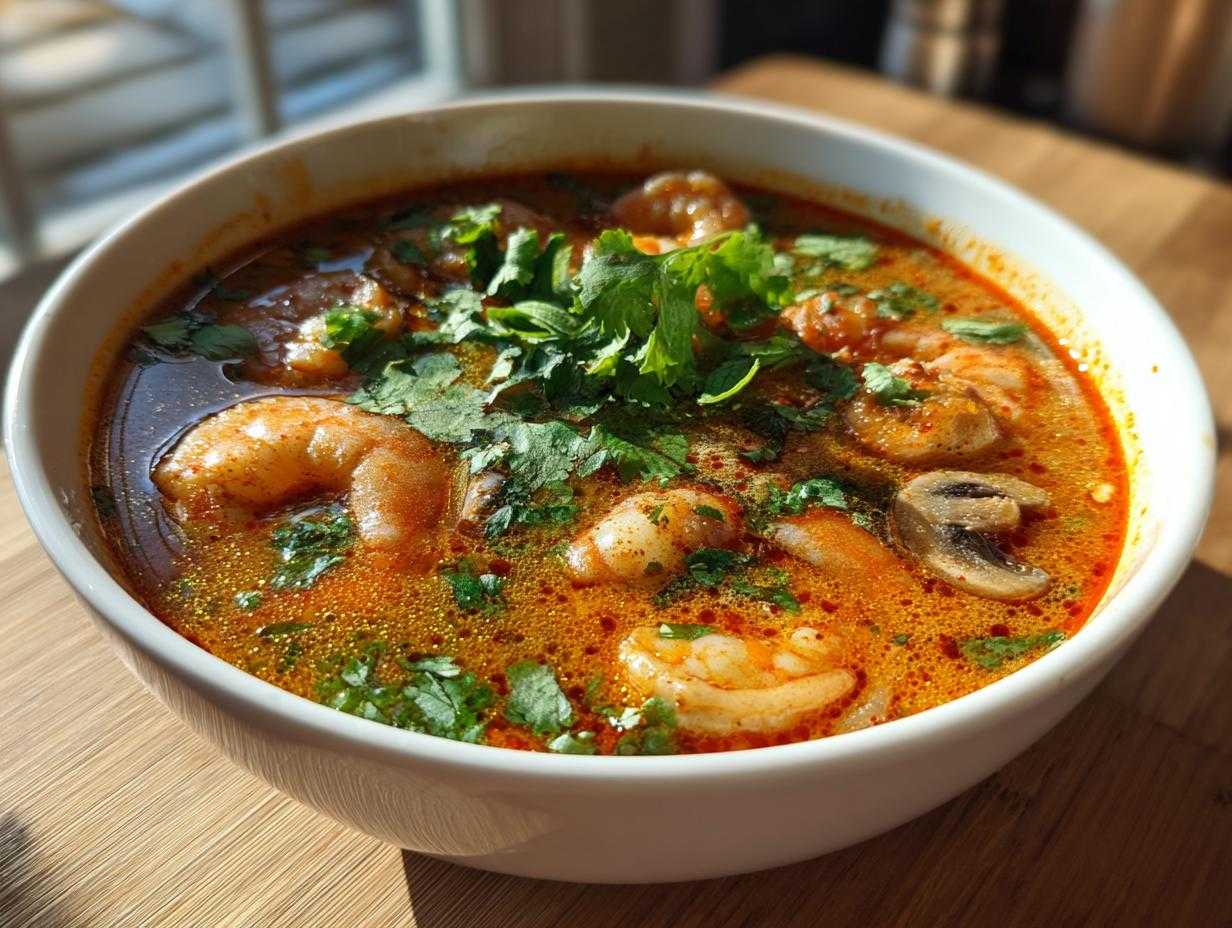
Oh, you know my obsession with Thai food, right? When you bite into something that perfectly balances sweet, savory, hot, and sour all at once, it just changes your whole mood! That’s what I live for in the kitchen, and nothing captures that magic quite like a truly spectacular helping of tom yum soup. Forget those watered-down versions you get sometimes; we are going straight for the real deal here.
I spent years trying to figure out the secrets behind that vibrant, zesty broth you get at the best street stalls in Bangkok. It all comes down to respecting the fresh ingredients and understanding how the acids and salts need to hit your tongue. Trust me, once you learn how to layer those essential aromatics, making an authentic tom yum soup at home becomes shockingly easy. This recipe focuses on achieving that signature hot and sour punch, just like the best Tom Yum Goong (shrimp version) should taste, and we can even pivot quickly to make a stunning vegan version!
Why This Authentic tom yum soup Recipe Works (Restaurant Quality Soup At Home)
It sounds intimidating—all those fancy Thai names—but honestly, this recipe is my go-to when I need serious flavor, fast. We’re aiming for that incredible aromatic quality that makes you close your eyes after the first sip. This isn’t just any hot and sour soup; this is the Authentic Thai Soup Recipe you’ll make again and again.
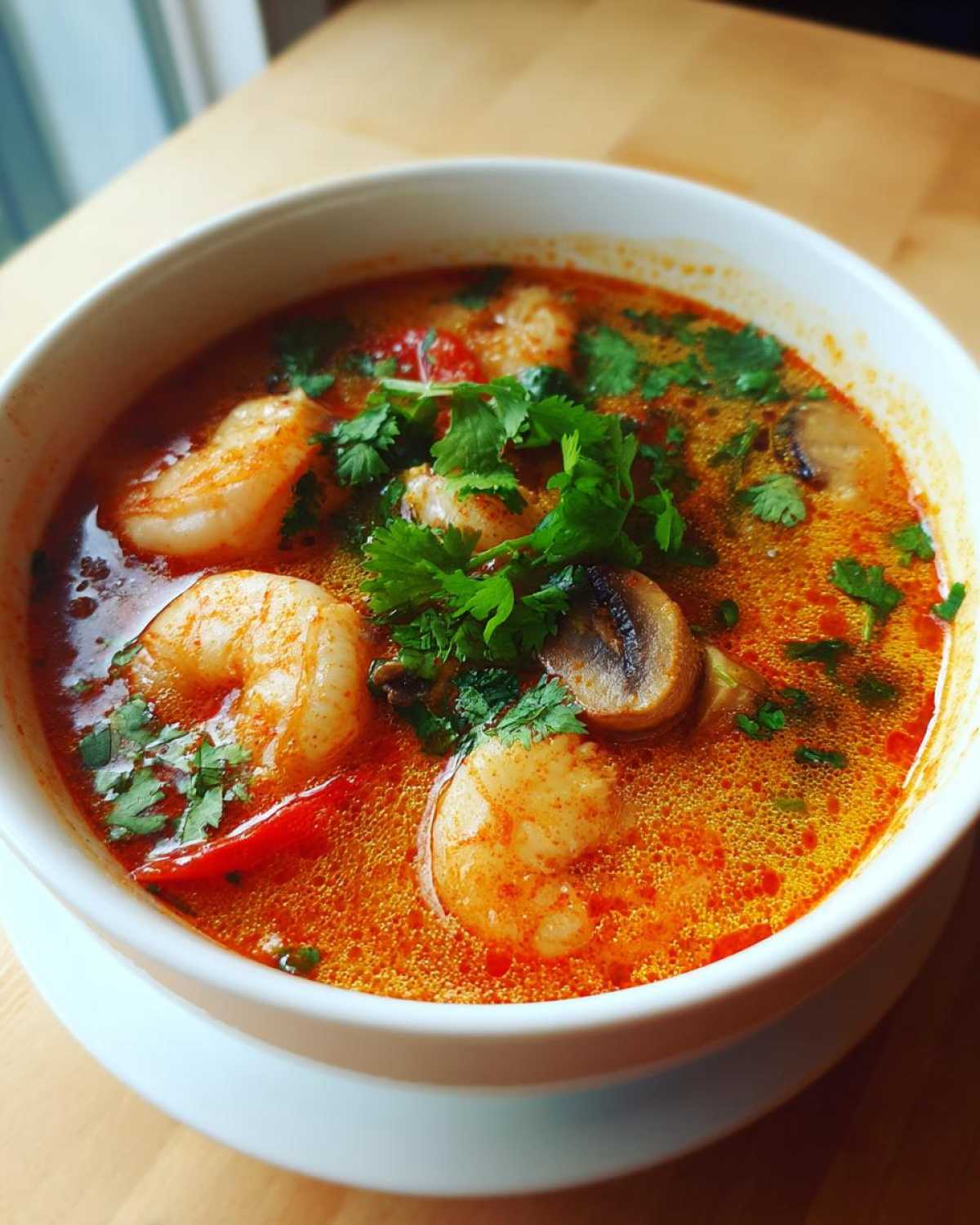
- It nails that perfect hot/sour balance without tasting muddy.
- It truly is an Easy Tom Yum Recipe—ready in about 30 minutes total!
- You get deep, layered flavor without hours of simmering.
Achieving the Signature Hot and Sour Flavor Profile
The secret here isn’t one ingredient; it’s the *timing* of the sour and salty elements. We add the fish sauce and sugar earlier, but the fresh lime juice goes in dead last, right off the heat. That keeps the lime bright and zesty. If you cook fresh lime juice too long, it gets flat, and we can’t have that in our soup!
Quick Prep Time for a Weeknight Thai Dinner
You won’t believe how fast this comes together. Prep is just 15 minutes, and the simmering part is only 15 minutes. It’s the perfect candidate for a healthy, flavor-packed Weeknight Thai Dinner when you’re craving something exciting but don’t want to spend all evening standing over the stove!
Essential Ingredients for Aromatic tom yum soup
Okay, grabbing the ingredients is where the magic in making a truly flavorful tom yum soup begins. Seriously, don’t even attempt this with dried herbs if you can avoid it. We are building an Aromatic Thai Broth, and that requires things that smell incredible the second you start prepping them. You’ll need four cups of good chicken or veggie broth to start—this is the canvas for our flavor!
Then come the stars of the show: the herbs. We toss in the lemongrass, galangal slices (if you can’t find it, use ginger, but try for galangal first!), and those torn kaffir lime leaves. We also need a few crushed Thai chilies for that signature heat. For texture, I love adding straw mushrooms, halved, but button mushrooms work just fine if you can’t find them.
Key Aromatics: Lemongrass Galangal Kaffir Lime Soup
These three—lemongrass, galangal, and kaffir lime leaves—are non-negotiable for that authentic Thai essence. My little tip for the lemongrass is crucial: don’t just hack it up! You need to take the whole stalk and use the blunt side of a heavy knife to really bash it a few times along the length. That bruising is what releases all those fragrant oils right into the broth. It makes such a difference!
The kaffir lime leaves also need a little tear before they go in. This breaks the tiny veins and lets the citrusy aroma bloom in the simmering liquid. It’s how we build that deep, layered flavor for the Lemongrass Galangal Kaffir Lime Soup base.
Protein Options: Shrimp and Tofu for tom yum soup
For the classic take, which we call Tom Yum Goong, you need about a pound of raw shrimp. Make sure they are peeled and deveined, ready to go in at the very end so they only cook for two or three minutes. They should just turn pink and plump up—do *not* leave them in boiling liquid too long, or they get tough!
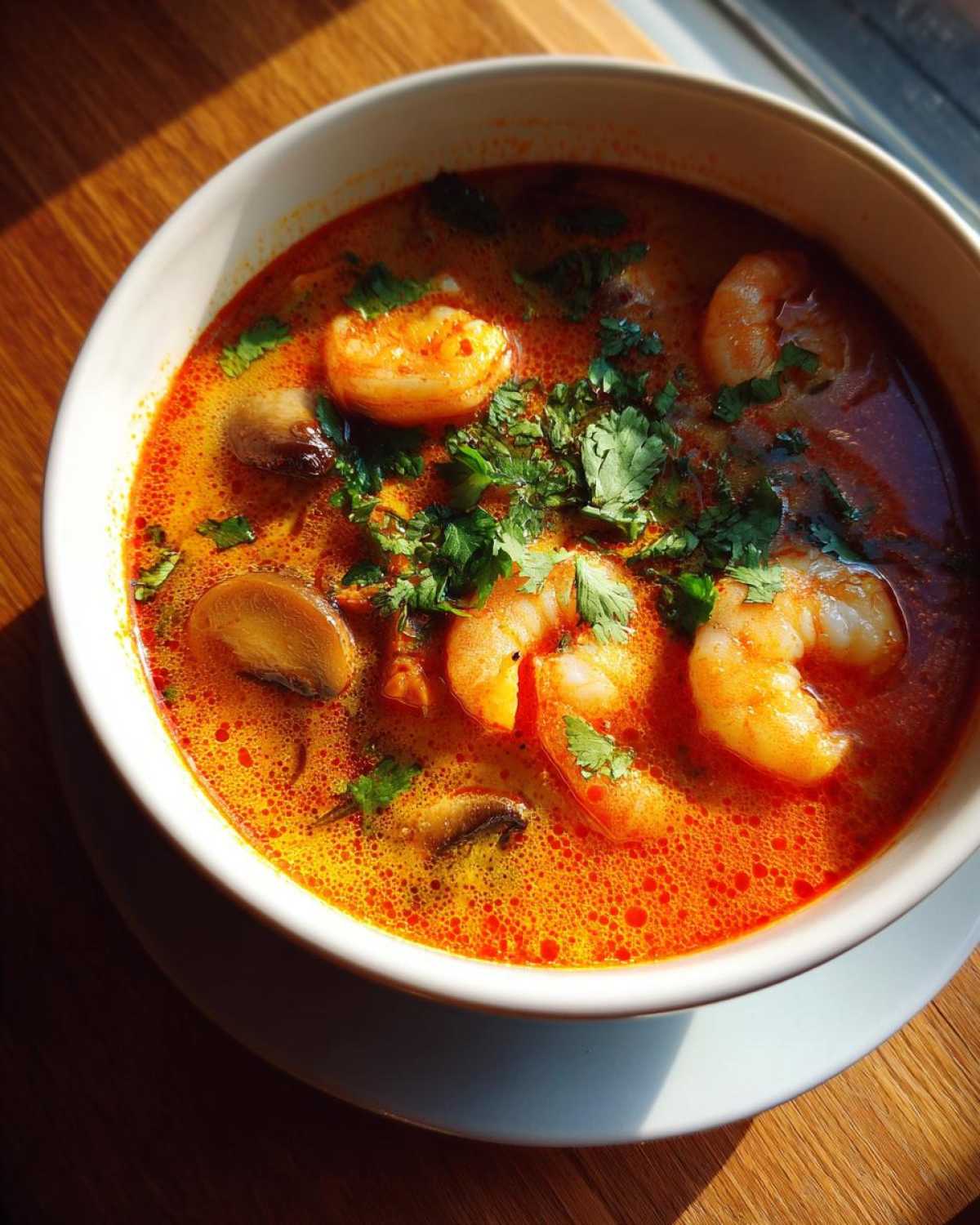
If you’re making the Vegan Tom Yum Soup variation, we swap the shrimp for some firm tofu, cut into nice one-inch cubes. Remember, on the vegan side, everything else about the broth stays the same, but you’ll swap the traditional fish sauce for soy sauce or a certified vegan fish sauce substitute later on. Easy peasy!
Step-by-Step Instructions for the Best tom yum soup Flavor
Now we get serious about extracting all that amazing fragrance from our herbs. This is the part where your kitchen starts smelling like a dream, truly giving you that Flavorful Asian Broth we are aiming for. Don’t rush this initial stage—it pays off huge later!
Infusing the Aromatic Thai Broth
First things first: throw the broth, the bruised lemongrass, the galangal slices, those torn kaffir lime leaves, and your chilies all into one medium pot. Get that mixture going over medium-high heat until it comes up to a total rolling boil. Once it hits that boil, I immediately drop the heat down low, just enough to maintain a happy, gentle simmer. You need to let this cook, undisturbed, for a solid 10 minutes. This simmering process is critical because it gives the herbs time to weep all their oils and flavor into the liquid—that’s how you build a rich Aromatic Thai Broth.
After 10 minutes, you can decide if you want the rustic look or the refined look. I usually strain everything out just so it doesn’t look like a salad floating around in my bowl, but honestly, leaving some of the herbs in is totally authentic too! Return the now-scented broth back into the pot.
Cooking Shrimp and Adjusting the tom yum soup Seasoning
Next up, toss in your mushrooms—whether they are little straw ones or regular button ones—and let them simmer until they soften up a bit, which only takes about 3 minutes. Now for the shrimp! Drop those pink beauties right in. Remember what I said about overcooking shrimp? Keep it quick: watch them until they curl up and turn opaque pink, which is usually just 2 to 3 minutes max. They finish cooking extremely fast.
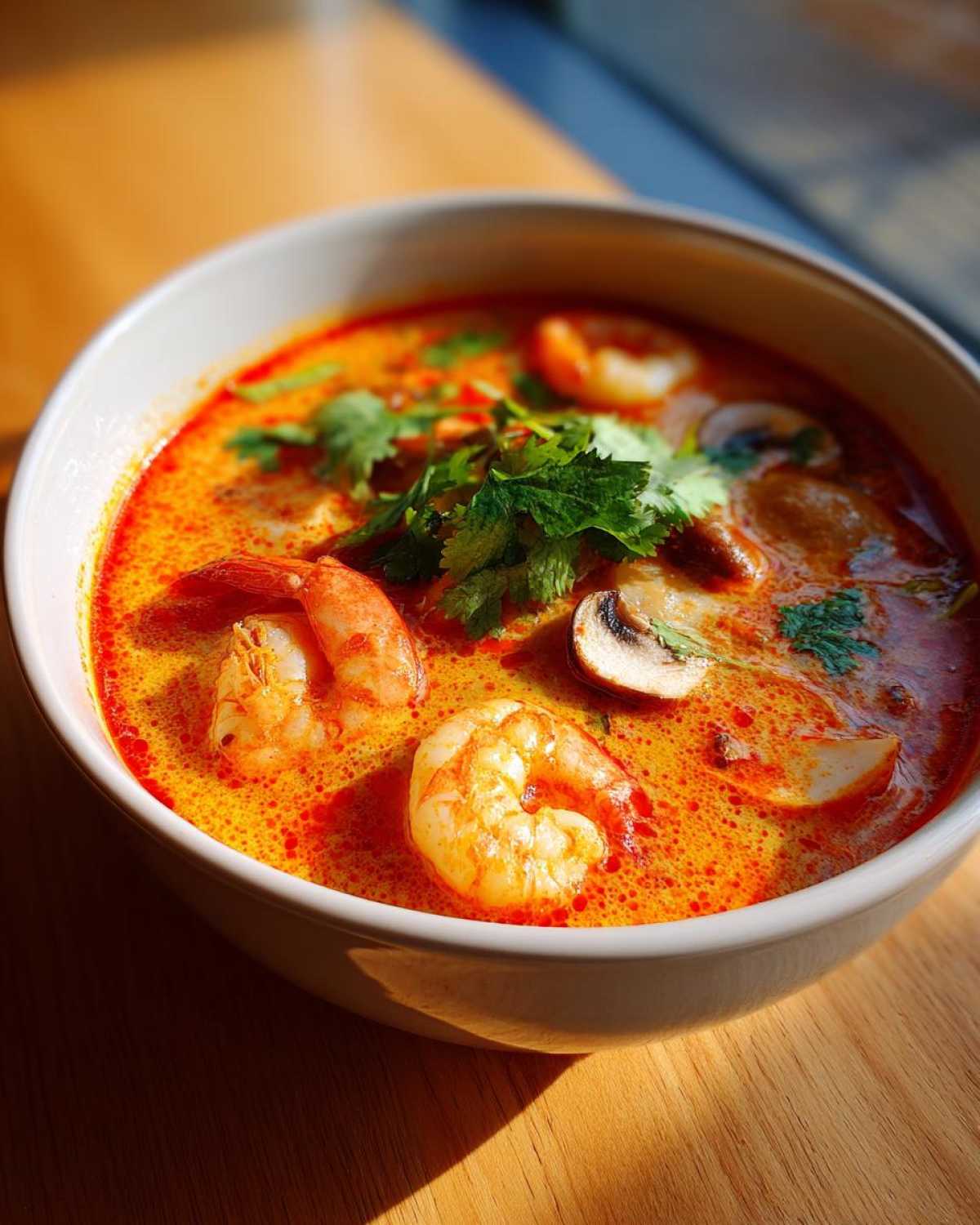
This is the most important move for intense flavor: Pull the entire pot right off the heat source. This stops the steam and lowers the temperature slightly, protecting the fresh lime flavor. Add your fish sauce, your sugar, and stir well. Then, pour in that fresh lime juice. Taste it now! This is your chance to make it perfect. Want more zip? Add more lime juice. Need more savory depth? A dash more fish sauce. If you’re feeling fancy, this is when you stir in that optional splash of coconut milk for a creamy finish. Ladle it straight into bowls and pile on the fresh cilantro!
You can see how important gentle heat management is, even in my creamy butter chicken recipe, it’s all about precision!
Tips for Making Restaurant Quality tom yum soup At Home
Okay, so we nail the basic technique, but how do you push this tom yum soup from ‘great homemade’ to ‘totally restaurant quality’? It’s all in these little details that the pros know! We want that super Spicy and Tangy Soup profile shining through clearly, making every spoonful complex and bright. Think of this as getting the absolute most out of your broth.
Clear vs. Creamy tom yum soup (Nam Sai vs. Nam Khon)
You might hear Thai chefs talk about “Nam Sai” or “Nam Khon.” It’s simple, really! The recipe I gave you makes a clear broth—that’s the Nam Sai style, focusing purely on the herbs and acidity. If you want the rich, slightly muted flavor of a Nam Khon style, that’s when you stir in that little bit of coconut milk or evaporated milk right at the end, off the heat. Both are delicious, but the clear version really lets the spice and sour notes sing!
Sourcing Galangal and Substitutions
If you’re making this outside of a major metropolitan area, finding fresh galangal can feel like searching for treasure. It looks similar to ginger but has a sharper, almost piney, citrus note to it. If you absolutely cannot find it, use fresh ginger! It’s important to note that ginger will change the flavor profile slightly—it’s warmer and less zesty than galangal—but it’s a very acceptable trade-off to keep your Flavorful Asian Broth going strong when that craving hits!
Variations: Making Your Own Vegan tom yum soup
I know, not everyone eats shrimp, or maybe you just ran out mid-shop! That’s totally fine because one of the most rewarding things about this recipe is how beautifully it adapts for a fully plant-based version. Don’t worry about losing that deep, savory base; we’ve got easy swaps that keep the integrity of the soup intact. We are making a fantastic Vegan Tom Yum Soup that’s just as zesty and aromatic, making it perfect for a quick meatless meal.
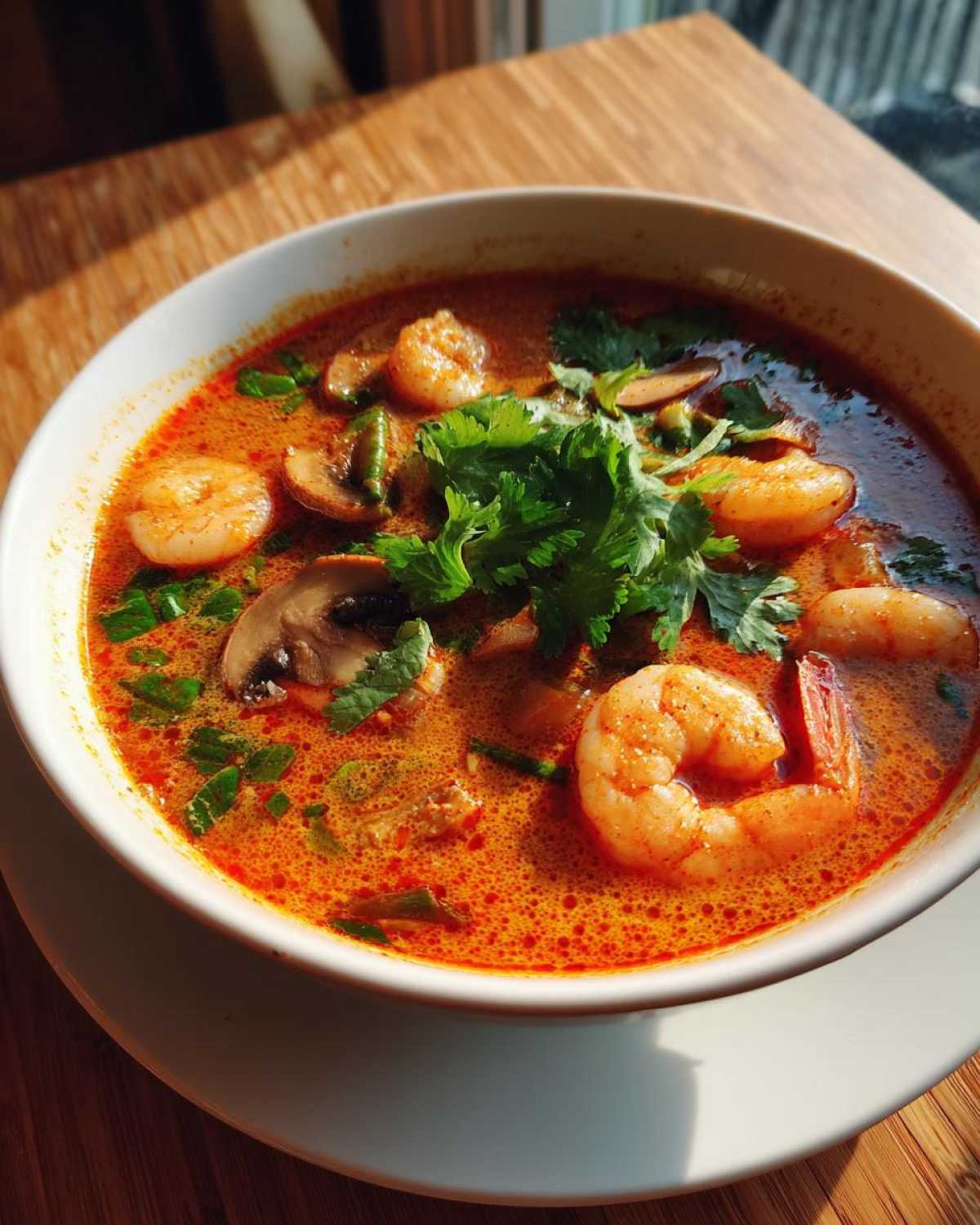
The primary swap, as you saw in the ingredients, is replacing the shrimp with firm tofu. You want to use firm or extra-firm tofu so it holds its shape when it simmers—cubing it up and patting it dry first helps it absorb the broth instead of just falling apart.
The other main change involves the saltiness. Since we ditch the shrimp, we must replace the fish sauce. I generally reach for a high-quality soy sauce, or even better, a vegan fish sauce if you can find one! Both work perfectly when balanced with your final lime juice adjustments. Honestly, the broth base with all those herbs is so intense, you won’t miss the seafood one bit. If you love plant-based Thai flavors, you should check out my peanut noodle sauce too!
Just follow the main instructions—simmer the herbs, strain them out, add your mushrooms, and then simmer your cubed tofu for those crucial few minutes until it’s warmed through. Then, when it’s time to season off the heat, use your soy sauce or vegan fish sauce instead of the regular kind. It’s such a satisfying, bright meal!
Serving Suggestions for Your tom yum soup
So, you’ve got this incredible, steaming bowl of spicy and tangy soup—now what? You absolutely must serve this with a big bowl of plain, steamed jasmine rice on the side. Seriously, the rice is non-negotiable! It cuts through the intense heat and sourness just enough, and you need something soft to soak up all that amazing, concentrated broth.
This soup truly is the centerpiece of any meal, but if you want to stick to that Classic Thai Food vibe, maybe have some simple fresh spring rolls or a little cucumber salad on the side, too. That way, you balance the intensity beautifully. Enjoy every single aromatic spoonful!
Storage and Reheating Instructions for tom yum soup Leftovers
Oh, the joy of having leftover tom yum soup! It might even taste better the next day because those gorgeous herbs have had extra time to marry their flavors in the broth. Storing it is super simple, but you have to be mindful of what version you made.
If you made the clear version (Nam Sai), just pop that leftover broth into an airtight container and stick it in the fridge. It keeps beautifully for about three days, which is perfect for a quick lunch later in the week. It’s still going to be wonderfully pungent and delicious!
Handling Coconut Milk Leftovers
Now, if you went for the creamy version (Nam Khon) with the coconut milk or evaporated milk added, you need to be a little gentler. Dairy and coconut milk tend to separate when they cool down unevenly or get reheated too aggressively. When you go to reheat this batch, put it over low heat and stir constantly until it’s just steaming hot—don’t let it boil hard!
If it looks like the milk is splitting slightly, just take it off the heat immediately and give it a really vigorous whisk. Often, that coaxing is all it takes to bring the emulsion back together. If it’s really stubborn, you can try adding a tiny splash of fresh water or veggie broth while whisking to loosen it up. Don’t try to store leftovers longer than three days, though; that fresh lime flavor really fades after that point.
Frequently Asked Questions About tom yum soup
How do I make my tom yum soup spicier?
Oh, I love when you ask this! Thai food needs that kick, right? If you want to turn up the heat in your tom yum soup, the easiest way is to use more of those fresh Thai chilies when you are initially simmering the broth. Don’t be shy! If you are tasting it at the end, though, and you want an immediate blast of heat without adding more chunks, grab some chili oil or Nam Prik Pao (Thai chili paste)—just stir a tiny spoonful right into your serving bowl. That will give you instant fire and add a little extra depth to the spice!
Can I use dried herbs instead of fresh for this tom yum soup?
Look, if you absolutely have to, you can, but please hear me out: You lose about 80% of the fragrance and vibrancy. The whole point of this soup is that zesty punch from fresh lemongrass and kaffir lime leaves. The flavor profile just won’t be the same; it goes from bright and zesty to slightly dull and dusty.
If fresh ingredients are completely impossible to find, use dried herbs very sparingly—maybe half a teaspoon of dried lemongrass and just one dried lime leaf, crushed right into the simmering broth. But promise me you’ll try to find the fresh stuff next time! It makes all the difference in an authentic recipe like this tom yum soup.
What is the difference between tom yum soup and tom kha?
This is a fantastic question because they are often confused, but they are totally different experiences! Think of it this way: Our tom yum soup recipe is all about being bright, zesty, and sharp—it’s hot and sour. We only add milk optionally at the very end.
Tom Kha, on the other hand, is inherently creamy. The defining characteristic of Tom Kha Gai (or whatever protein you choose) is that the broth is based heavily on coconut milk, which mellows out the spice and sourness considerably and gives it a lovely, velvety texture. So, one is sharp and acidic; the other is rich and comforting. Both are amazing, but they serve different cravings!
Before you go, if you need a simple dessert inspiration after all that spice, check out my easy berry cobbler!
Rate This Authentic tom yum soup Recipe
I have spilled all my secrets, shared all my tips, and shown you exactly how to nail that perfect restaurant-quality flavor for your tom yum soup!
Now it’s your turn! I absolutely need to know what you think. Please take a minute and leave a quick star rating for this recipe right below. Seriously, your feedback helps others trust these methods, and I always read every single comment you leave!
Let me know what you thought—did your broth end up perfectly balancing the heat and the sourness? Did your shrimp stay plump? Did you try the creamy version or keep it clear? Drop a comment and tell me all about your kitchen adventure. I can’t wait to hear how much you loved this easy trip to Thailand right in your own home!
And hey, if you’re looking for another foolproof favorite that everyone begs me to make, you have to try my recipe for the best soft and chewy cookies—sometimes you just need something sweet after all that wonderful spice!
Print
Authentic Tom Yum Goong (Shrimp) Soup
- Total Time: 30 min
- Yield: 4 servings
- Diet: Low Fat
Description
Make classic Thai hot and sour shrimp soup with fresh herbs for an authentic flavor.
Ingredients
- 4 cups chicken or vegetable broth
- 1 pound raw shrimp, peeled and deveined
- 1 stalk lemongrass, bruised and cut into 2-inch pieces
- 4 slices galangal (or ginger if galangal is unavailable)
- 5 kaffir lime leaves, torn
- 2-3 Thai chilies, crushed (adjust to heat preference)
- 1/2 cup straw mushrooms or button mushrooms, halved
- 2 tablespoons fish sauce
- 2 tablespoons lime juice, freshly squeezed
- 1 teaspoon sugar
- 1/4 cup cilantro, chopped, for garnish
- (Optional for creamy version: 1/4 cup evaporated milk or coconut milk)
- (For Vegan/Vegetarian alternative: Substitute shrimp with 1 cup firm tofu cubes and use vegetable broth; substitute fish sauce with soy sauce or vegan fish sauce)
Instructions
- Combine broth, lemongrass, galangal, kaffir lime leaves, and crushed chilies in a medium pot. Bring to a boil over medium-high heat.
- Reduce heat and simmer for 10 minutes to infuse the broth with the aromatics.
- Strain the broth to remove the lemongrass, galangal, and kaffir lime leaves, or leave them in for a more rustic presentation. Return the broth to the pot.
- Add mushrooms and cook until tender, about 3 minutes.
- Add the shrimp (or tofu for vegan option). Cook until the shrimp turn pink and opaque, about 2-3 minutes. Do not overcook.
- Remove the pot from the heat. Stir in the fish sauce, lime juice, and sugar. Taste and adjust seasoning—add more lime for sourness or fish sauce for saltiness.
- If using, stir in the evaporated milk or coconut milk now for a creamy Tom Yum Nam Khon.
- Ladle the soup into bowls. Garnish generously with fresh cilantro before serving.
Notes
- For the best flavor, gently bruise the lemongrass stalk with the back of a knife before adding it to the broth.
- Use fresh lime juice only; bottled juice changes the flavor profile significantly.
- If you prefer a clear soup (Tom Yum Nam Sai), skip the optional evaporated or coconut milk step.
- Prep Time: 15 min
- Cook Time: 15 min
- Category: Soup
- Method: Stovetop Simmering
- Cuisine: Thai
Nutrition
- Serving Size: 1.5 cups
- Calories: 150
- Sugar: 3
- Sodium: 650
- Fat: 3
- Saturated Fat: 1
- Unsaturated Fat: 2
- Trans Fat: 0
- Carbohydrates: 10
- Fiber: 1
- Protein: 22
- Cholesterol: 150

