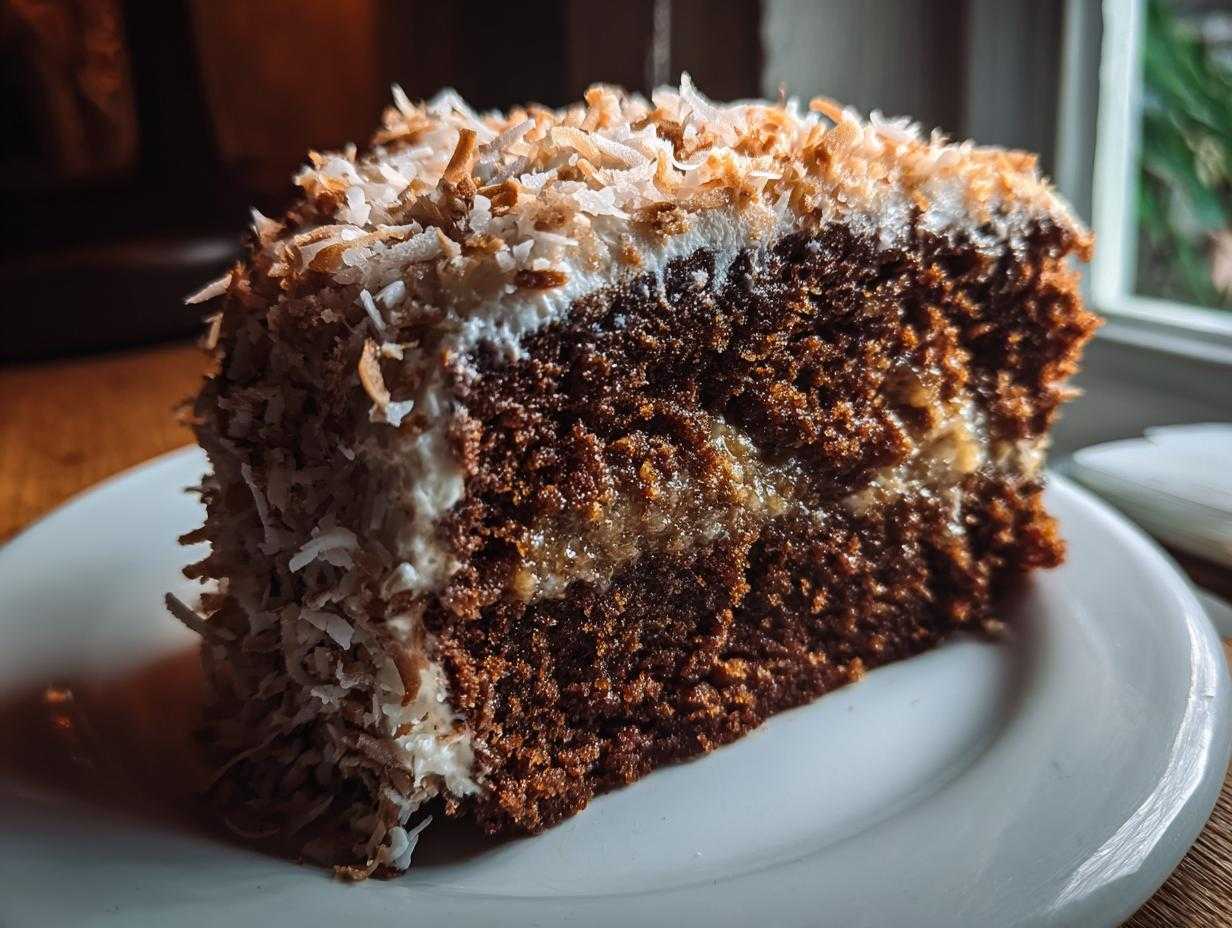
If you want to talk about true American celebration cakes, you have to talk about the german chocolate cake. Forget dry cardboard layers; we’re talking about two incredibly moist chocolate layers swimming in just the right amount of richness. This recipe, folks, is my go-to for birthdays, holidays, you name it. It’s the definitive guide to getting that signature sweet, gooey coconut-pecan frosting just right without burning it—believe me, I’ve learned that the hard way! This detailed, step-by-step guide guarantees you ditch the box mix forever and nail that perfect texture every single time. This recipe has saved me more times than I can count, and it’s the only true german chocolate cake I share.
Why This Homemade german chocolate Cake Recipe Works
Honestly, this recipe is a winner because it respects the classic structure but fixes all the common pitfalls. It’s designed for home bakers who want that stellar result, not something fussy. Trust me, you’re going to love it!
- Moisture Mastery: We beat the texture issue by using oil and buttermilk, which keeps these chocolate layers unbelievably soft, even the next day.
- Flavor Layering: The incorporation of hot chocolate directly into the batter ensures a deep, satisfying chocolate foundation that perfectly complements the sweet topping. For more from-scratch inspiration, check out my guide on baking from scratch desserts.
- The Frosting Payoff: The custard style of the coconut pecan frosting thickens perfectly on the stovetop, giving you that classic, rich, gooey texture—it’s not just some thin glaze!
Ingredients for the Moist german chocolate Cake Layers
Listen up, because getting these measurements right is half the battle. I’ve been collecting notes on this forever, and the balance here is what keeps these layers so perfectly tender. You’ll notice we use oil instead of all butter in the cake itself; that’s one of my secrets for keeping it moist for days. You can get more pointers on keeping things soft over in my guide to moist chocolate cake.
Before you start mixing, make sure your buttermilk is at least room temperature—it makes such a difference in the chemistry! Even though we follow up with hot water, room temperature wet ingredients help everything emulsify cleaner.
Here is exactly what you need for the two cake layers:
- 1 3/4 cups all-purpose flour
- 1 3/4 cups granulated sugar
- 1 teaspoon baking soda
- 1/2 teaspoon salt
- 1 cup buttermilk (please, let it sit out for 20 minutes!)
- 1 cup vegetable oil (your moisture insurance policy!)
- 2 large eggs
- 1 teaspoon vanilla extract
- 1 cup hot water (freshly boiled, please—this blooms the cocoa/melts the chocolate chips)
- 1 cup semisweet chocolate chips (the good quality ones make a difference here.)
Crafting the Signature Coconut Pecan Frosting Recipe
Okay, let’s talk about the star of the show: that glorious, gooey, slightly chunky topping! This isn’t your average buttercream; this is a cooked caramel custard base loaded with coconut and pecans. It takes a little more attention than just whipping butter, but wow, is it worth it.
You’ll need slightly different ingredients for this magic, so get them ready:
- 1/2 cup butter (real butter, no substitutes if you can help it!)
- 1/2 cup evaporated milk (don’t use regular milk here; evaporation is key!)
- 1 cup packed light brown sugar
- 4 large egg yolks (Just the yolks—save those whites for meringues later!)
- 1 cup shredded coconut
- 1 cup chopped pecans (I usually give mine a quick toast first for maximum flavor!)
The biggest warning I have for you, especially if you are looking for a truly rich buttery frosting, is the cooking phase. You must stir constantly when the butter, milk, brown sugar, and egg yolks are simmering together. Seriously, don’t walk away, or you’ll get scrambled eggs instead of luscious frosting! My advice is to use a wooden spoon and keep pushing the bottom of the pan so nothing scorches. For more tips on amazing toppings, you can check out my guide on rich buttery frosting recipes.
Once it thickens nicely enough to coat the back of that spoon after about 8 to 10 minutes, pull it straight off the heat! Stir in your pecans and coconut, and let it cool just until it’s spreadable but still lovely and warm. This texture is the secret to making sure the topping sinks just slightly into the cake layers.
Step-by-Step Instructions for the Classic german chocolate Cake
Okay, now we put it all together! This is where the magic happens, but remember what I always say: a good cake needs patience, especially during mixing. If you rush, you end up with a tough bake. We’re aiming for tender layers, so read these steps carefully. You can find my overall strategy for making sure layer cakes turn out perfectly right here in my guide on classic layer cake recipes!
We are going through five main stages here: prep, dry mix, wet mix, chocolate incorporation, and baking. Don’t worry about the frosting instructions yet; focus only on baking these gorgeous layers first!
Mixing the Moist Chocolate Cake Batter
- First things first, get your oven heated up to 350 degrees Fahrenheit. You need to grease and flour two 9-inch round cake pans really well—don’t skip this! I usually use soft butter and dust with cocoa powder instead of flour so you don’t get white streaks on your beautiful chocolate cake later.
- In a large bowl, you’re going to whisk together all your dry stuff: the flour, the granulated sugar, the baking soda, and the salt. Give it a good 30 seconds of whisking to make sure everything is totally distributed.
- Now add in the buttermilk, the vegetable oil, the two whole eggs, and the vanilla extract. Mix this gently until everything is *just* combined. Stop the minute the flour streaks disappear. Seriously, overmixing is the enemy here!
- This is the flavor boost: In a separate little saucepan, combine your hot water and the semisweet chocolate chips. Keep stirring until those chips are perfectly smooth and glossy.
- Pour that warm, melted chocolate mixture right into your cake batter. Mix it on low speed or by hand just until it’s blended in. You’ll notice the batter gets much thinner—that’s exactly what we want for a wonderfully moist bake!
Baking and Cooling the german chocolate Layers
- Divide that beautiful, smooth batter evenly between your two prepared pans. Try to eyeball it closely so your layers bake up the same height.
- Pop those right into your preheated oven and bake them for about 30 to 35 minutes. Start checking around the 30-minute mark. When you insert a toothpick into the very center, it should come out clean or with just a few moist crumbs clinging to it—no wet batter!
- The most important cooling step: Let those cake layers rest in their pans on a wire rack for exactly 10 minutes. This lets them firm up just enough so they won’t tear when you flip them.
- After 10 minutes, gently flip the cakes out onto the wire rack to cool completely. They need to be totally cool before you even *think* about frosting them, or that gorgeous custard topping will just slide right off!
Assembling Your german chocolate Masterpiece
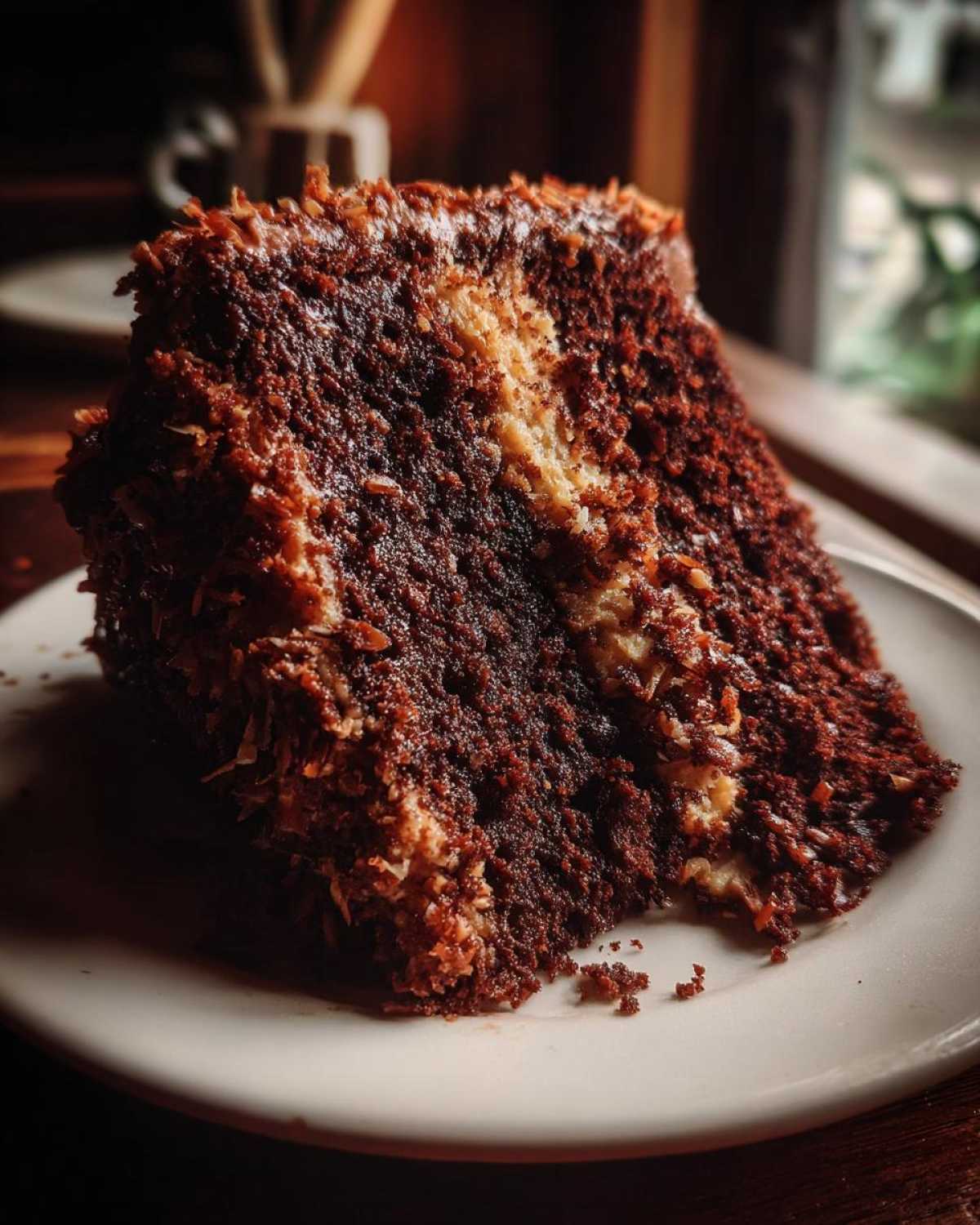
The moment of truth! You have your perfectly cooled, deep chocolate layers, and you have that luscious, warm coconut-pecan topping cooling on the counter. This is where we turn ingredients into the showstopper we’ve been working toward. Don’t rush this part; clean assembly makes all the difference!
Make sure your cake layers are completely cool—I mean room temperature, no warmth at all. If they are even slightly warm, the butterfat in the frosting will melt, and you’ll end up with a sweet, sticky puddle instead of beautiful layers. Trust me on this one!
Here’s the assembly sequence that guarantees a professional look:
- Place your first cake layer onto whatever pretty plate or cake stand you plan to serve it on. This layer is now the base, so make sure it’s centered!
- Take roughly half of your fantastic Coconut Pecan Frosting Recipe. Gently spread it evenly across the top of the first layer. It should go right up to the edges.
- Carefully place that second layer on top. It fits like a beautiful chocolate hat!
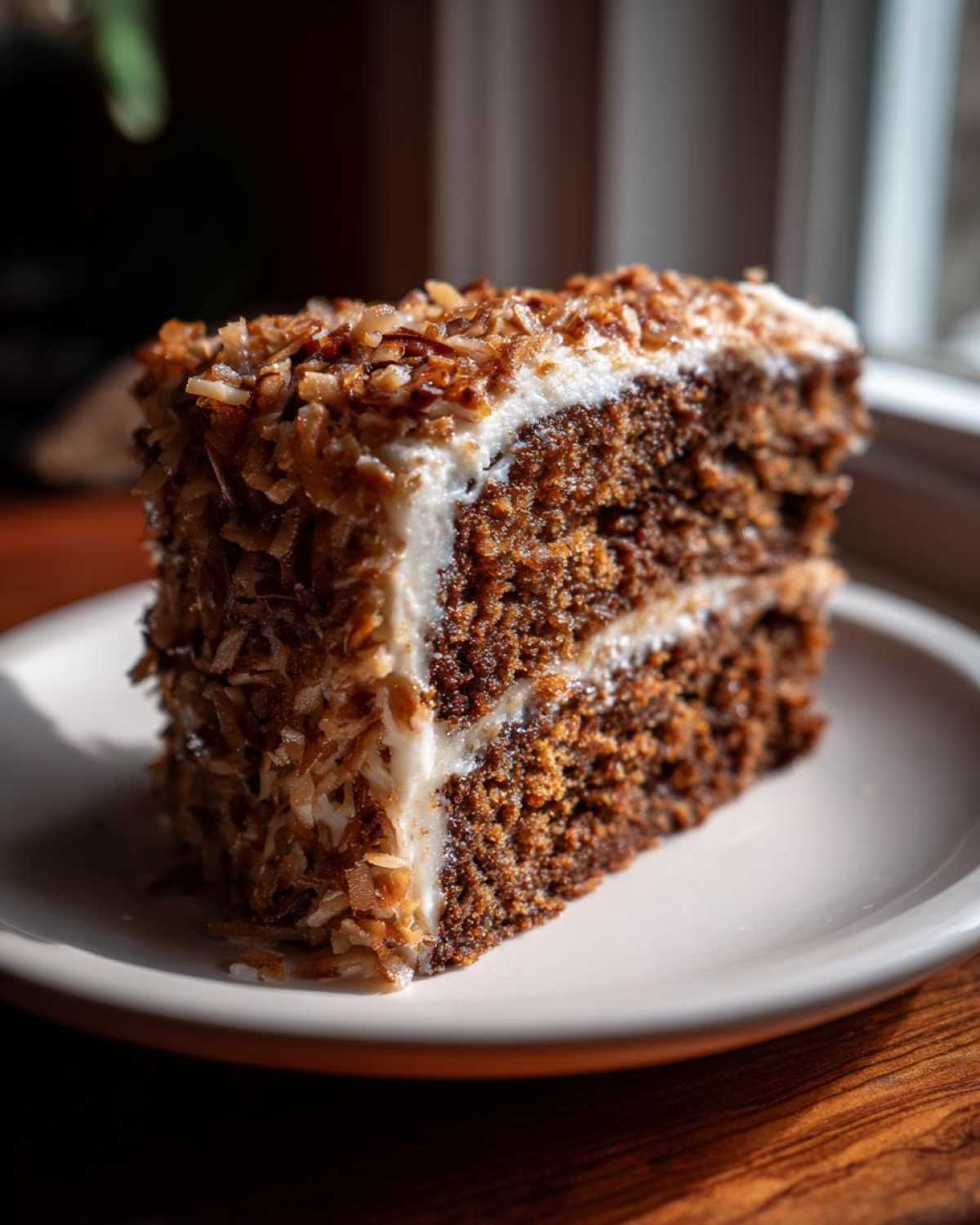
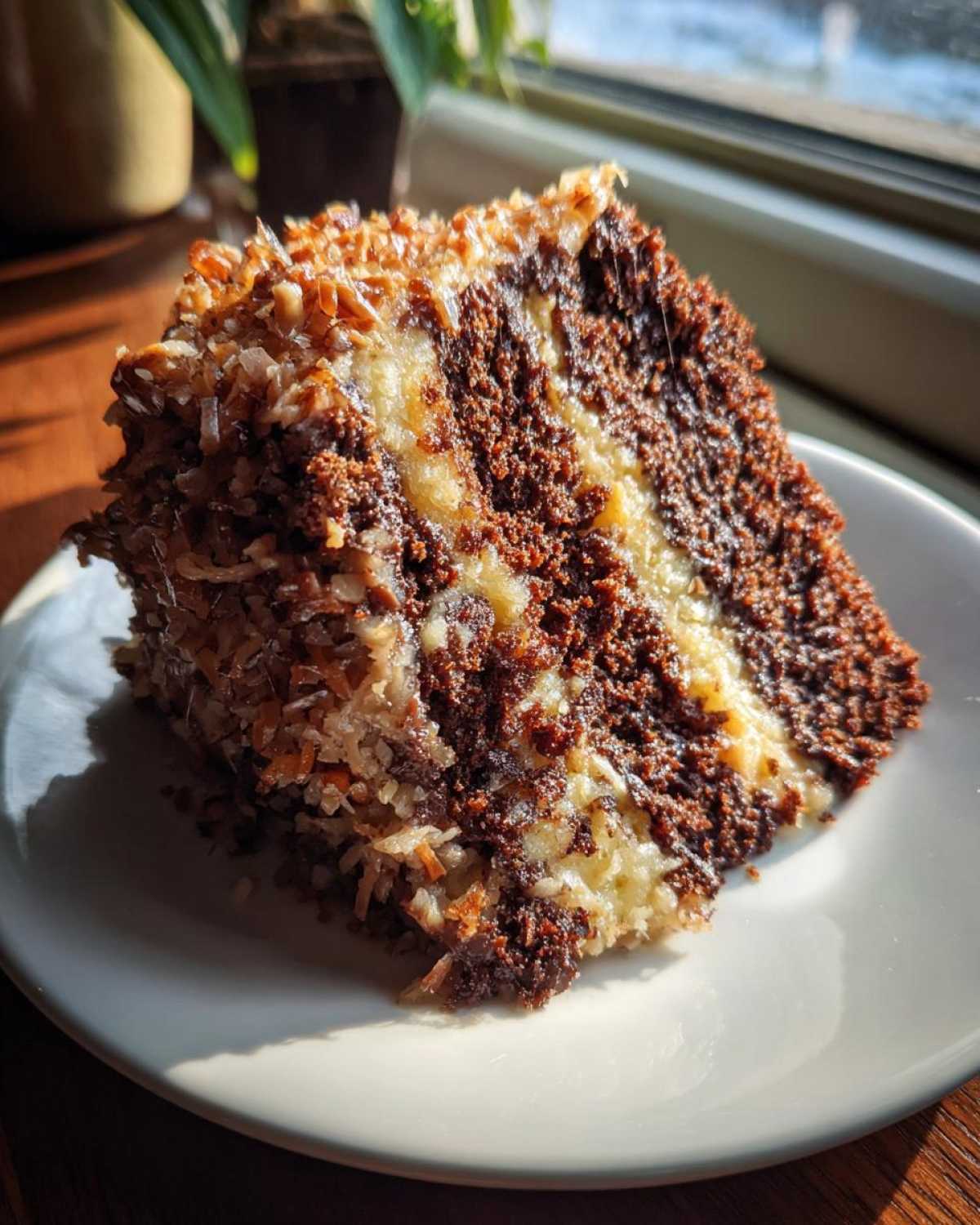
- Now take the remaining frosting and gently spread it over the very top of the cake, and then work your way down the sides. You don’t have to make it perfectly smooth—in fact, I like a slightly rustic look where you can see the chunks of pecans poking out.
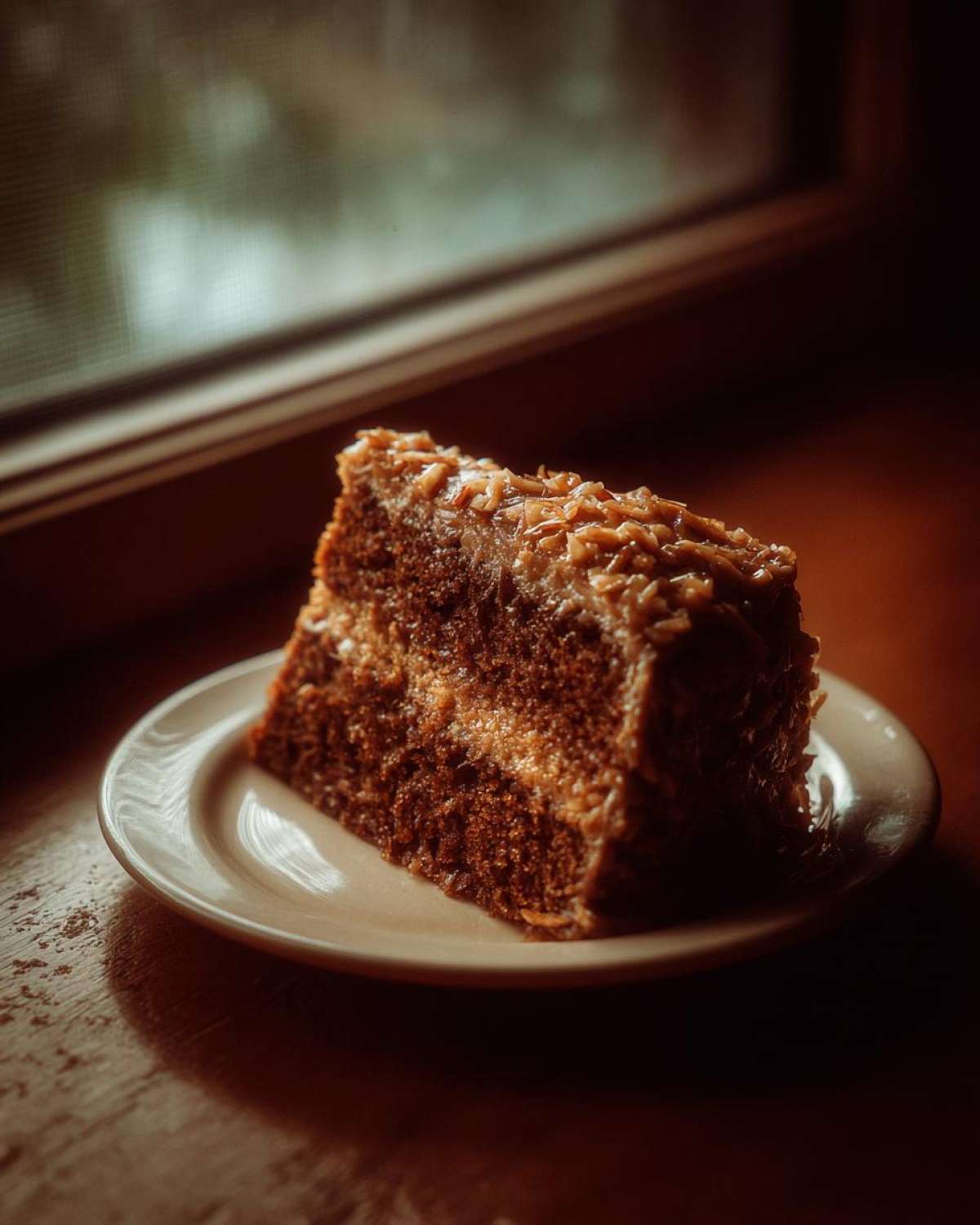
Here is the absolute final piece of advice, borrowed from my notes: For the cleanest slices, especially since this topping likes to ooze a little, pop the whole finished german chocolate cake into the refrigerator for at least one hour before you plan to cut into it. Chilling it slightly firms up that custard topping just enough so your knife glides through without dragging everything with it. Once chilled, you’ve got the Best German Chocolate Cake you’ve ever made. For more ideas on making stunning centerpieces, take a peek at my guide on the best german chocolate cake recipes!
Tips for Success with german chocolate Baking
Baking this rich, iconic cake always seems intimidating, but once you know these little tricks, you’ll be whipping them up like a pro. Honestly, the difference between a good chocolate cake and a truly fantastic german chocolate cake lies in these small details. I’ve learned a few things over the years wrestling with that temperamental frosting!
Here are my top three non-negotiable tips for making sure your bake is textbook perfect every single time. For more scratch baking inspiration, don’t forget to look at my full guide on baking from scratch desserts!
- The Coffee Secret: This is a huge one for anyone wanting deep, dark chocolate flavor without an overly chocolatey taste. Instead of using the 1 cup of hot water specified in the cake batter step, swap it out entirely for 1 cup of strong, freshly brewed hot coffee. The coffee doesn’t make the cake taste like coffee—I promise! It just amplifies the richness of the chocolate chips exponentially. It’s my favorite way to elevate the flavor profile!
- Frosting Control: When you’re cooking that custard for the icing, sometimes life gets in the way, and it ends up setting up a little stiffly on the counter before you can spread it. Don’t panic! If your frosting seems too thick to spread nicely, put it back on the stove over the absolute lowest heat setting for just 15 to 30 seconds, stirring constantly. A gentle nudge of heat brings that butter and milk back to life, making it beautifully spreadable again without scrambling the yolks.
- The Buttermilk Trade: While the recipe calls for buttermilk, if you find yourself halfway through baking and realizing yours is a little cold, pop it into the microwave for just 10 seconds. Getting your wet ingredients closer to room temperature helps them incorporate better with the creamed sugar and oil, leading to a smoother batter right from the start. A smooth batter equals a better texture in the end!
Easy german chocolate Variations
Now, I know everyone loves a towering layer cake for the holidays, but sometimes you need that incredible german chocolate flavor profile in something quicker! Maybe you don’t have time for two full layers, or maybe you’re making desserts for a potluck where sliced cake isn’t practical. Don’t worry, my kitchen loves adaptations just as much as the original!
Once you have mastered the core frosting—which is really the key to everything here—you can start folding it into other simple recipes. These are lifesavers when you need that coconut-pecan fix fast!
Fudgy german chocolate Brownies
If you want something totally decadent and unbelievably chewy, you have to try turning this into a brownie. The rich, fudgy texture of a good brownie pairs so shockingly well with that sweet, chunky coconut topping. What I do is make my favorite standard fudgy brownie batter—you can grab my absolute favorite steps over here if you want to see how I get them truly gooey: fudgy brownie recipes.
Bake your brownies in a 9×13 pan as usual. Once they are almost totally cool—not piping hot, but still slightly warm—you just take that amazing Coconut Pecan Frosting Recipe you made and spread it right over the top. Let it set up slightly, slice them, and you have these perfect, dense squares. They are fantastic for parties!
The Super Simple german chocolate Poke Cake
Need a **no bake dessert** that steals the show? This is it! A poke cake is honestly one of the best ways to deliver maximum flavor with minimum fuss for a huge crowd. I use a standard, good-quality boxed dark chocolate cake mix for the base here—don’t feel guilty! It’s all about convenience!
Bake the chocolate cake according to the box directions in a 9×13 pan. While it’s still hot, grab a wooden skewer or the handle of a wooden spoon and poke holes all over the top surface—go deep, but not all the way through to the pan bottom. Then, instead of the custard topping (it’s too thick for poking!), I use my quick adaptation for a topping. You can see the fun ways people adapt this over at my guide to cake poking: poke cake ideas.
For this version, I whip up a mixture of evaporated milk, a little powdered sugar, and vanilla, and pour about half of it over the hot cake so it soaks in wonderfully. Once that sets up slightly, I dump the *actual* coconut-pecan frosting over the top and let it chill. It’s moist, it’s easy, and it has that essential German Flavor Profile!
Storage and Reheating Instructions
So, you’ve made this masterpiece, and now you have leftovers—lucky you! But because we made that amazing, cooked custard frosting loaded with milk, egg yolks, butter, coconut, and pecans, this cake needs a little special attention regarding storage. This isn’t like a simple buttercream cake you can leave on the counter. We need to respect that gorgeous rich buttery frosting!
Your german chocolate is definitely a refrigerator cake. Wrap the whole thing tightly in plastic wrap—I usually do two layers—or place it in a good, airtight cake carrier. It stays fresh and safe in the fridge for a good 3 to 4 days. If you keep it sealed well, the layers stay incredibly moist, thanks to that oil base we used!
Now, here’s the crucial part that separates the good slices from the *great* slices: You absolutely have to pull this cake out of the fridge about an hour before serving. Those chocolate layers get a little firm when they get cold, and you won’t get the full textural experience. Letting it sit on the counter for 60 minutes allows everything to soften back up, making the cake tender again and the frosting wonderfully gooey.
If you need to store a single slice later, just wrap that slice individually tight in plastic wrap and pop it in the fridge. When you’re ready to eat it, microwave it for just 10 to 15 seconds—no more! That little bit of heat brings back that soft, just-baked quality. Enjoy every single bite of that indulgent chocolate bake!
Frequently Asked Questions About german chocolate Cake
It’s totally normal to have questions when tackling a classic like this! I get asked all the time about ingredient swaps or how to make sure everything sets up perfectly. Don’t feel shy—these are the details that turn a good cake into a truly decadent chocolate dessert. I’ve tried just about every trick up my sleeve, so here are my best answers based on years of baking this recipe!
Can I make the Coconut Pecan Frosting ahead of time?
Yes, you absolutely can make the Coconut Pecan Frosting Recipe ahead of time, which is fantastic for party planning! You need to cook it exactly as directed, let it cool down until it’s spreadable, and then store it in an airtight container in the refrigerator for up to three days. The only catch is that when you pull it out of the fridge, it will be quite firm—almost like candy. You’ll need to gently warm it back up on the counter for an hour or two until it reaches that soft, spoonable texture again before frosting your completely cool cake layers. Don’t microwave it all at once, or it’ll separate!
What is the best way to get a moist chocolate cake?
The moistness comes from two main things in this recipe, and you nailed it if you focused on them! Number one: Don’t skip the buttermilk! Buttermilk has a little acidity that reacts beautifully with the baking soda, giving you a soft lift, and it helps keep the crumb pillowy. Number two, and this is crucial: Do not over-bake! Those 30 to 35 minutes are gospel. If you bake until a toothpick comes out bone dry, you’ve already baked out too much moisture. Aim for that toothpick to have moist crumbs clinging to it—that’s how you guarantee you end up with a truly moist chocolate cake.
Can I use shelf-stable milk instead of buttermilk?
Oh, I’ve been there, staring into the fridge seeing an empty carton! If you’re out of buttermilk, you can absolutely make a quick substitute. Take a regular cup of milk (whole milk is best if you have it) and add one tablespoon of white vinegar or lemon juice to it. Give it a gentle stir and let it sit on the counter for five minutes. It will curdle slightly, acting just like buttermilk in the recipe! It works like a charm in this homemade chocolate cake.
How far in advance can I assemble the entire cake?
Because the frosting is custard-based, if you assemble the entire german chocolate cake more than 12 hours ahead of time, the moisture from the cake can start to break down the integrity of the topping slightly, making it runnier than you’d want. My sweet spot is always assembling it the morning of the party, or no more than 8 hours ahead. That way, it gets that crucial 1-hour chill time before slicing, and the frosting is perfectly set but still gorgeously gooey when serving. If you want an even richer experience, look at my tips for making decadent chocolate desserts!
Print
Classic German Chocolate Cake with Coconut Pecan Frosting
- Total Time: 60 min
- Yield: 12 servings
- Diet: Vegetarian
Description
Make a traditional, moist German chocolate cake featuring two layers topped with rich, sweet coconut-pecan frosting.
Ingredients
- 1 3/4 cups all-purpose flour
- 1 3/4 cups granulated sugar
- 1 teaspoon baking soda
- 1/2 teaspoon salt
- 1 cup buttermilk
- 1 cup vegetable oil
- 2 large eggs
- 1 teaspoon vanilla extract
- 1 cup hot water
- 1 cup semisweet chocolate chips
- 1 cup chopped pecans
- 1 cup shredded coconut
- 1/2 cup butter
- 1/2 cup evaporated milk
- 1 cup packed light brown sugar
- 4 large egg yolks
Instructions
- Preheat your oven to 350 degrees Fahrenheit. Grease and flour two 9-inch round cake pans.
- In a large bowl, whisk together the flour, sugar, baking soda, and salt.
- Add the buttermilk, oil, eggs, and vanilla extract to the dry ingredients. Mix until just combined.
- In a small saucepan, combine the hot water and chocolate chips. Stir until the chocolate is melted and smooth. Pour the chocolate mixture into the cake batter and mix well.
- Divide the batter evenly between the prepared cake pans. Bake for 30 to 35 minutes, or until a toothpick inserted into the center comes out clean. Let the cakes cool in the pans for 10 minutes before inverting them onto a wire rack to cool completely.
- Prepare the frosting: In a medium saucepan, combine the butter, evaporated milk, brown sugar, and egg yolks. Cook over medium heat, stirring constantly, until the mixture thickens enough to coat the back of a spoon, about 8 to 10 minutes. Do not boil.
- Remove the frosting from the heat. Stir in the pecans and coconut. Let the frosting cool slightly until it is spreadable.
- Place one cake layer on a serving plate. Spread half of the frosting over the top. Place the second cake layer on top. Spread the remaining frosting over the top and sides of the cake.
Notes
- For a richer chocolate flavor in the cake, use strong brewed coffee instead of hot water.
- If you prefer a thicker frosting, cook the mixture for a few extra minutes, watching carefully to prevent scorching.
- Chill the cake for at least one hour before slicing for cleaner cuts.
- Prep Time: 25 min
- Cook Time: 35 min
- Category: Dessert
- Method: Baking
- Cuisine: American
Nutrition
- Serving Size: 1 slice
- Calories: 450
- Sugar: 55g
- Sodium: 250mg
- Fat: 25g
- Saturated Fat: 10g
- Unsaturated Fat: 15g
- Trans Fat: 0g
- Carbohydrates: 58g
- Fiber: 2g
- Protein: 5g
- Cholesterol: 100mg