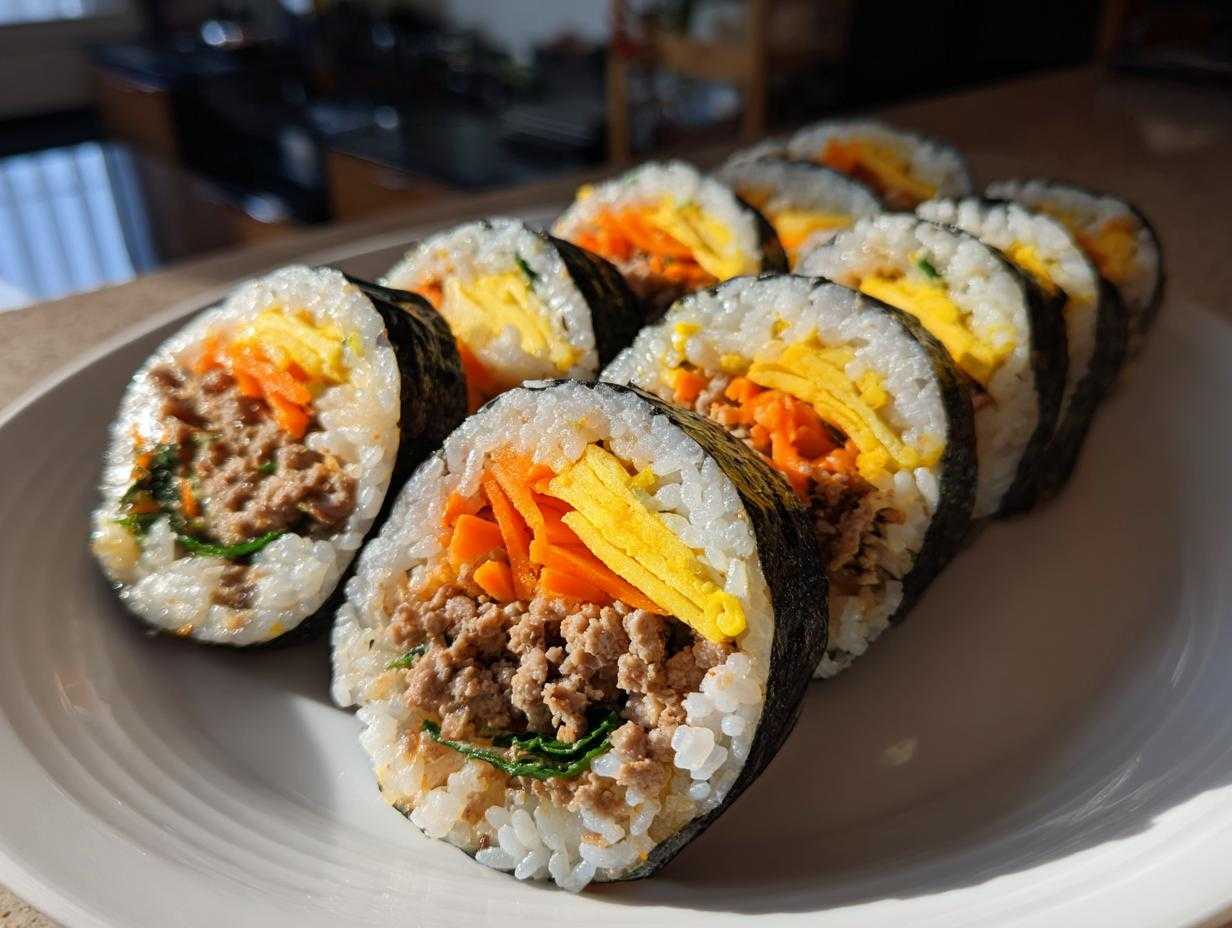
When life gets totally hectic, sometimes you just need a delicious meal on the table *fast*, right? Forget lengthy simmering times or complicated techniques. I have found my absolute rockstar weeknight saver, and it’s something you can whip up faster than ordering takeout: perfect **tuna kimbap**! Seriously, these Korean seaweed rolls are fantastic.
The best part? This recipe relies on humble, reliable ingredients—mostly canned tuna—and you can have five rolls ready to go in under 40 minutes total. It’s my secret weapon for packing amazing Korean lunch box ideas or for throwing together a super satisfying picnic spread without spending all afternoon assembling things. Trust me, once you try this simple version of Chamchi Kimbap, you’ll be making it all the time.
Why This Easy Tuna Kimbap Recipe Works (Korean Seaweed Rolls)
Listen, I know making kimbap can seem a little intimidating when you see those beautiful rolls at the takeout spot, but this recipe strips away all the fuss! We’re aiming for maximum flavor payoff with minimal kitchen stress. This is the real deal—authentic flavor you taste in classic Chamchi Kimbap—but designed for your busy Tuesday night.
-
Quick Tuna Rolls Ready in Under 40 Minutes
This is absolutely my favorite part. Between prepping the eggs and mixing the tuna, we are looking at a total time commitment of about 35 minutes. It’s genuinely one of the quickest Asian dinner ideas invented, perfect when you need something satisfying now.
-
Beginner Kimbap Recipe Friendly
Don’t sweat the rolling part! Honestly, even if this is your first time attempting homemade kimbap, this filling is forgiving. If you use a little plastic wrap under your bamboo mat, you’ll find rolling super simple and clean. No sticky rice everywhere, I promise!
Ingredients for Authentic Tuna Kimbap (Chamchi Kimbap Easy)
When I say easy, I mean it! For these delicious Canned Tuna Recipe Korean Style rolls, you don’t need to hunt down specialty items, except maybe the pickled radish. Everything is laid out here so you can shop smart and start prepping quickly. Pay close attention to draining that tuna—it’s crucial for the texture!
Here is what you need for about five rolls:
- 5 sheets roasted seaweed (gim) – The wrapper, obviously!
- 3 cups cooked short-grain white rice, seasoned with 1 tsp sesame oil and 1/2 tsp salt – Warm rice spreads so much better, don’t skip warming it up a bit!
- 1 can (5 oz) tuna in water, drained well – Seriously, drain all that water out. Soggy tuna makes soggy kimbap!
- 1/4 cup mayonnaise – Nope, can’t substitute this moisture.
- 1 tsp yellow mustard (optional) – Just a little zip for the classic version.
- 1 large carrot, julienned
- 1/2 cucumber, seeded and julienned
- 1 cup pickled radish (danmuji), cut into strips – This is non-negotiable for that classic sweet crunch.
- 4 eggs, beaten
- Vegetable oil for cooking
- Sesame seeds for garnish
See? It’s a straightforward list that comes together beautifully. Just remember to have all your fillings ready before you even think about laying down that rice!
How to Prepare Delicious Tuna Rice Rolls: Step-by-Step Instructions
Okay, this is where the magic happens! While the ingredients are simple, the execution is everything, especially when you want those gorgeous, tightly packed Korean Rice Rolls Tutorial results. Follow these steps closely, and you’ll be a pro in no time.
Preparing the Fillings (Eggs, Veggies, and Tuna Kimbap Mixture)
Start with the eggs! Heat a lightly oiled pan, pour your beaten eggs gently to create thin omelets—think crepe thin. Once they’re cooked, stack them, let them cool just slightly so they don’t fall apart, and then slice them neatly into thin strips. Set those aside!
Next up, the crunch components. Lightly sauté your julienned carrots with just a pinch of salt for about two minutes. We want them tender-crisp, not mushy. You can use the cucumber raw or give it a tiny sauté too, depending on how you like the texture.
Now for the star: the tuna filling. Grab your well-drained tuna, mix it right into a bowl with the mayonnaise and that optional squirt of yellow mustard. Mash it gently until it looks like a cohesive, creamy mix. Have everything ready before you start rolling!
Assembling and Rolling Your Korean Seaweed Rolls
If you followed my earlier advice, you’ve got plastic wrap over your rolling mat—it saves SO much cleanup! Lay down one sheet of seaweed (gim). Now, gently spread about three-quarters of a cup of your seasoned rice all over that sheet. This is important: leave a clear one-inch strip bare along the far edge. That’s the glue that holds everything together!
Lay your fillings horizontally across the center of the rice. I do radish first, then carrots, cucumber, egg strips, and finish with a nice, straight line of the tuna mix on top. Grab the mat edge closest to you, lift it up, and start rolling tightly away from your body. Press down firmly as you go to compact everything. Once you reach that bare seaweed edge, dab a tiny bit of water on it to help it stick, and finish sealing that roll up!
Finishing and Slicing the Tuna Kimbap
Once you have a tight log, carefully unroll the mat. Brush the entire outside surface lightly with sesame oil—this adds flavor and shine. Finally, sprinkle those sesame seeds over the top for a beautiful finish. Don’t skip the oil!
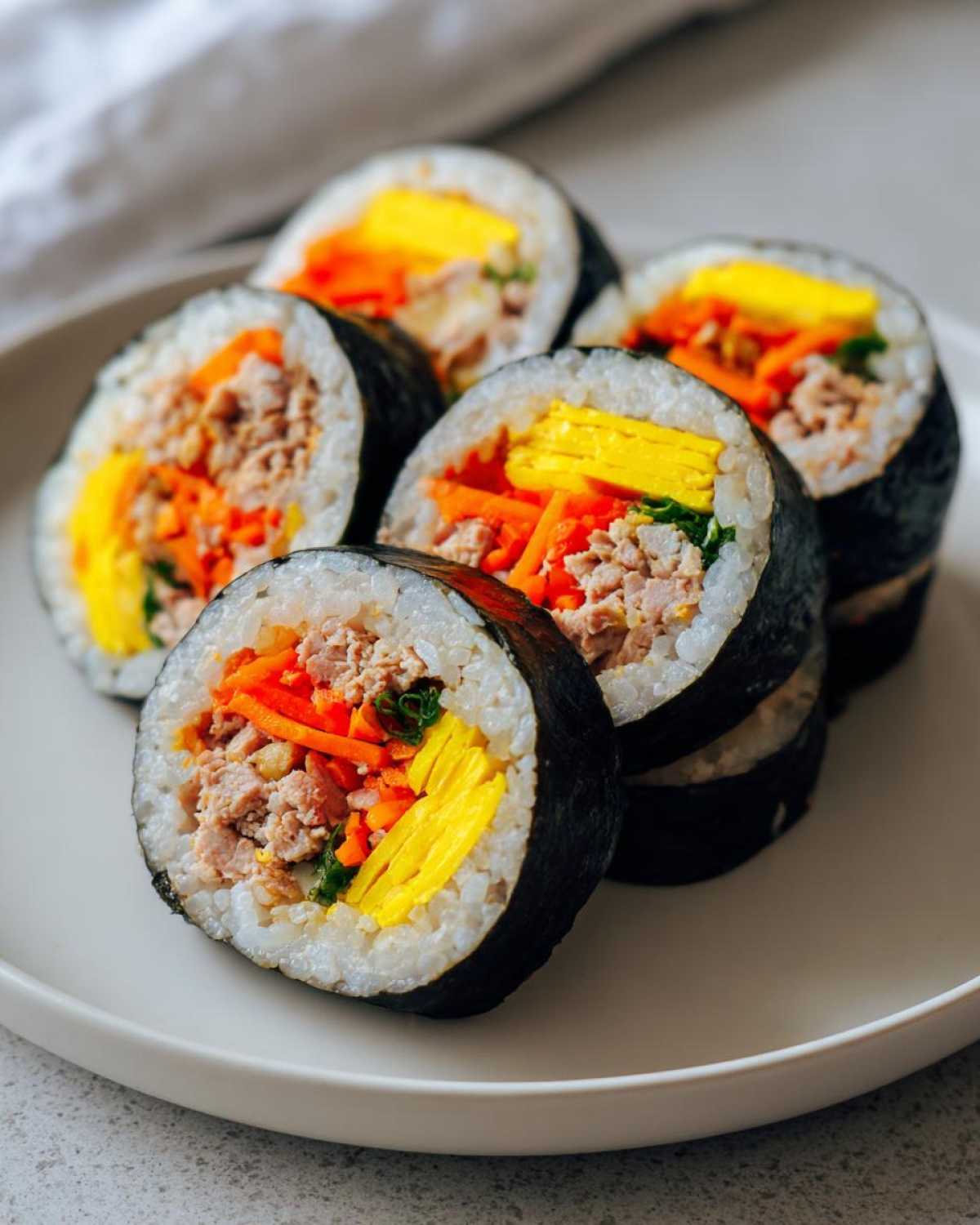
To slice for serving, grab your sharpest knife and moisten the blade with water first. A wet knife glides right through the seaweed without tearing it. Cut your long roll into six or eight perfect pieces. Gorgeous Delicious Tuna Rice Rolls, ready just like that!
Tips for Perfect Homemade Kimbap
So, you’ve mastered the rolling, but you want to make sure every single log of homemade kimbap comes out flawless? Over the years, I’ve learned a few tricks that stop common frustrations in their tracks. These little bits of wisdom make the difference between ‘okay’ kimbap and ‘wow, did you buy this from a restaurant?’ kimbap.
First off, let’s talk rice temperature again—I can’t stress this enough for making great kimbap at home. Cold rice is hard, brittle, and it cracks when you try to spread it. It makes that little border impossible to seal! Always make sure your short-grain rice is still slightly warm before seasoning and spreading it on the seaweed. It stays pliable and sticks together beautifully.
And remember that tip about the rolling mat? If you are nervous about sticky rice adhering to the bamboo, just cover the whole mat with a sheet of plastic wrap before you start. When you roll, the mat never touches the rice directly. When you’re done, you just peel the plastic off the roll, and the mat is completely clean. It’s a game changer, especially when you’re aiming for a tight roll!
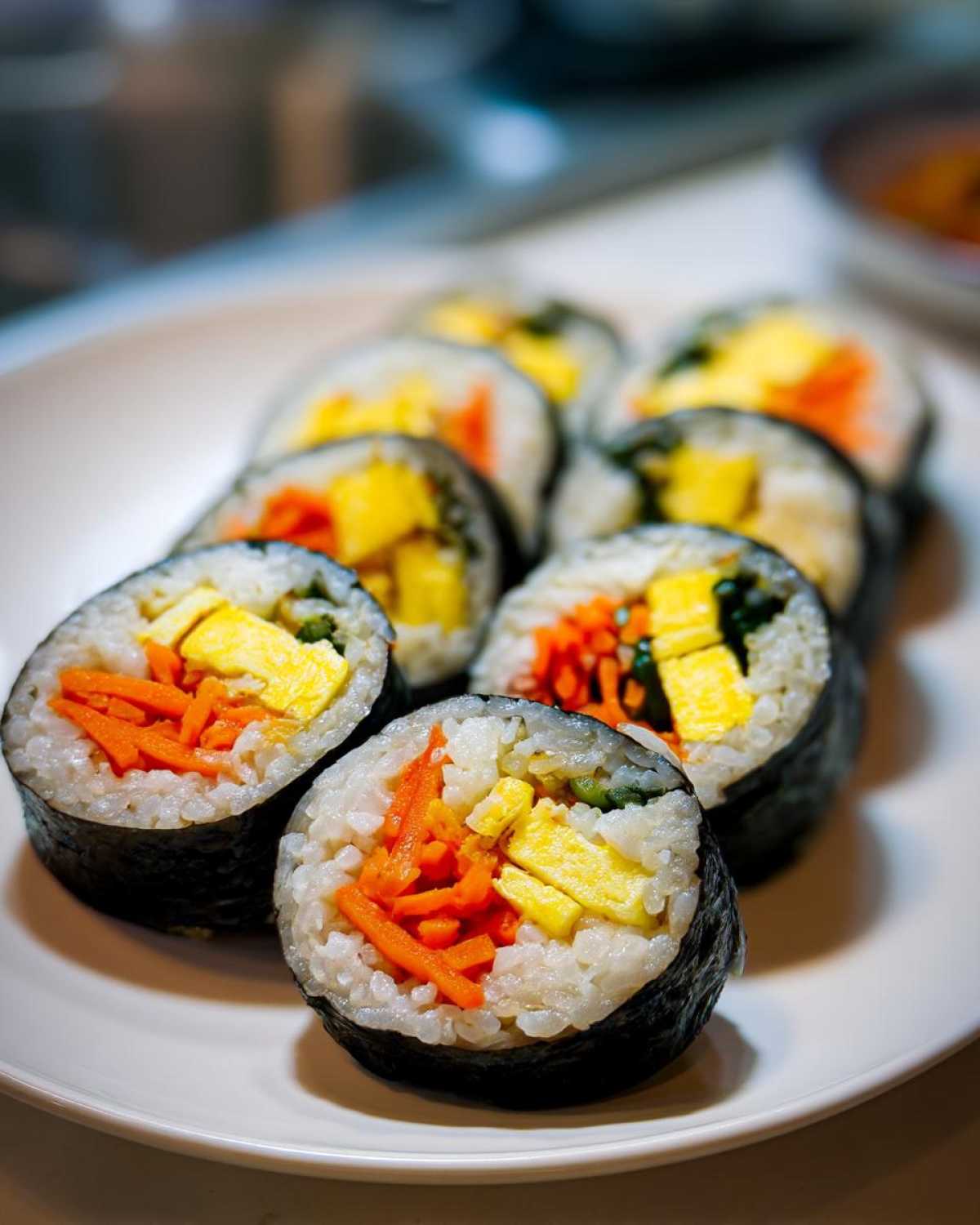
Another thing: don’t overfill! It’s tempting to cram every single filling into one roll, but you risk having your fillings squish out the sides when you try to seal it. Stick to those core layers—a thin layer of each component is all you need. Keep the fillings centrally focused, so when you tuck and roll, everything meets perfectly in the middle.
Finally, always have a tiny bowl of water nearby when you are trimming the ends off your finished rolls. Dipping your knife in the water between cuts keeps the seaweed from catching and tearing. Clean cuts mean picture-perfect presentation for your next potluck or picnic!
Variations: Making Spicy Tuna Seaweed Wraps
Okay, let’s talk heat! I know so many of you absolutely crave that little kick when you’re reaching for a quick snack, and honestly, traditional Chamchi Kimbap is amazing, but sometimes you just need something zesty, right?
If you want the deeply satisfying flavor of those famous **Spicy Tuna Seaweed Wraps** that you see everywhere, you don’t need a whole new recipe—you just need one simple swap in the filling mixture we already made. This is how we turn this easy standard roll into a fiery favorite!
Instead of mixing the drained tuna with mayonnaise and that tiny bit of mustard, forget the mustard entirely. We are going straight for Gochujang, which is that gorgeous, deep red Korean chili paste. It brings heat, a little sweetness, and that incredible fermented depth that just sings with the rice.
For your can of tuna, you are going to mix in about one generous tablespoon, maybe two if you really love the fire! Just start with one tablespoon, mix it really well with the mayo until everything is uniform and that beautiful reddish-orange color comes through. That’s it! When you layer that spicy tuna mix into your roll, you instantly get that amazing, addictive flavor profile.
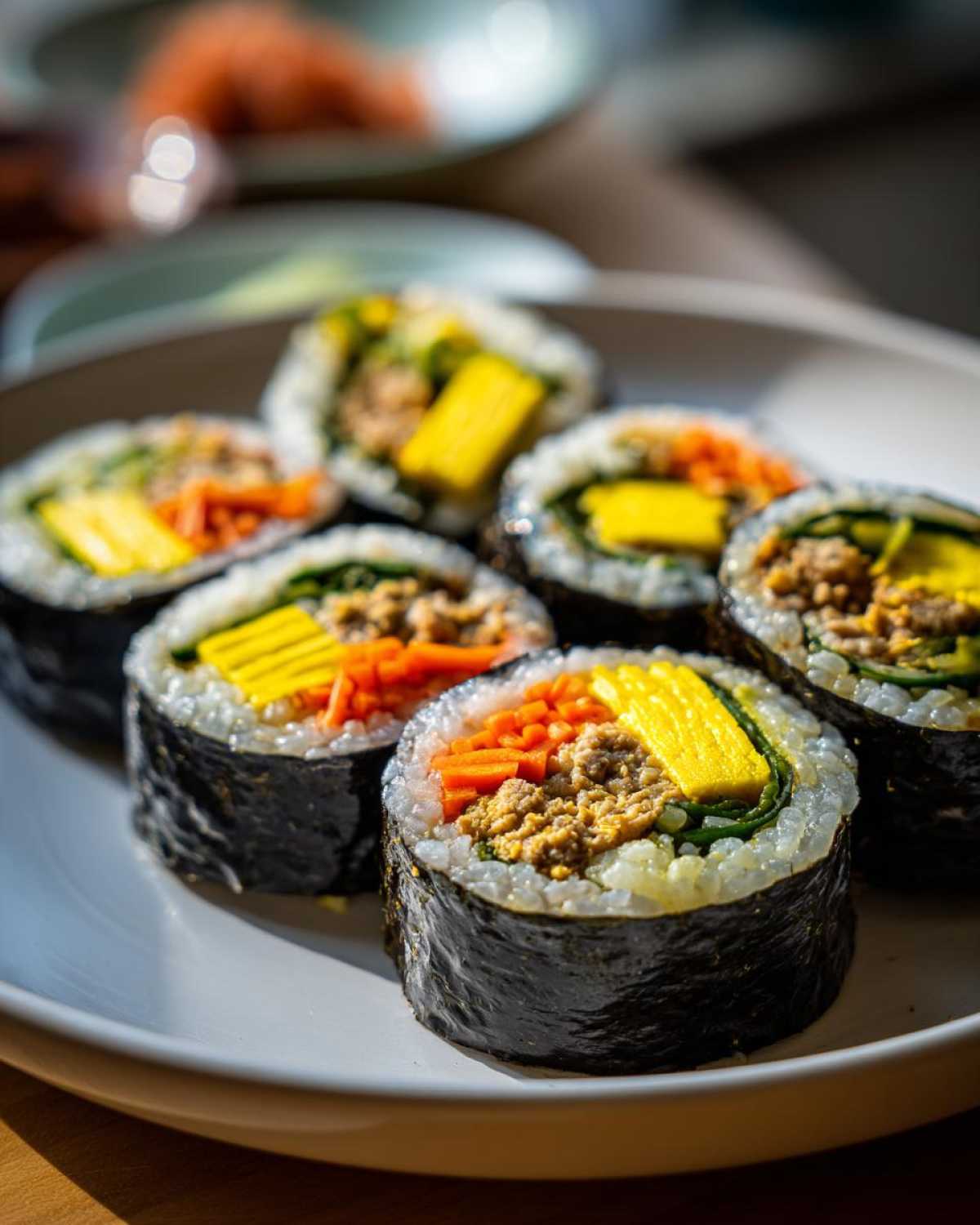
It’s simple, but it completely transforms the roll. If you’re looking for other quick, zesty dinners, you should definitely check out how to make a Spicy Tuna Wrap—it uses this same flavor magic but in a completely different format. So go ahead, add that fire to your next batch of Tuna Gimbap Recipe; I promise you won’t regret turning up the heat!
Serving Suggestions for Tuna Kimbap (Picnic Friendly Korean Food)
Once you’ve rolled and sliced your beautiful fresh **tuna kimbap**, the next challenge is deciding what goes *with* them! These rolls are already such a complete meal because they pack in protein, carbs, and veggies, which makes them ideal for almost any situation. They are totally my top pick for easy Korean Lunch Box Ideas because they hold up so well!
Because the tuna filling is already rich and creamy from the mayo, you don’t need a heavy side dish. In fact, lighter, brighter flavors really make those savory rice rolls shine. I always keep things incredibly simple when I’m prepping these for a picnic or a busy workday lunch.
Simple Side Dishes to Pair
The great thing about kimbap is that it loves acidity! Acidity cuts right through the richness of the mayo and sesame oil beautifully. My go-to is always a quick side of kimchi, of course. You can grab any kind you like, but the tangy, spicy flavor of traditional Napa cabbage kimchi is unbeatable next to these mild tuna rolls.
If kimchi feels like too much effort, try a tiny bowl of quick pickled side dish. Shredded cabbage dressed with rice vinegar, a pinch of sugar, and a tiny bit of salt takes five minutes to throw together. It adds that necessary *zing* without any cooking time, which is perfect for keeping this recipe fast.
Another really nice texture contrast comes from something crunchy and plain. Think about lightly blanched spinach seasoned just with sesame oil and garlic, served cold. It’s simple, healthy, and adds a lovely green element to your plate next to the wrapped rolls.
Drinks That Go Best with Kimbap
When it comes to drinks, you want something cold and refreshing that won’t clash with the sesame flavor. Fizzy drinks are surprisingly excellent here. A simple sparkling water with a big squeeze of fresh lemon or lime is perfect for cleansing your palate between bites.
If you want something more traditional, you can’t go wrong with *Bori Cha* (roasted barley tea). It’s served hot or cold in Korea, and it has this wonderful nutty, toasted flavor that complements the seaweed and rice perfectly without adding any sweetness. It’s super refreshing, especially on a warm day when you’re enjoying these as Picnic Friendly Korean Food!
Just avoid overly sweet juices or heavy sodas; they tend to overwhelm the delicate flavors of the seasoned rice and fresh vegetables inside the roll. We want the kimbap itself to be the star!
Storage & Make Ahead Korean Snacks
Alright, let’s be real—if you make five rolls of this amazing **tuna kimbap**, you might actually have leftovers! And that’s great, because they make fantastic **Make Ahead Korean Snacks**! However, I have to give you the honest truth right off the bat: kimbap is, like most things wrapped in seaweed, best eaten the day you make it. That crispy *gim* texture really starts to soften once it sits with the moist rice and fillings.
But don’t throw them out by morning! If you handle the storage right, you can totally enjoy them the next day for lunch. The absolute key here is minimizing air exposure. You want an airtight container, no question. If you have one of those plastic food storage containers with a tight-sealing lid, use that immediately after you finish slicing the rolls.
I generally advise eating leftover kimbap within 24 hours. If you try to push it to day three, the rice tends to get a little hard, and the seaweed will be quite chewy—not the texture we are aiming for when we make these quick rolls!
Can Tuna Kimbap Be Frozen?
Nope. Please, don’t freeze them. I tested this once when I felt very ambitious about meal prepping! When you thaw kimbap, the moisture trapped inside—from the rice, the mayo in the tuna, and the veggies—melts and turns everything slimy and watery. The seaweed just disintegrates. Frozen kimbap is a sad experience. Save your freezer space for kimchi stew or something that reheats better!
Prep Ahead for Super Quick Assembly
This is where you can really save time! Since the actual assembly takes about 15 minutes once your ingredients are ready, tackle the prep work the night before. This transforms this into an unbelievably fast **Quick Tuna Rolls** process the next day.
Here’s what I do for my make ahead strategy:
- Cook the Rice: Cook your rice and season it perfectly the night before. Store it in an airtight container in the fridge. Just before rolling in the morning, you *must* warm it up slightly—even 20 seconds in the microwave makes a huge difference in spreading ease.
- Prep the Fillings: Cook your egg strips and slice your pickled radish and carrots. Store each cooked/prepped vegetable in its own container. They hold up perfectly overnight.
- Mix the Tuna: Mix up your **tuna kimbap** filling (mayo, tuna, mustard) the night before and keep it chilled. Don’t add it to the roll until assembly time, though.
When you wake up, all you have to do is lay out the seaweed, spread the warm rice, and layer the prepped fillings. You can usually assemble and slice five rolls in less than fifteen minutes this way. It’s the perfect way to have homemade quality food ready for school lunches or a grab-and-go breakfast!
Frequently Asked Questions about Tuna Kimbap Recipe
I always gather a bunch of questions when I try a new recipe, and since this is such a popular staple, I wanted to cover the things I hear most often about making the best **Tuna Gimbap Recipe** at home. Don’t worry if you have a few quirks in your kitchen; there’s usually a simple fix!
-
Can I substitute the canned tuna for another protein in this tuna kimbap?
Yes, you absolutely can! If you want to switch things up, you need a filler that holds its shape well with the mayo dressing. I’ve used finely shredded, cooked chicken breast—just mix it with mayo like you would the tuna. Imitation crab meat, chopped up a bit, also works wonderfully and gives you a texture similar to spicy tuna seaweed wraps. The key is that the protein needs to stay relatively dry when you mix it so it doesn’t soak into the rice during assembly.
-
What is the secret to preventing the kimbap from unrolling?
This is the make-or-break moment, right? The secret has two parts for these **Quick Tuna Rolls**. First, you must roll it tightly—imagine you are tucking a very important, expensive gift inside that first fold. Second, and crucially, you need to seal that final one-inch bare edge of the seaweed. Just wet your fingertip and run it lightly along that edge before you press the mat down for the final time. That moisture acts like edible glue, locking your roll securely for when you slice it!
-
Can I add more vegetables like refreshing cucumber kimbap additions?
Heck yes, you can load them up! The recipe I shared is the classic, simple *Chamchi Kimbap* style, but kimbap is famous for having tons of filling ideas. If you love crispness, feel free to add more crunchy elements like thinly sliced yellow bell peppers or extra rows of **refreshing cucumber kimbap** strips. The major caution I always give is to make sure whatever extra veggie you add is very, very dry. Watery veggies are the enemy of a good seal, as they will leach moisture into the rice and make the roll slide apart!
If you’re looking for more guidance on making these classic Tuna Gimbap Recipe logs, you can always check out my longer tutorial on rolling techniques. Happy rolling!
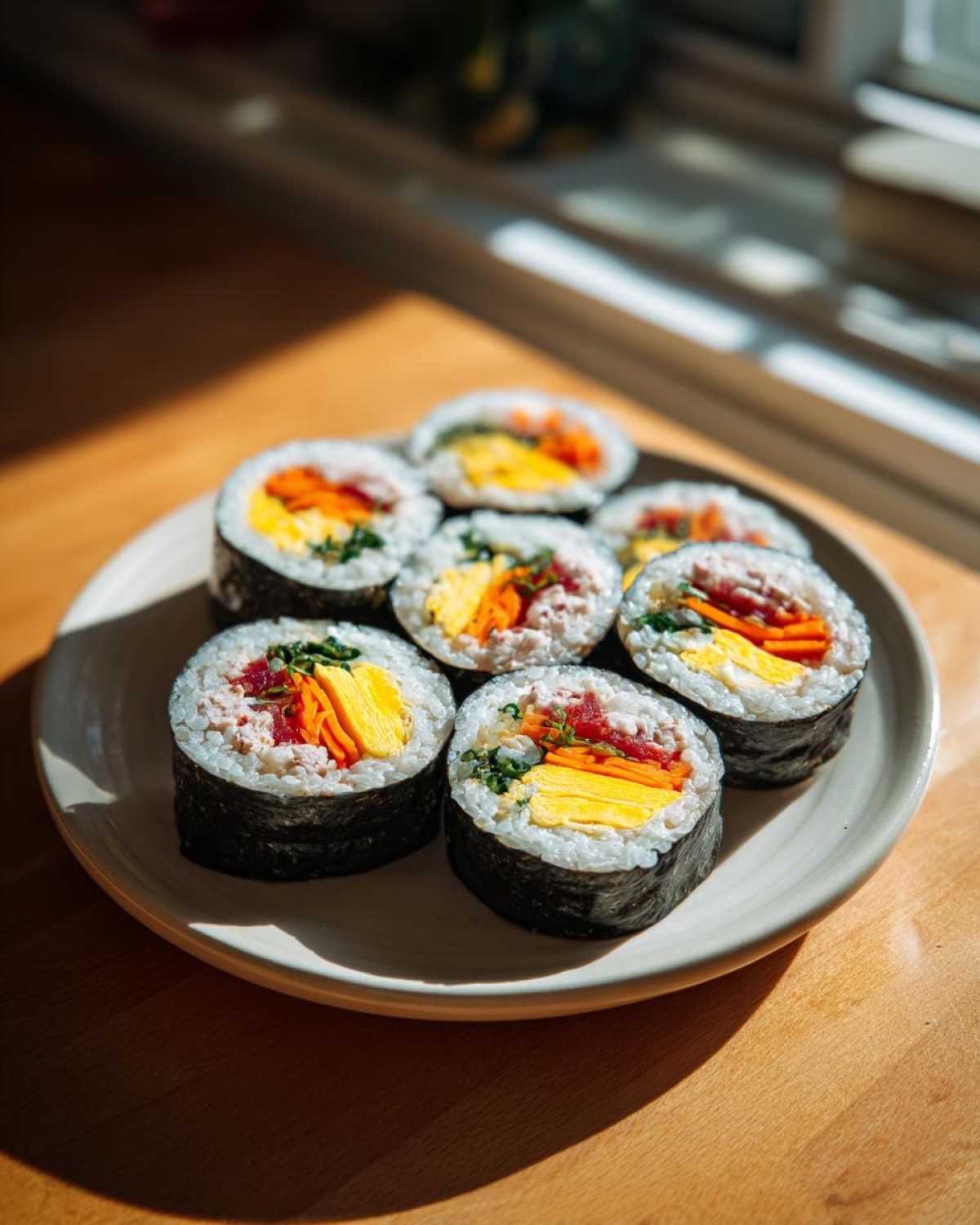
Estimated Nutritional Data for Tuna Kimbap
Keeping track of what’s in your food is smart, especially when you’re making snacks for lunch boxes or busy dinners. Since this recipe uses canned tuna and fresh vegetables, it scores pretty well nutritionally! Please keep in mind that these are just estimates based on the ingredients and servings listed in the recipe card. Your exact numbers might vary depending on how much mayo you absolutely *must* put into that tuna filling!
Here’s a general breakdown for one serving slice (about 6 pieces of a typical roll):
- Serving Size: 1 roll (6 pieces)
- Calories: Approximately 280
- Fat: Around 10g (Don’t worry, most of that is healthy fat from the sesame oil!)
- Saturated Fat: Only about 2g
- Carbohydrates: Approximately 38g
- Protein: A solid 12g to keep you full!
- Sugar: Very low, about 3g
- Sodium: Around 350mg (Watch this if your pickled radish is extra salty!)
It’s a really balanced, portable meal. It gives you the energy from the rice without weighing you down, and the tuna offers great protein. It’s why I turn to this for easy Easy Asian Meal Prep all the time!
Share Your Quick Tuna Rolls Experience
Seriously, now that you’ve mastered the roll, I want to know how they turned out! Did you stick to the classic mild tuna mix, or did you go wild with the spicy version? I live for hearing about your kitchen experiments in the comments below. Did you use different **Kimbap Filling Ideas**? I’m always looking for ways to mix up my vegetable selection for next time!
Don’t be shy! If you made these **Quick Tuna Rolls** and packed them for lunch or served them at a family gathering, snap a picture and tag me on social media. Seeing your beautiful, tight rolls makes my day, and it proves that anyone can conquer making **Korean Seaweed Rolls** at home.
I truly hope this recipe brings a little bit of that easy, satisfying Korean comfort food magic into your busy week, just like it does mine. Enjoy every delicious bite!
Estimated Nutritional Data for Tuna Kimbap
Keeping track of what’s in your food is smart, especially when you’re making snacks for lunch boxes or busy dinners. Since this recipe uses canned tuna and fresh vegetables, it scores pretty well nutritionally! Please keep in mind that these are just estimates based on the ingredients and servings listed in the recipe card. Your exact numbers might vary depending on how much mayo you absolutely *must* put into that tuna filling!
Here’s a general breakdown for one serving slice (about 6 pieces of a typical roll):
- Serving Size: 1 roll (6 pieces)
- Calories: Approximately 280
- Fat: Around 10g (Don’t worry, most of that is healthy fat from the sesame oil!)
- Saturated Fat: Only about 2g
- Carbohydrates: Approximately 38g
- Protein: A solid 12g to keep you full!
- Sugar: Very low, about 3g
- Sodium: Around 350mg (Watch this if your pickled radish is extra salty!)
It’s a really balanced, portable meal. It gives you the energy from the rice without weighing you down, and the tuna offers great protein. It’s why I turn to this for easy Easy Asian Meal Prep all the time!
Share Your Quick Tuna Rolls Experience
Seriously, now that you’ve mastered the roll, I want to know how they turned out! Did you stick to the classic mild tuna mix, or did you go wild with the spicy version? I live for hearing about your kitchen experiments in the comments below. Did you use different Kimbap Filling Ideas? I’m always looking for ways to mix up my vegetable selection for next time!
Don’t be shy! If you made these **Quick Tuna Rolls** and packed them for lunch or served them at a family gathering, snap a picture and tag me on social media. Seeing your beautiful, tight rolls makes my day, and it proves that anyone can conquer making **Korean Seaweed Rolls** at home.
I truly hope this recipe brings a little bit of that easy, satisfying Korean comfort food magic into your busy week, just like it does mine. Enjoy every delicious bite!
Print
Easy Tuna Kimbap (Chamchi Kimbap)
- Total Time: 35 min
- Yield: 5 rolls (about 35 pieces)
- Diet: Vegetarian
Description
Make simple and satisfying Korean tuna rice rolls using canned tuna. This recipe is perfect for quick lunches or picnics.
Ingredients
- 5 sheets roasted seaweed (gim)
- 3 cups cooked short-grain white rice, seasoned with 1 tsp sesame oil and 1/2 tsp salt
- 1 can (5 oz) tuna in water, drained well
- 1/4 cup mayonnaise
- 1 tsp yellow mustard (optional)
- 1 large carrot, julienned
- 1/2 cucumber, seeded and julienned
- 1 cup pickled radish (danmuji), cut into strips
- 4 eggs, beaten
- Vegetable oil for cooking
- Sesame seeds for garnish
Instructions
- Prepare the egg garnish: Heat a lightly oiled pan. Pour thin layers of beaten egg to make thin omelets. Stack them, let cool slightly, and slice into thin strips.
- Prepare the vegetables: Lightly sauté the julienned carrots with a pinch of salt for 2 minutes until tender-crisp. Briefly sauté the cucumber strips if desired, or use them raw.
- Make the tuna filling: In a bowl, combine the drained tuna, mayonnaise, and mustard (if using). Mix until combined.
- Assemble the kimbap: Lay one sheet of seaweed on a bamboo rolling mat. Spread about 3/4 cup of the seasoned rice evenly over the seaweed, leaving a 1-inch border at the top edge.
- Layer the fillings across the center of the rice: Place strips of pickled radish, carrots, cucumber, egg strips, and a line of the tuna mixture.
- Roll the kimbap: Lift the edge of the mat closest to you and tightly roll the ingredients away from you, pressing gently to seal the roll. Moisten the top edge of the seaweed with a little water to seal completely.
- Finish the rolls: Brush the outside of the finished roll lightly with sesame oil and sprinkle with sesame seeds.
- Slice and serve: Using a sharp, slightly moistened knife, cut each roll into 6 to 8 pieces.
Notes
- For Spicy Tuna Kimbap, mix the tuna filling with 1 to 2 tablespoons of Gochujang (Korean chili paste) instead of mustard.
- To make rolling easier, place plastic wrap over your rolling mat.
- Use warm rice; cold rice is difficult to spread evenly.
- Prep Time: 25 min
- Cook Time: 10 min
- Category: Main Course
- Method: Rolling
- Cuisine: Korean
Nutrition
- Serving Size: 1 roll (6 pieces)
- Calories: 280
- Sugar: 3
- Sodium: 350
- Fat: 10
- Saturated Fat: 2
- Unsaturated Fat: 8
- Trans Fat: 0
- Carbohydrates: 38
- Fiber: 1
- Protein: 12
- Cholesterol: 75