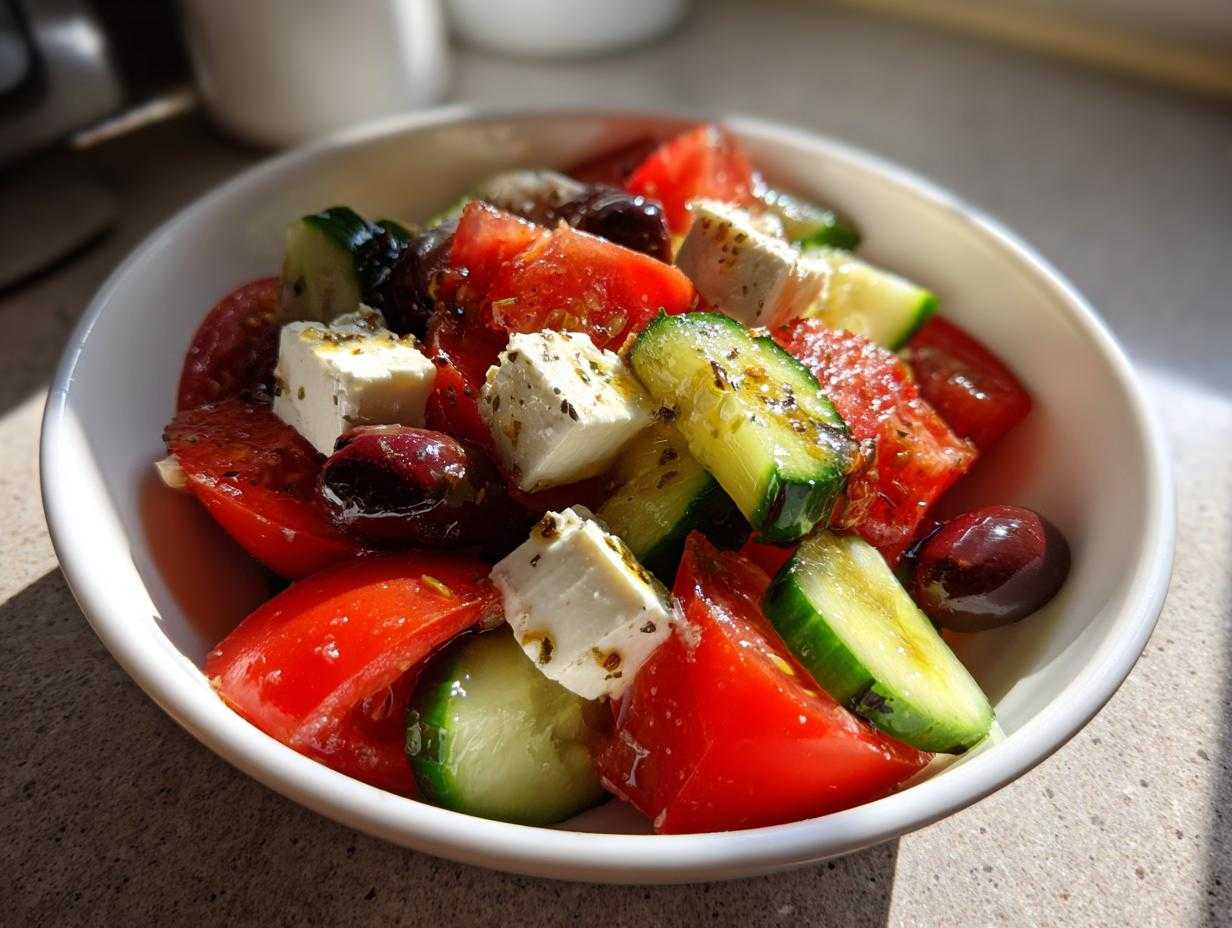
Are you tired of soggy, forgettable side salads that taste like wet lettuce and disappointment? Me too! I spent years thinking a proper **greek salad** meant tearing up romaine and calling it a day. Oh, how wrong I was! When I finally learned to make the real thing—the *Horiatiki*—everything changed. If you are looking for something brighter than even my simple easy crunchy cabbage salad, this is it!
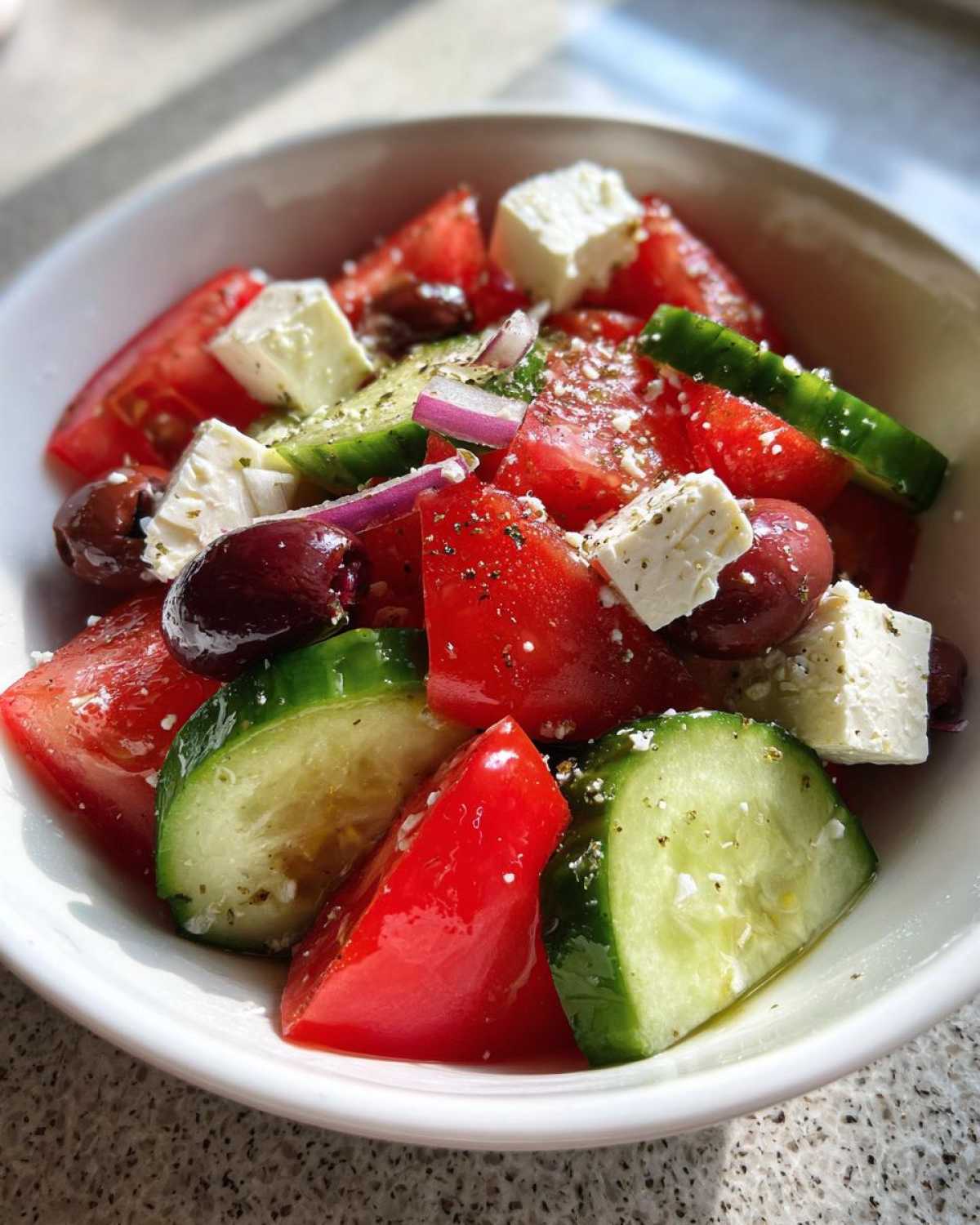
This is the authentic, vegetable-forward **greek salad** you see next to grilled octopus in seaside tavernas. The secret is zero filler; it’s pure, vibrant flavor packed into fresh cucumber, ripe tomatoes, tangy onions, and huge slabs of real feta. And the best part? I can honestly promise you this classic recipe comes together in under 15 minutes. We stick to traditional techniques because we know that genuine flavor can’t be rushed, even when the prep is lightning fast.
Why This Authentic greek salad Recipe Works So Well
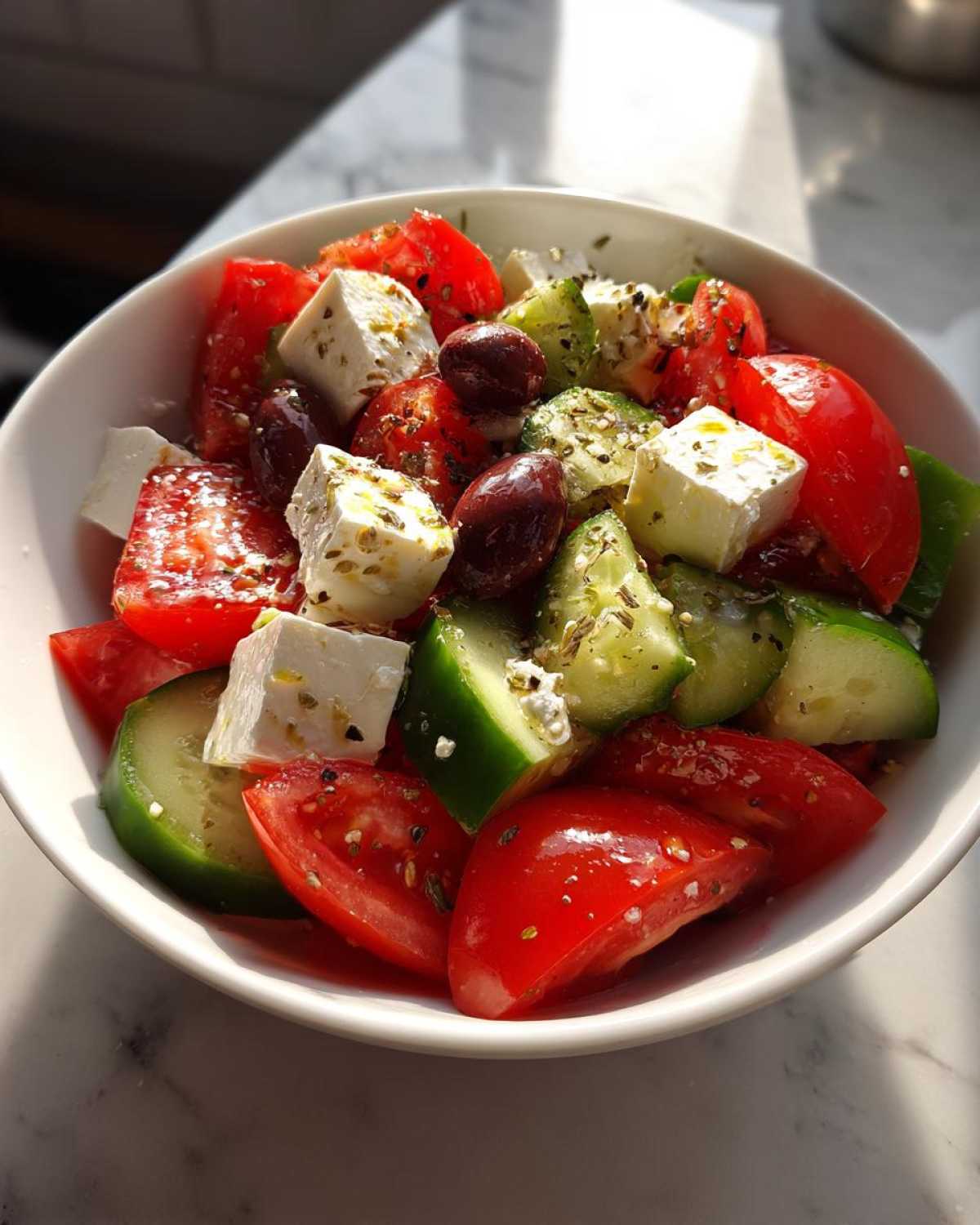
Honestly, this recipe cuts through all the noise you usually find in online salads. It’s focused, it’s fast, and it tastes exactly like a vacation feels. If you’re looking for something truly special among refreshing summer salads, this is it. We keep things rustic and clean, which is why it’s such a fantastic, **Easy Mediterranean Salad** option.
Here’s the breakdown of why this *Horiatiki* beats everything else:
- It focuses entirely on the quality of your vegetables and cheese, making it a stellar **Fresh Vegetable Salad**.
- The preparation is so quick—truly under 15 minutes—that it’s perfect for last-minute dinner pushes.
- The flavor profile is bright and tangy thanks to minimal, high-impact ingredients, keeping things wonderfully light.
The No-Lettuce Rule for a True greek salad
Listen, if you see lettuce, it’s not Horiatiki! True **greek salad** relies on the cucumber and tomatoes holding their shape and texture. Lettuce just wilts into watery sadness once the vinegary dressing hits it. We want crisp veggies absorbing that gorgeous oregano drizzle, not soaking in green sludge. It maximizes the vegetable integrity, simple as that!
Speed: Making a greek salad in Under 15 Minutes
This is where we shine for busy cooks! Because there is zero cooking involved—nada—all you are doing is chopping and whisking. As long as your knife is moderately sharp, you’re done before your oven even finishes preheating for the main course. It’s the definition of **Quick Summer Salad Ideas** that look way more impressive than the effort required.
Essential Ingredients for the Best greek salad Dressing
Guys, I cannot stress this enough: A **greek salad** is only as good as the three things you put the most effort into—the tomatoes, the olive oil, and the feta. Forget the cheap, pre-crumbled feta packed in plastic tubs; that stuff tastes like dusty chalk. We need the good stuff, the block packed in brine, because that saltiness and creamy texture are non-negotiable foundations for authentic flavor. Think of this as a minimalist masterpiece. You aren’t hiding anything here. Every single ingredient has to stand up and shine, which is why I always lean on the best quality I can find. When you make my homemade greek salad dressing, you’ll notice how just a few powerhouse items do all the heavy lifting!
Ingredients for the Classic greek salad
When you are gathering your components, I want you to look at them and think ‘vibrant.’ This isn’t the time for sad, pale vegetables, okay? Make sure you get chunky, quality ingredients, just like they do in Greece. It makes a huge difference to the final texture!
- 2 large ripe tomatoes, cut into wedges
- 1 large English cucumber, peeled and sliced into thick half-moons
- 1/2 red onion, thinly sliced
- 1 green bell pepper, seeded and sliced
- 1/2 cup Kalamata olives, whole or pitted
- 6 ounces block feta cheese, cut into large cubes (do not crumble)
- 1/4 cup extra virgin olive oil (the good stuff!)
- 2 tablespoons red wine vinegar
- 1 teaspoon dried oregano
- 1/4 teaspoon salt
- 1/4 teaspoon black pepper
Crafting the Best greek Salad Dressing: Oregano Vinaigrette
Okay, this is where we tie it all together—the **Best Greek Salad Dressing**. Forget those creamy, mayo-heavy things you sometimes see served stateside. A true Horiatiki dressing is bright, sharp, and relies heavily on high-quality olive oil and oregano. It needs to cut through the fattiness of the feta, not fight it!
My personal trick here is to let the dried oregano have a little soak session. I mix the red wine vinegar and the oregano together first, maybe let it sit for just five minutes while I cut the cucumber. The vinegar gets infused with that lovely grassy scent. Then, while whisking like crazy—and I mean *whisking*—slowly drizzle in that good olive oil. You’re basically making a thin vinaigrette that acts like a flavor blanket over the whole salad. Trust me, this little pre-soak step makes a difference compared to just dumping it all in at once. You can find more inspiration for tangy flavor boosts over at my caramelized onions ultimate guide, although we keep this dressing simple!
Step-by-Step Instructions for Your greek salad
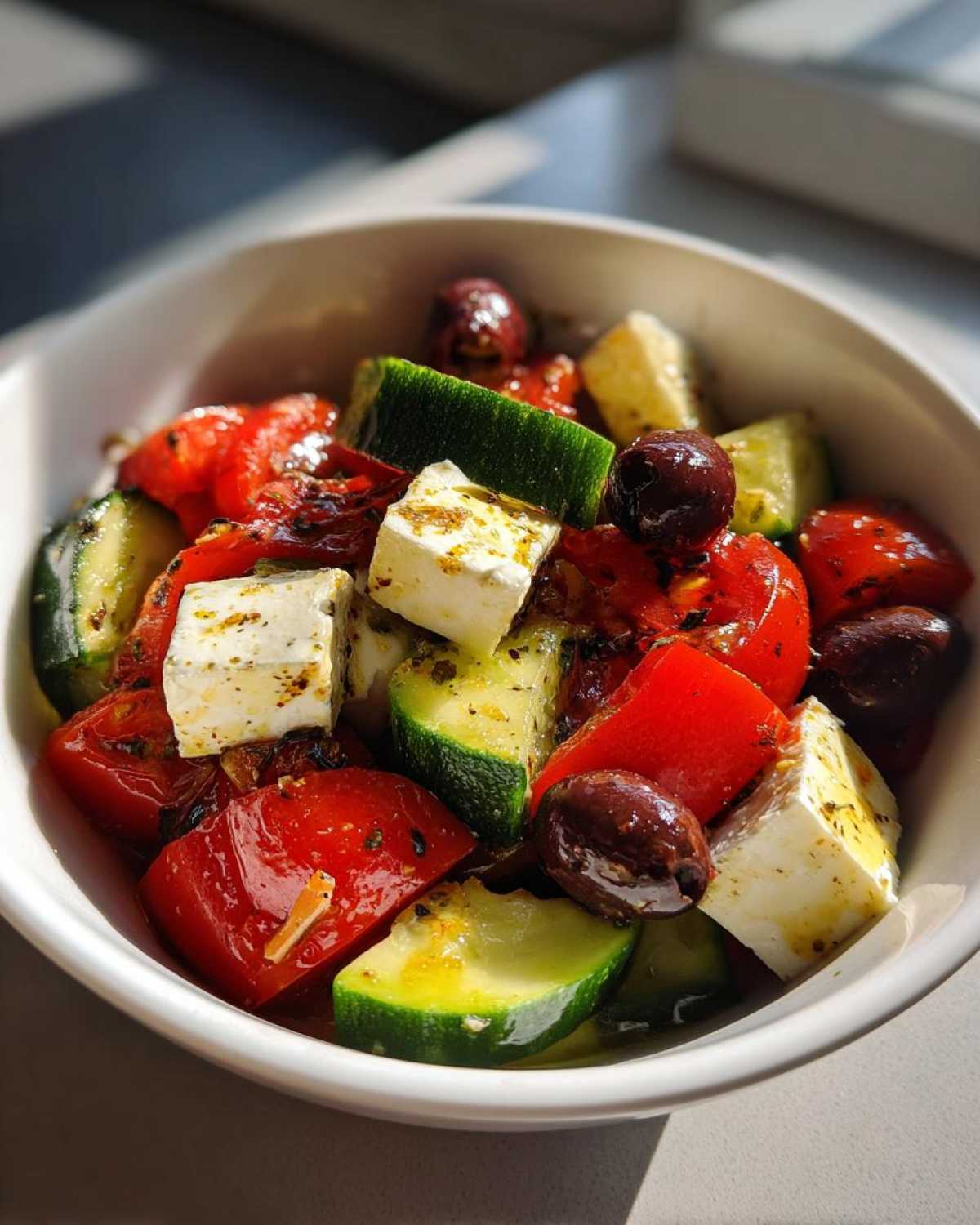
Look, this is the easiest part, so don’t overthink it! We are aiming for that magic 15-minute total time here. The assembly order is crucial because we don’t want that beautiful feta breaking apart before the salad even hits the table. We build the base, we crown it with cheese, and only then do we add the bright, zesty dressing.
First things first, get all those beautiful vegetables prepped—tomatoes, cucumbers, peppers, and onions. Toss them all into a big wide bowl. Next, we are adding the Kalamata olives right into the vegetable mix. Now, here is the critical move: gently place those big, glorious cubes of feta right on top of everything else. Do not mix them in yet! They are the crown jewels of this **greek salad**, and they need protection for a moment.
While the cheese is chilling on top, whisk up that **oregano vinaigrette** like I showed you earlier. Dribble that dressing evenly over the whole bowl, making sure you get some oil over the feta pieces. Finally, grab two large spoons—no tongs for this beautiful assembly unless you want feta dust everywhere!—and gently fold everything together. You want everything coated, but you want those feta cubes to remain mostly in one piece. Seriously, you’re done in 15 minutes. Enjoy that crunch!
Tips for Success: Mastering the Authentic greek salad
Achieving that genuine taste of **Traditional Greek Cooking** isn’t hard, but it does require you to respect the ingredients. This isn’t a salad you want to fuss over with a million little steps, but respecting the core components is key. If you cheat on the cheese or chop your veggies into tiny specks, you’re missing the point of the Horiatiki experience. Trust me, these little rules elevate this from a vegetable mix to a spectacular **greek salad**. For more ways to enjoy feta, check out my mediterranean spinach feta cheese crisps!
Choosing the Right Feta for Your greek salad
If you buy the pre-crumbled feta in a plastic shaker, you are inviting dryness and a lot of weird stabilizers into your dish. Please, go for the block! The best **greek salad** feta is sold soaking in brine—that salty liquid is pure flavor insurance. When you slice it into those big, rustic cubes, you get that perfect salty burst against the sweet tomato, and it won’t dissolve into nothingness when you toss it. It’s worth going to the proper deli counter for this one ingredient!
When to Dress Your Vibrant Tomato Cucumber Salad
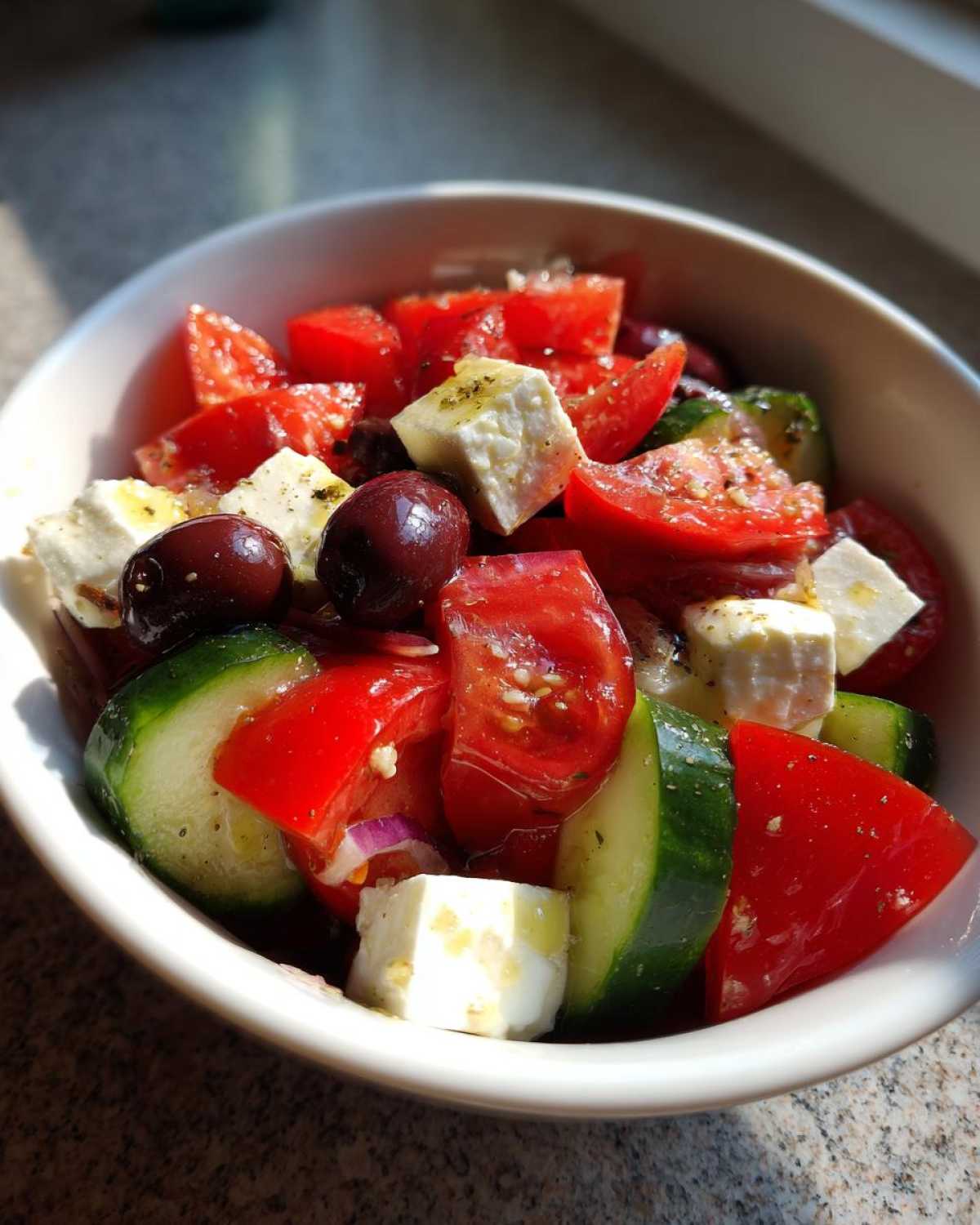
I call this the soggy salad emergency. If you dress this **Vibrant Tomato Cucumber Salad** more than about five minutes before you plan to eat it, you’re asking for trouble. The cucumbers and tomatoes start releasing all their gorgeous, watery juice the second they hit the acid. That liquid mixes with the oil and vinegar and creates a sad puddle at the bottom of the bowl. Assemble everything—vegetables and feta—and keep it dry. Whisk that dressing on, toss gently, and serve immediately. That’s the secret to keeping texture!
Serving Suggestions for Your Classic Horiatiki Salad
So, you’ve mastered the authentic **greek salad**, and now you need to know what to serve it with! This salad is so bright and versatile, it basically goes with anything, but it *really* shines next to smoky, grilled flavors. Think of this as your ultimate refreshing partner for outdoor cooking. It’s amazing next to grilled chicken souvlaki, of course, but honestly, it’s my go-to among **Healthy Side Dish Recipes** for summer BBQs because it handles sitting out for a little while better than anything creamy.
If you’re looking for a light lunch on its own, that’s great too, but if you’re serving it up for a party, try pairing it with some simple grilled halloumi or even some marinated, slightly spicy pork skewers. It’s the perfect cooling contrast. For more great ideas on throwing together easy foods guests adore, sneak a peek at my write-up on 18 easy summer appetizers. This Horiatiki absolutely belongs in that lineup as the star **BBQ Side Salad**!
Make-Ahead and Storage for Leftover greek salad
This is a touchy subject for Horiatiki because it really wants to be eaten the second those vegetables meet the vinegar! If you’re planning for leftovers or trying to get ahead, you absolutely must use the component storage strategy. We want to keep everything separate until the very last second.
You can totally make the **oregano vinaigrette** ahead of time! I mix mine up, seal it tight, and it lasts beautifully in the fridge for about three days—that’s my favorite part of being organized. It’s a great **Simple Salad To Make Ahead** component. But the vegetables and the feta? Chop them, keep them dry, and store them in the fridge in separate airtight containers. Only combine and dress them right before serving. If you try storing the dressed salad, I promise you’ll end up with soggy cucumbers. For hack ideas on storing components separately, check out my thoughts on mason jar layered salads!
Frequently Asked Questions About Authentic greek salad
I know you have questions, because when I first started making this, I did too! It feels almost *too* simple, right? But trust me, the beauty of this **Authentic Greek Salad Recipe** is its simplicity. We get asked all the time about customizations, so let’s clear up the big ones right here before you dive into making the perfect **Easy Mediterranean Salad** batch.
Can I add lettuce to my greek salad?
This is the big one! If you add lettuce, you are officially making a *village salad* variant, not authentic *Horiatiki*. The traditional **greek salad** relies on the heft and juicy texture of those tomatoes and cucumbers. Lettuce just gets slimy and waters down the whole beautiful experience. I strongly suggest you don’t do it if you want the real deal! However, if you absolutely must bulk it up for a crowd, use crisp Romaine on the *side* of the serving platter, never mixed in. We want to honor those clean flavors!
What is the best substitute for red wine vinegar in this greek salad dressing?
Red wine vinegar hits that perfect sharp, slightly fruity note that works so well with the oregano and olives. If you happen to be out, don’t panic! The best substitute, which keeps that bright acidity, is fresh lemon juice. If you use lemon, you might need a tiny splash less than the recipe calls for, or just taste as you go. It creates a wonderfully tangy dressing that still makes this **low carb salad option** sing! For more vibrant salad combinations, check out my Greek Orzo Salad for inspiration.
How can I turn this greek salad into a light dinner salad?
That’s a fantastic question! As a gorgeous **Healthy Side Dish Recipe**, it’s already perfect, but if you need it to carry dinner, you just need a little protein boost. I absolutely love adding canned chickpeas—just rinse them off really well. They soak up that leftover olive oil dressing beautifully. Or, if you’re feeling ambitious, some freshly grilled, slightly charred chicken breast strips thrown on top turns this into a stellar **Light Dinner Salad**. It keeps it light, Mediterranean, and super satisfying for a warm evening meal!
Estimated Nutritional Profile for This greek salad
Now, let’s talk numbers, though honestly, with a truly **fresh vegetable salad** like this, I try not to focus too much on the math! This **greek salad** is definitely one of my go-to choices when I want something genuinely satisfying that fits right into a clean eating lifestyle. Since it’s all fresh vegetables, quality olive oil, and feta, the fats are the main player, but they are the *good* fats, you know?
Keep in mind that these figures are just estimates based on the recipe amounts I use, and your exact numbers might vary depending on whether you drain that feta block completely or if your tomatoes were extra juicy! But this gives you a great idea of what’s packed into one serving of this bright, **refreshing salad for parties**.
- Serving Size: 1 serving
- Calories: 320
- Fat: 28g
- Saturated Fat: 10g
- Carbohydrates: 12g
- Fiber: 3g
- Protein: 10g
- Sugar: 7g
- Sodium: 650mg (That rich feta adds up quickly!)
See? High flavor, good healthy fats, and a whole lot of vibrant goodness! It’s naturally low-carb, making it great for anyone watching their sugar intake, too. That’s the beauty of simple **Mediterranean Diet Meals**—they taste incredible without needing heavy processing!
Print
Authentic No-Lettuce Greek Salad (Horiatiki) in Under 15 Minutes
- Total Time: 15 min
- Yield: 4 servings
- Diet: Vegetarian
Description
Make a traditional Greek Salad, Horiatiki, quickly. This recipe uses fresh vegetables, quality feta, and Kalamata olives with a simple, tangy oregano vinaigrette.
Ingredients
- 2 large ripe tomatoes, cut into wedges
- 1 large English cucumber, peeled and sliced into thick half-moons
- 1/2 red onion, thinly sliced
- 1 green bell pepper, seeded and sliced
- 1/2 cup Kalamata olives, whole or pitted
- 6 ounces block feta cheese, cut into large cubes (do not crumble)
- 1/4 cup extra virgin olive oil
- 2 tablespoons red wine vinegar
- 1 teaspoon dried oregano
- 1/4 teaspoon salt
- 1/4 teaspoon black pepper
Instructions
- Prepare all vegetables: cut tomatoes, cucumber, onion, and pepper. Place them in a large bowl.
- Add the Kalamata olives to the vegetables.
- Gently place the large cubes of feta cheese on top of the vegetables. Do not mix yet.
- In a small bowl, whisk together the olive oil, red wine vinegar, dried oregano, salt, and pepper to make the dressing.
- Pour the dressing evenly over the salad ingredients.
- Gently toss the salad just before serving to coat the vegetables and keep the feta mostly intact.
Notes
- Use high-quality feta cheese that comes in a block, packed in brine, for the best flavor and texture.
- For an authentic touch, do not chop the vegetables too finely; keep them rustic and chunky.
- You can mix the dressing ahead of time and store it in the refrigerator for up to three days.
- Prep Time: 15 min
- Cook Time: 0 min
- Category: Side Dish
- Method: No Cook
- Cuisine: Greek
Nutrition
- Serving Size: 1 serving
- Calories: 320
- Sugar: 7
- Sodium: 650
- Fat: 28
- Saturated Fat: 10
- Unsaturated Fat: 18
- Trans Fat: 0
- Carbohydrates: 12
- Fiber: 3
- Protein: 10
- Cholesterol: 40